
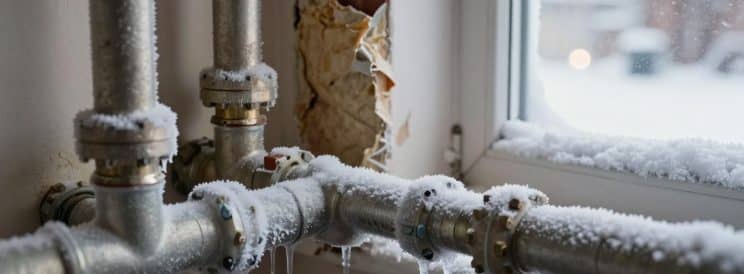
Will Pipes Burst if They Freeze? J Sewer & Drain Plumbing Answers

Could a sudden cold snap turn a small plumbing worry into a costly home emergency?

We open with the top homeowner question—will pipes burst if they freeze—and explain why this matters during Chicago’s harsh winter weather. Frozen water can make a steady line of plumbing fail, and unheated or uninsulated areas are most at risk.

As a trusted, family-owned, two-generation team, J Sewer & Drain Plumbing Inc. (est. 2017) treats every customer like family. We serve Chicago, IL and nearby areas, and remain available Monday to Saturday: 24 hours open.

Save this contact: call (773) 968-2704 or email jsewerdrainplumbing@gmail.com for fast help. Offices: 3343 N Monticello Ave, Chicago, IL 60618; 809 Ridge Rd, Wilmette, IL 60091; and 3017 N Elston Ave, Chicago, IL 60618.

Key Takeaways

  • Freezing water raises pressure; ice blockages often cause damage.
  • Unheated and uninsulated areas in a home face the highest risk.
  • Preparation and quick response cut damage and repair costs.
  • We provide clear, step-by-step guidance and prompt local service.
  • Keep our contact handy for emergencies: (773) 968-2704, jsewerdrainplumbing@gmail.com.

Why frozen pipes are a problem in cold weather

Cold snaps in the Midwest can quietly stress home plumbing systems. Water expands as it turns to ice, and that expansion creates tremendous pressure inside a confined pipe. When ice forms and blocks flow, pressure builds behind the blockage until a weak spot gives way.

How freezing water expands and creates pressure inside a pipe

Water freezes at 32°F, but in practical terms a pipe usually locks up when outside temperatures hover near 20°F or lower for hours. The solid ice takes up more room, squeezing the metal or plastic and spiking internal pressure.

Temperatures that increase the risk of pipes freezing in winter

Short cold snaps may chill exposed lines, while sustained low temperatures do worse. Drafts and wind chill around rim joists, sill plates, and utility penetrations can create local pockets of colder air.
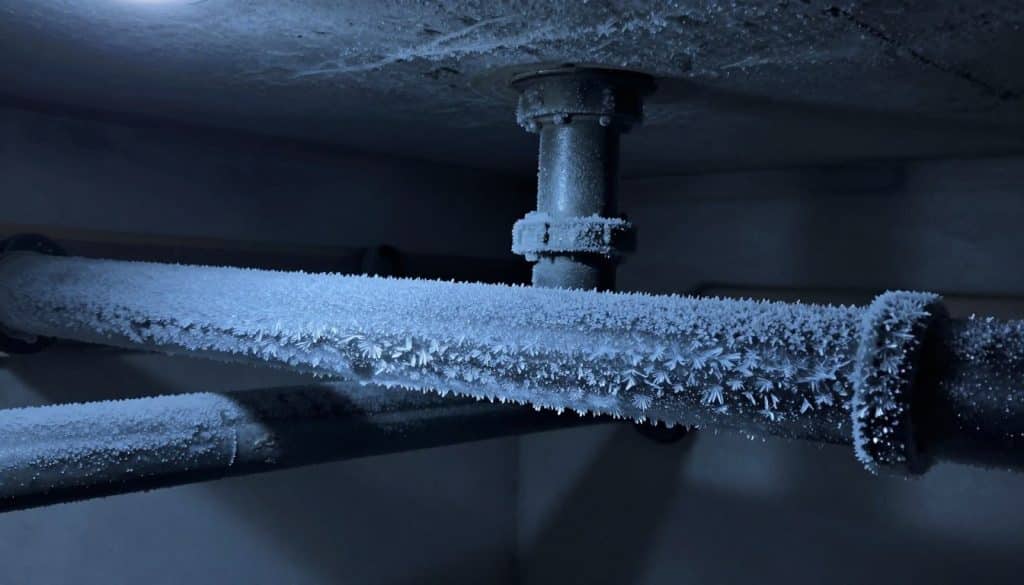
A close-up view of frozen pipes in a dimly lit basement, showcasing frost clinging to the metallic surface. The foreground features ice crystals with intricate designs, glistening under soft ambient light. In the middle, thick, dark pipes are encased in a layer of ice, clearly depicting the problem of freezing in cold weather. The background shows shadows of pipes running along the ceiling, implying a larger plumbing system. Use an atmospheric perspective to accentuate the chill, with a bluish tint to create a cold mood. The image should evoke a sense of urgency and concern regarding plumbing issues in winter.

Where pipes freeze most often in homes

Pipes in unheated, uninsulated areas—attics, basements, garage spaces, and along exterior walls—face the highest risk. Both hot and cold lines can suffer when a heater cycles low or insulation is thin.

  • High-risk areas: unfinished attics, basements, garages, exterior walls
  • Key sign: reduced flow or odd pressure changes
  • Local help: we serve Chicago, IL and nearby areas with fast, family-focused care

Will pipes burst if they freeze?

When cold locks water inside a line, minor troubles can become serious quickly.

Yes — frozen lines can burst, and the risk is real enough to treat a freeze as urgent. The main danger is not the frozen spot alone. When ice forms and blocks flow, trapped water raises internal pressure until the tube fails at a weak joint or thin section.

That failure can look like a small split that grows when the ice thaws, or a full pipe burst that releases gallons fast and causes major damage to your property. The longer the condition persists, the higher the chance of serious harm and costly repairs.

We recommend acting right away: shut off water if needed, relieve pressure, and follow safe thawing steps next. Quick action protects your home in Chicago, IL and nearby areas, and helps us reduce loss and restore service promptly.

  • Key risks: ice blockage, rising pressure, hidden leaks
  • What to watch for: low flow, frost on lines, sudden leaks when warming
  • Immediate step: act now to limit time under stress and reduce damage
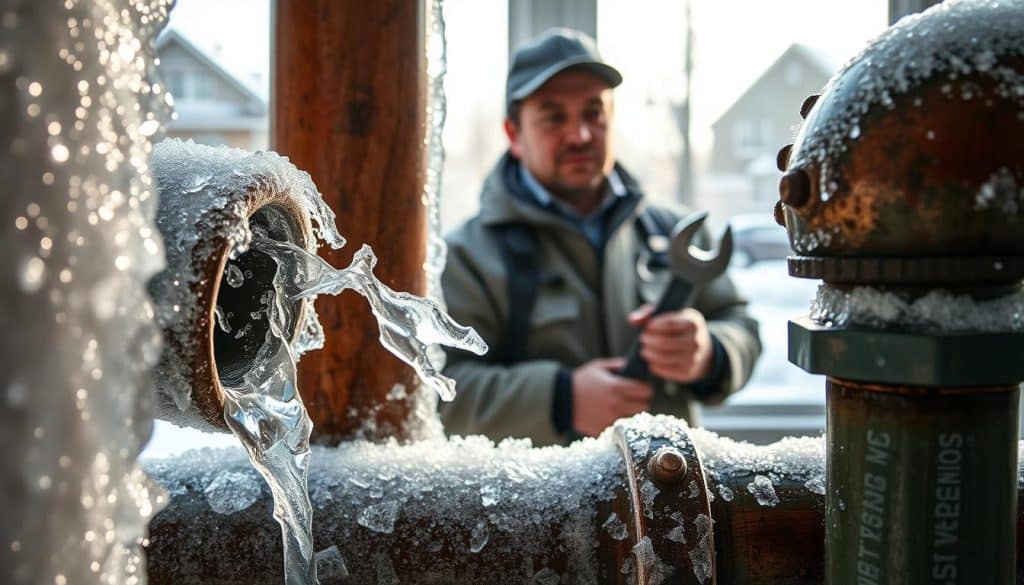
why do pipes burst in the winter - will pipes burst if they freeze

How to protect pipes and what to do when pipes freeze

A few careful steps before winter can protect your home from plumbing emergencies. We help you protect pipes, limit property damage, and reduce repair time with simple, reliable actions.

Prevention checklist:

  • Wrap exposed lines with quality insulation and seal drafts around exterior walls and utility penetrations.
  • Keep steady heat—set your heater no lower than 55°F when away—to reduce the chance temperatures drop enough to harm a line.
  • Open under-sink cabinets and let warm air circulate near vulnerable plumbing.

Outdoor and quick-response tips:

  • Disconnect hoses, drain outdoor faucets, and cover spigots to protect the water supply and reduce damage risk.
  • Run a slow drip from faucets on affected lines to keep water moving and relieve pressure.
  • Locate and test your main shut-off valve now so you can turn water off fast in an emergency.

Spot and thaw safely: Look for low flow, frost on a line, or sudden pressure changes. Keep the faucet open, then apply gentle heat with a hair dryer, heating pad, or space heater—never use open flame.

If a line breaks, turn water off at the main valve immediately, contain water if safe, and call J Sewer & Drain Plumbing Inc. at (773) 968-2704 or email jsewerdrainplumbing@gmail.com. Business Hours Monday to Saturday: 24 hours Open. We’ll help protect your property and get repairs moving fast.
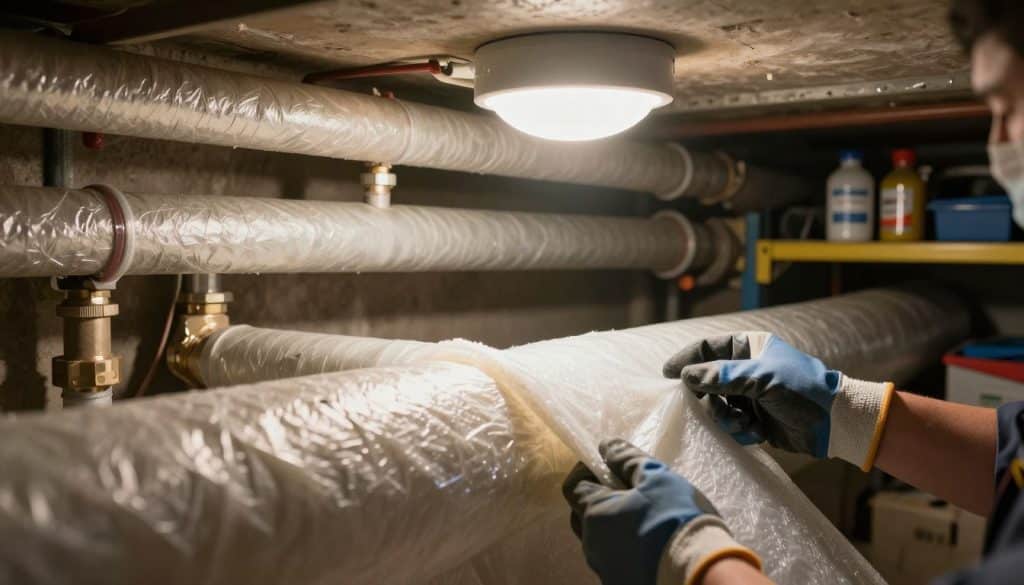
A close-up view of insulated pipes in a basement, showcasing protective foam wrappings and heating tape, emphasizing their importance in preventing freezing. In the foreground, a pair of hands, wearing gloves, is carefully securing a pipe with insulation material. The middle ground features well-organized plumbing fixtures and a bright utility light casting a warm glow, highlighting the textures of the insulation. In the background, a clutter-free, tidy basement space with utility shelves and proper storage of plumbing supplies enhances the professional atmosphere. The image is illuminated by soft, warm lighting to create a cozy yet functional ambiance, reflecting the careful precautions necessary to protect against pipe freezing.

Conclusion

Protecting your home against cold weather damage starts with small, steady actions.

Preparation and quick response are the best defenses. Keep rooms warm, allow airflow near exposed lines, and know where your main shut-off valve is. Gentle thawing and prompt shutoff cut the chance of major water loss and costly repairs.

If you notice low flow or frost on a line, act safely and call for help. We offer winter checks, fast assessments, and emergency service to limit disruption to your household.

J Sewer & Drain Plumbing Inc., family-owned and two-generation since 2017, serves Chicago, IL and nearby areas. Call (773) 968-2704 or email jsewerdrainplumbing@gmail.com. Business Hours Monday to Saturday: 24 hours Open. Offices: Locations: 3343 N Monticello Ave, 3017 N Elston Ave, Chicago, IL; 809 Ridge Rd, Wilmette, IL.


FAQ

Will pipes burst if they freeze? Chicago plumbing experts answer

When water inside a line forms ice, trapped liquid can push against fittings and joints. That pressure often forces a weakness to split, causing a leak or full rupture. In Chicago, rapid temperature drops and uninsulated runs in exterior walls or attics make this a common winter risk. We recommend prompt action at the first sign of freezing to reduce damage and the need for emergency repairs.

Why are frozen pipes a problem in cold weather?

Freezing creates two main hazards: blockages that stop flow and pressure that damages material. Even if the ice doesn’t break a section immediately, an obstruction raises stress elsewhere in the system. Over time, repeated freezing and thawing weakens joints, increasing the chance of costly water damage inside walls, ceilings, and floors.

How does freezing water expand and create pressure inside a pipe?

Water expands by about 9% as it turns to ice. That expansion reduces space inside the line and pushes on surrounding liquid. Because ice can form a solid plug, the trapped water between the plug and closed valves becomes pressurized. That internal force seeks the weakest point — usually a seam or fitting — and can cause a split or blowout.

At what temperatures does the risk of frozen lines increase?

Risk rises once outdoor temperatures drop near or below 20°F, especially during extended cold snaps. Wind chill, prolonged nights, and sudden drops make unprotected runs vulnerable even at slightly higher readings. In Chicago winters, multi-day cold stretches pose the greatest threat.

Where do frozen lines most often occur in homes?

Problem areas include exterior walls, unheated attics, crawl spaces, basements, and garages. Runs that travel through uninsulated cavities or along outside walls, and pipes near windows or poorly sealed doors, are especially prone to cold damage.

Why do lines burst when an ice blockage traps water and pressure builds behind it?

An ice plug blocks movement, so incoming water from the supply side continues to pressurize the trapped section. Because metal and plastic have limits, that concentrated force finds a weak spot and forces a crack or seam to open. The result can be sudden flooding once thawing begins.

How can we prevent frozen lines before temperatures drop?

Insulate exposed runs with foam sleeves or fiberglass, seal gaps where cold air enters, and maintain a steady home temperature. In Chicago, adding heat tape on vulnerable sections and insulating exterior walls offers extra protection. Early preparation is the easiest way to avoid emergency repairs.

How do we protect outdoor faucets and water supply lines?

Disconnect garden hoses, shut and drain exterior shutoffs, and install insulated spigot covers. For supply lines that run along outside walls, add foam insulation or heat tape, and consider relocating vulnerable shut-offs indoors where feasible.

Can we use cabinets and indoor air to warm vulnerable lines near exterior walls?

Yes. Opening sink cabinet doors and allowing warm home air to circulate helps keep lines above freezing. On very cold days, place a small space heater safely nearby or allow warm air from adjacent rooms to flow into the cavity.

Is dripping faucets an effective protection method?

Letting a faucet drip slowly keeps water moving and lowers the chance of an ice plug forming. Run both hot and cold lines slightly to relieve pressure buildup on shared supply sections. This method uses minimal water but can prevent significant damage during prolonged cold spells.

Where is the main water shut-off valve and why confirm it works?

The main shut-off is usually in basements, crawl spaces, or near the water meter. Knowing its location and testing operation before winter lets you stop flow quickly during an emergency, limiting flooding and repair scope. Have a professional like J Sewer & Drain Plumbing Inc. inspect or service stuck valves.

How can we spot a frozen line fast?

Look for reduced or no flow at taps, frost or ice on exposed runs, and unusual pressure changes. Discolored water or gurgling sounds also signal an issue. Early detection helps prevent a minor freeze from becoming a major leak.

What are safe steps to thaw a frozen line?

Apply gentle heat using a hair dryer, heating pad, or portable space heater; never use open flames. Start nearest the faucet and work toward the frozen section, keep the faucet open to relieve pressure, and monitor for leaks. If you cannot reach the area safely, call J Sewer & Drain Plumbing Inc. for professional thawing.

What should we do if a line bursts to limit damage?

Shut off the main water supply immediately, open faucets to drain remaining water, and shut electrical power to affected areas if flooding is present. Move valuables away, document damage with photos, and contact a licensed plumber and your insurance carrier. Quick action reduces repair time and overall cost.

We Always Put Our Customers First

Our 5-star reviews speak for themselves!

How Can We Help You Today?

Our team is standing by and ready to help!

Contact Us keyboard_double_arrow_right