Facing a stubborn, non-flushing fixture can feel urgent and confusing—What should I do if my toilet will not flush at all? Could a simple tank adjustment or a hidden bowl clog be the real cause, rather than a full sewer failure? That quick question helps focus the next safe steps.
We offer a calm, safety-first plan to protect your bathroom and prevent water damage while assessing the issue. Most no-flush situations stem from either a bowl or drain blockage, or a tank mechanism like the flapper, chain, or low water level.
At-home fixes often clear basic clogs or reset tank parts; persistent backups, repeated water loss, or sewage odors point to deeper line problems needing professional care.
As a family-owned Chicago team, J Sewer & Drain Plumbing Inc. treats every customer like family. For urgent or recurring concerns, reach us any day, Monday through Saturday, 24 hours: call (773) 968-2704 or email jsewerdrainplumbing@gmail.com. Offices: 3343 N Monticello Ave, 3017 N Elston Ave, Chicago, IL; 809 Ridge Rd, Wilmette, IL.
Key Takeaways
- Prioritize stopping overflow and protecting floors first.
- Two main cause groups: bowl/drain blockage or tank mechanism failure.
- Basic clog clearing and simple tank fixes are often DIY-safe.
- Avoid harsh chemical drains; they can harm pipes and fixtures.
- Call J Sewer & Drain Plumbing Inc. for urgent, recurring, or complex issues.
Before You Do Anything: Prevent Overflow and Protect Your Bathroom
First, protect your space and stop extra water from spreading. We guide you through simple, safe steps that reduce damage while preserving options for repair.
Shut off the supply valve beside the base of the toilet right away. That stops continuous filling and lowers the risk of overflow when the water level is high in the bowl.
Remove excess water from the toilet bowl using a small container or cup. Clearing space in the bowl makes plunging or gentle hot-water methods safer and cleaner.
Watch for warning signs: water rising toward the rim, slow drainage, or a handle that feels inactive. Each hint points to different issues—a rising water level often means a blockage downstream; slow drainage suggests partial clogging; an inactive handle signals tank or linkage problems.
- Do not flush again when water sits high—repeated flushing can spill water and spread contamination.
- Avoid aggressive chemical products; they can damage porcelain and pipes and make plumbing tasks more hazardous.
- Follow a stepwise troubleshooting order: least invasive methods first, then tools like a flange plunger or auger if needed.
If you have a single bathroom or manage a property, shut the water off early and call us. We are available 24 hours, Monday–Saturday in Chicago and nearby areas, ready to prevent a small problem from becoming a major cleanup and repair job.
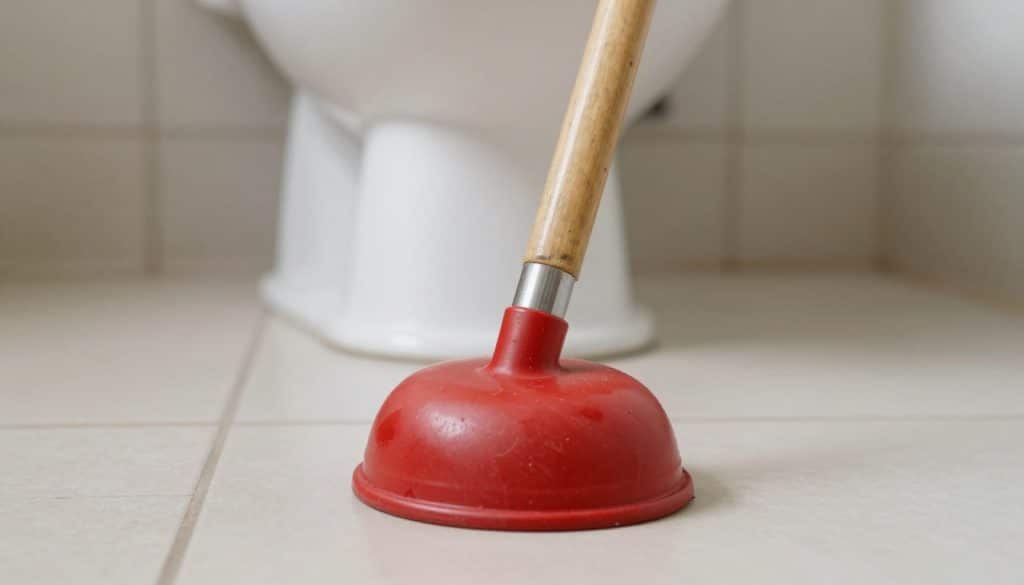
What should I do if my toilet will not flush at all?
Begin with simple, proven actions that increase water flow and limit mess. Gather a flange plunger, an auger, dish soap, and a towel before you start.
Pick the right plunger and make a tight seal
Use a flange plunger designed for a bowl. Ensure enough water covers the rubber so you get suction without splashing.
Plunge the correct way
Press gently first to release trapped air, then plunge firmly for 20–30 seconds. Watch for the water level to drop or swirl—those signs mean progress.
When the clog is deeper
Feed a toilet auger into the drain, crank to break the blockage, then retract slowly and test the flush.
Safe chemical-free options
- Add ½ cup dish soap, then pour one gallon hot (not boiling) water into the bowl; wait 10–15 minutes and test.
- Pour 1 cup baking soda, then 2 cups vinegar; wait ~30 minutes, then flush. Repeat once if needed.
- Only use a straightened wire wrapped with tape for reachable debris, probing gently to avoid scratches.
Give clogs time to soften between attempts. If multiple efforts fail, repeated blockages occur, or the issue seems deep, call J Sewer & Drain Plumbing Inc. (Chicago, Mon–Sat, 24 hours) for professional help.
Check the Toilet Tank: Common Parts That Stop a Flush
A quick look inside the tank often reveals a simple part failure that stops a reliable flush. We shift from the bowl to the tank because many problems are mechanical, not in the drain.
Fix a disconnected or broken chain
When the handle feels loose or inactive, inspect the chain between the handle arm and flapper. A slipped or broken chain will prevent lift. Reattach the chain and set a slight tension. It must lift the flapper without holding it open.
Replace a cracked or warped rubber flapper
A worn or warped rubber flapper cannot seal the valve properly. Turn off water, drain the tank, remove the old flapper, and snap a new flapper into place. A good seal stops running water and restores a strong toilet flush.
Inspect handle arm, lift wire, and valve connections
Check the handle arm, lift wire, and flush valve at the bottom of the tank for corrosion or loose clips. Small misalignments cause big issues. Be gentle—overtightening can make leaks worse.
- Reconnect a slipped chain, adjust length for slight tension.
- Replace damaged flapper with a compatible rubber part.
- Call J Sewer & Drain Plumbing Inc. for corroded parts, repeated running, or recurring problems; we protect your home and handle tank repairs quickly for Chicago-area properties.
Restore Proper Water Level and Pressure in the Tank
A balanced tank level and reliable refill action restore most lost flush power quickly. Confirm the tank water level sits about an inch below the overflow tube. That level gives the pressure and volume needed to move waste through the trapway.
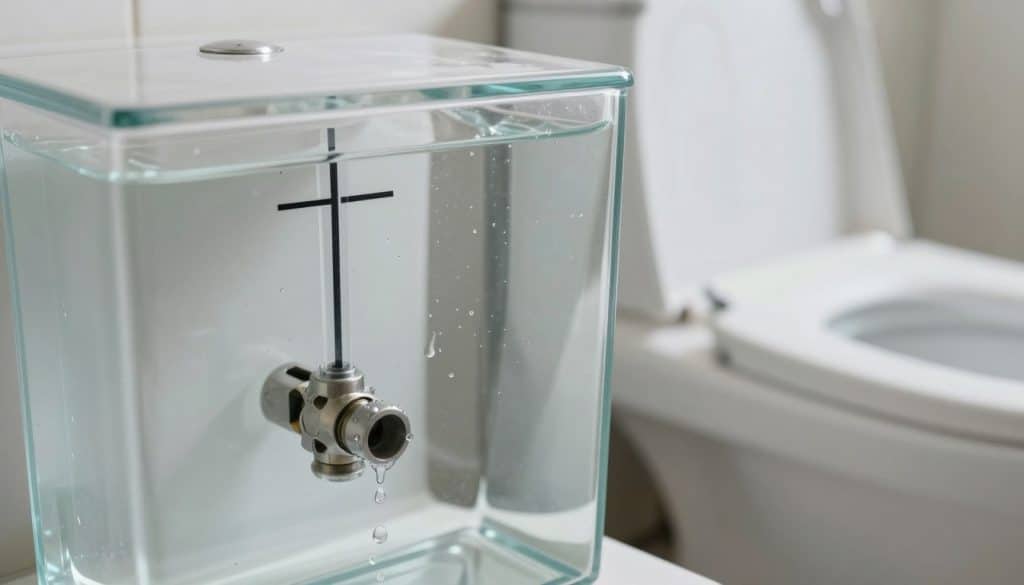
Confirm and adjust the tank water level
Look for the fill mark or set the surface about 1 inch below the overflow. If the level is low, raise the float slightly to increase water and improve a flush toilet’s performance.
Fix float and fill valve problems
Adjust the float using its screw or clip, depending on the model. Watch for a stuck float or a valve that won’t fill the tank reliably. Signs of a failing fill valve include slow refill, inconsistent level, or no refill at all.
Clear inlet holes and check water flow
Mineral buildup can block inlet holes under the rim and cut water flow into the bowl. Gently clean them with a small brush or toothpick to restore rinse action without harming parts.
- Quick checks: confirm the supply valve is open and the float moves freely.
- When to call us: replacements, persistent low pressure, or recurring level loss need professional diagnosis.
When It’s Not the Toilet: Drain Line and Pipe Problems to Watch For
Signs that the problem lives beyond the bowl often point to the home’s drain lines, not the fixture.
Recognize signs of a deeper issue
Recurring clogs, slow drains in sinks and tubs, or backups that appear in multiple places suggest a main-line blockage or damaged pipe. Gurgling sounds and water near the base of fixtures are red flags.
Common causes we find in the field
Grease buildup, flushed foreign objects, tree roots intruding, and collapsed or damaged pipe runs are frequent culprits. A small problem in the system can mirror repeated fixture-level problems.
How pipe slope and design affect flow
Proper slope keeps wastewater moving; the general target is 1/4 inch per foot. Too flat allows pooling and buildup, while too steep can erode joints and cause long-term wear. Both lead to weak flush performance and recurring issues.
- Call a plumber now if multiple fixtures back up, you hear gurgling, or clogs return quickly.
- We offer fast response in Chicago, IL and nearby areas, Monday–Saturday, 24 hours for suspected main-line or system problems.
How to Prevent Future No-Flush Problems in Your Home
A few family-friendly practices go a long way toward steady, worry-free bathroom performance. Keep clear rules and a short care routine so small wear does not become a big repair.
Flush only toilet paper and waste
Teach everyone in the house to flush only toilet paper and waste. Avoid wipes, feminine products, and other paper-like items that clog drains and stress the system.
Routine checks for tank parts and seals
Inspect the tank each season. Look at the flapper, handle action, and the valve for signs of wear. A quick seal swap or small adjustment saves time and money.
Watch for running water and ghost refills
Listen for quiet running after a flush and watch the water level at the bottom of the tank. Those signs often point to a leaky flapper or a failing valve. Catching this early lets us make a simple repair today.
- Household rule: only flush toilet paper and human waste.
- Quarterly check: flapper seal, handle, and valve action.
- Property managers: log recurring units with issues so patterns are easy to spot.
Prevention protects your home and your budget. We offer honest, family-first help in Chicago, IL and nearby areas, ready to inspect parts and recommend fair repairs when they make sense.
Conclusion
A short, practical summary makes it easier to move from quick fixes to pro help.
Stepwise check: stop overflow and remove excess water, clear bowl clogs with a flange plunger or auger, inspect tank parts like chain and flapper, then set the tank water level and check the fill valve. If the problem persists, suspect the drain line or a larger plumbing issue.
Protect your home: halt running water early, avoid harsh chemicals, and call for help when problems repeat or worsen.
Contact J Sewer & Drain Plumbing Inc. — family-owned since 2017, two generations serving Chicago, IL and nearby areas. Call (773) 968-2704 or email jsewerdrainplumbing@gmail.com. Monday–Saturday: 24 hours Open.
Offices: 3343 N Monticello Ave, Chicago, IL 60618 | 809 Ridge Rd, Wilmette, IL 60091 | 3017 N Elston Ave, Chicago, IL 60618. We treat every customer like family and deliver dependable plumbing repairs with respect.