Curious when a quick video can save you time and money? We ask this because clear sight beats guesswork.
At J Sewer & Drain Plumbing Inc., a family-owned, two-generation Chicago team (est. 2017), we treat your home like family. We serve Chicago, IL and nearby neighborhoods with friendly, professional service.
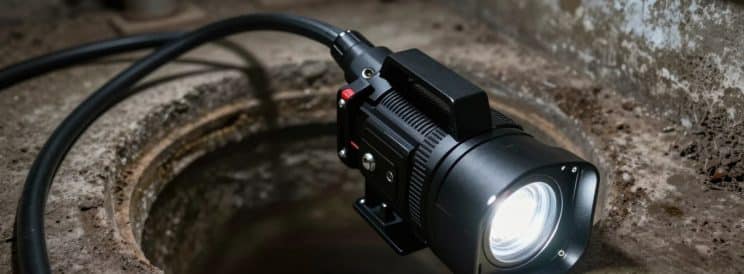
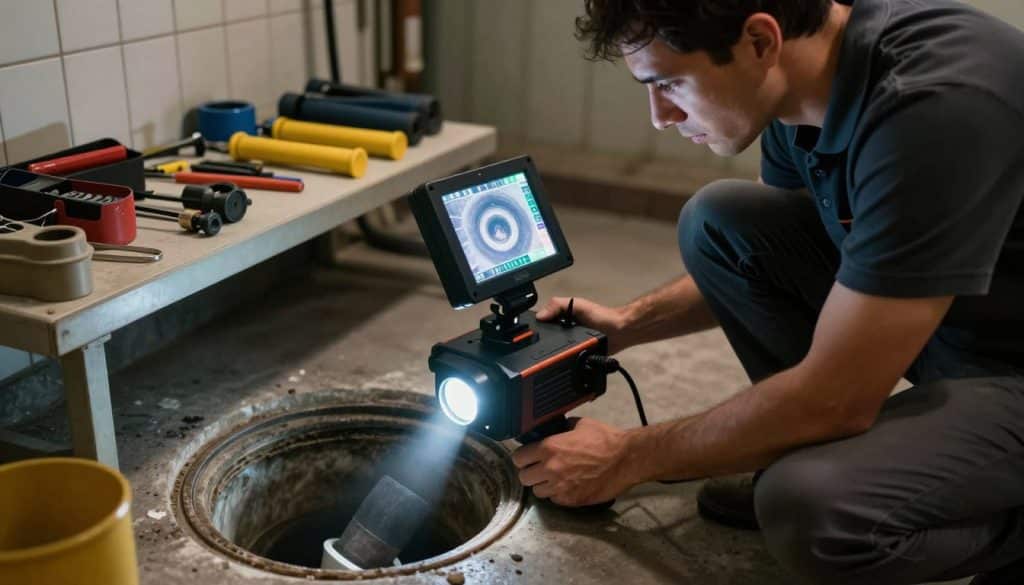
Modern video technology lets our plumbers see inside sewer line piping in real time using a high-resolution, waterproof camera on a flexible rod. The live monitor feed reduces digging and guesswork, so repairs come with proof, not guesswork.
In this short guide we define the core question — “What is a drain camera inspection, and how does it work?” — in plain language. You will learn what happens during a visit, what equipment we use, and the homeowner outcomes: faster diagnosis, fewer repeat clogs, and smarter repair choices.
Call (773) 968-2704 or email jsewerdrainplumbing@gmail.com to schedule and feel confident in your home.
Key Takeaways
- We use video tools to inspect plumbing and sewer lines with precision.
- Visual evidence helps you approve work based on facts, not guesses.
- Inspections often mean faster fixes and fewer repeat clogs.
- Our team serves Chicago-area homes with family-first care and clear communication.
- This guide maps equipment, steps, common findings, and when to call us.
What a drain camera inspection is and why homeowners use it
A clear video feed from inside your piping gives homeowners direct proof of what’s wrong. The technician watches live video in real time, so you see the same view we see. That visual record turns vague symptoms into a definite diagnosis.
A real-time look inside your plumbing and sewer system
We send a waterproof camera through the line to show joints, roots, and blockages. You get footage that confirms the exact location of the issue.
How video footage removes guesswork in diagnosing drain issues
Slow drains, recurring clogs, or backups often point to several possible causes. Live video lets us move from “maybe roots” to “roots at nine feet,” which cuts uncertainty and builds trust.
Why this modern inspection method is less invasive than digging
Rather than opening walls or digging your yard, we pinpoint the problem first. This saves time, lowers repair costs, and protects your property.
- Faster: narrow solutions quickly
- Clear: evidence-based recommendations
- Respectful: minimal disruption to your systems
What is a drain camera inspection, and how does it work?
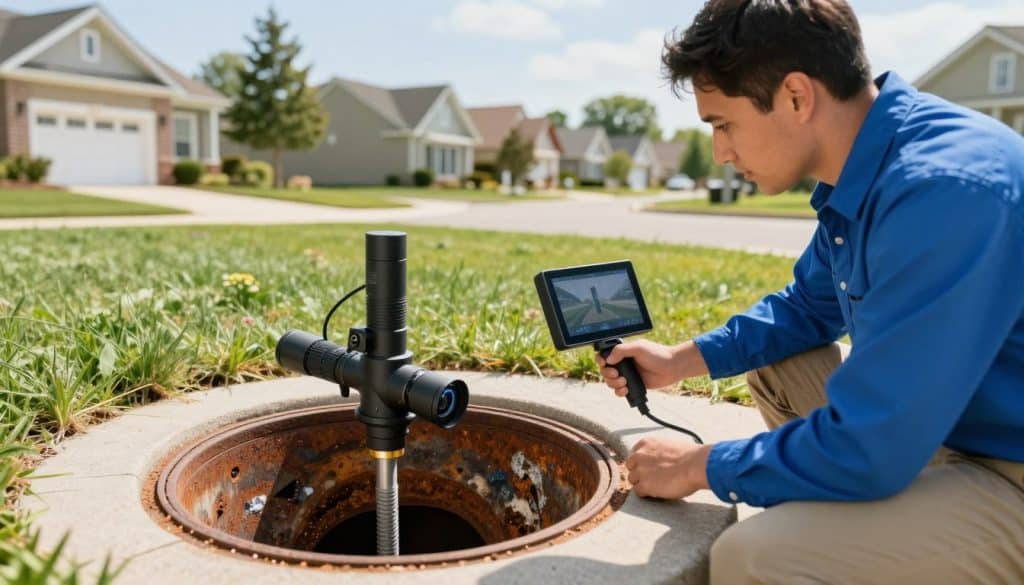
We guide a slim, high-resolution probe through problem lines so you and our team see the issue in real time. The device rides on a flexible rod and sends a live video view to a monitor. That direct feed lets us pinpoint trouble without unnecessary digging.
Entry points vary by home. We often use an outdoor cleanout, a basement floor drain, or even a toilet when that gives the safest, most direct route into the sewer line. The choice depends on pipe access and your Chicago home’s layout.
Camera inspections do not fix problems — they identify them. During the visit you’ll see buildup, roots, cracks, or blockages, and we’ll explain what each point on screen means.
- Clear view: live footage shows exact cause and location.
- Minimal disruption: no digging unless needed for repairs.
- Next steps: targeted cleaning, repair planning, or sign‑off when the line is sound.
The equipment plumbers use for sewer camera inspections
Our gear combines rugged build quality with clear optics so we can inspect lines without guesswork. We bring tools designed to protect your home while giving clear evidence of any problem.
Waterproof high-resolution head on a flexible rod
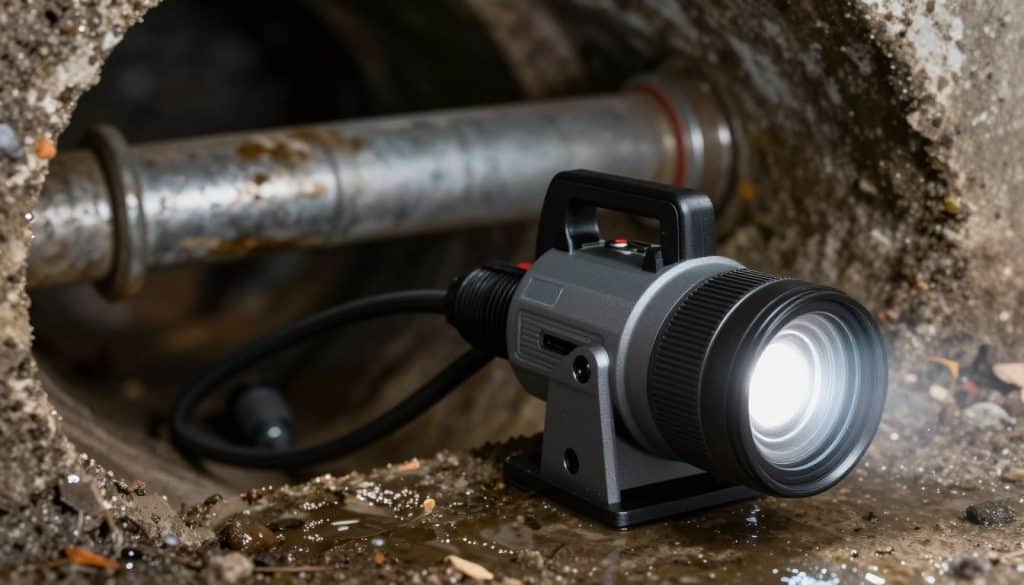
A sealed, high-definition head rides on a flexible metal hose or rod that navigates bends and joints. The unit stays stable while moving, so footage remains sharp as we pass through pipes.
Bright LED lighting and the on-screen point of view
Built-in LEDs light the interior so the screen view reveals cracks, roots, and buildup. Without that light, the on-screen image would be too dark to diagnose accurately.
Depth, distance, and precise locating
Many rigs log distance as the probe advances, so we can mark the exact spot for repair. Knowing depth reduces digging and protects your yard and floors.
Recording, screenshots, and sharing in real time
Digital recording captures footage and stills for your records. When available, we can send live video or files via Wi‑Fi or email so you see results right away.
- Clear evidence: live video helps plan repairs.
- Less disruption: precise locating means targeted fixes.
- Transparent results: recorded footage for your files.
Step-by-step process for a video drain camera inspection
Our process starts with a quick evaluation to decide which access point gives the straightest, safest route. We commonly use the outdoor cleanout, a basement floor drain, or a toilet, chosen to protect your property while reaching the sewer line.
Careful navigation through bends and joints
We feed a flexible rod through the pipe slowly, guiding the head around bends and changes in diameter. This protects pipes and keeps the on-screen view steady so we can read the footage clearly.
Interpreting the live view and capturing evidence
While watching the screen, we note patterns that point to clogs, root intrusion, or damage. We capture digital video and screenshots for your records and for planning repairs.
Marking the exact point for targeted repairs
Distance logging lets us mark depth and location precisely. That detail keeps repairs focused, reduces digging, and saves you time and money.
- Result: faster diagnosis
- Benefit: fewer repeat calls
- Next step: discuss cleaning or repair options based on urgency and budget
What problems a camera inspection can reveal inside drain and sewer lines
Live footage from inside your sewer line lets us spot problems without guesswork. That view shows exactly what blocks flow and where repairs belong. We focus on findings that matter most to homeowners, so you can protect your home and avoid repeat issues.
Tree roots and underground obstructions: Tree roots enter tiny cracks, then grow into major blockages. On screen, roots look like dark filaments pushing into the pipe. When we see roots, we recommend targeted removal or further repair to stop return visits.
Grease, debris, and recurring clogs: Built-up grease and household debris create slow-flow patterns and repeated clogs. Video helps decide between cleaning versus an upgrade to prevent future buildup.
Structural damage and misalignment: Cracks, corrosion, punctures, misaligned joints, and collapsed sections show as breaks or shifts on the feed. These defects usually need more than cleaning; they call for focused repair or replacement.
Foreign objects and hidden damage: Toys, wipes, and other objects can lodge at joints and narrow spots, causing backups and overflow. The recorded footage guides our recommendation—cleaning when possible, targeted repair when necessary.
- Clear evidence: pinpoint cause and location
- Protected property: less digging, fewer surprises
- Smart next steps: cleaning vs targeted repair explained
When to schedule a drain camera inspection in Chicago, IL and nearby areas
If multiple fixtures slow at once, that pattern often signals a deeper issue below the surface. Quick visual diagnosis gives clarity so you avoid repeated service calls.
Warning signs that call for a plumber now
Frequent backups, persistent clogs, gurgling sounds, or odd smells point to problems in the sewer or main line, not just one fixture. When several drains act up, call us for a camera-based check.
After an overflow or backup
An overflowing toilet or a heavy backup needs prompt assessment. We can insert the camera through a toilet or cleanout to locate the block and stop further water damage.
Before buying an older home
Older Chicago houses often have hidden sewer line wear from trees, shifting soil, or aging materials. A pre-purchase inspection protects your property and negotiation power.
- Checklist for homeowners: repeated clogs, gurgles, slow drains in multiple rooms, bad odors, recent overflows.
- After the visit: we provide clear findings, marked locations, and straightforward repair or cleaning options.
- Local promise: family-owned service in Chicago, IL and nearby areas, available Monday–Saturday with 24-hour support when needed.
When symptoms match any bullet above, call J Sewer & Drain Plumbing Inc. We treat your home like family and aim to fix the right problem the first time.
Conclusion
Seeing the problem first saves time, money, and needless digging. A quick camera inspection gives clear evidence from inside your sewer line so choices rely on fact, not guesswork.
We are J Sewer & Drain Plumbing Inc., family-owned, two-generation, established 2017, proud to serve Chicago, IL and nearby areas. When we recommend work, we show footage from the sewer camera and explain options in plain language.
Call (773) 968-2704 or email jsewerdrainplumbing@gmail.com to schedule. Offices: 3343 N Monticello Ave, 3017 N Elston Ave, Chicago, IL; 809 Ridge Rd, Wilmette, IL.
Availability: Monday–Saturday, 24 hours open. Reach out and we’ll protect your home with transparent service and friendly expertise.