Have you ever wondered how fast a hidden leak can turn a quiet house into an urgent crisis? A timely water pipe repair can prevent hidden leaks from escalating into costly structural damage and higher utility bills.
We are J Sewer & Drain Plumbing Inc., a family-owned, two-generation team serving Chicago and nearby towns since 2017. We treat every customer like family and act quickly to limit damage when a line fails. Our mission is simple: protect your property with clear guidance and professional service.
We offer 24-hour response, Monday through Saturday, and support both homes and businesses with transparent options. Small pinhole leaks and joint cracks need fast action, and major bursts demand immediate shutoff and a licensed crew on site.
In this guide, we preview immediate steps, safe short-term patches, how to spot different pipes, and when a permanent fix is the safer choice. For help now, call (773) 968-2704 or email jsewerdrainplumbing@gmail.com.
Visit us at 3343 N Monticello Ave, 3017 N Elston Ave, Chicago, IL; 809 Ridge Rd, Wilmette, IL.
Key Takeaways
- Fast action cuts damage—shut off when you spot a leak and call us.
- We are a family-owned Chicago company offering residential and commercial services.
- Temporary fixes can help, but licensed work ensures code compliance and durability.
- Our team is available for a 24-hour response, Monday–Saturday.
- Contact info and three local locations are listed for immediate support.
What to Do Immediately When a Pipe Starts Leaking
A sudden leak can force quick choices — your first actions decide how much harm follows. Stay calm, move family members to safety, and follow simple steps while help is on the way from our Chicago team.
Shut off the nearest valve or the main supply
Find the closest shutoff and turn it off first. If the leak continues, close the main to stop flow and buy time for the service crew.
Protect your home and avoid electrical hazards
If leaking is near outlets or appliances, switch off power to that area. Use a non-contact tester if you have one, and do not step into standing liquid near live circuits.
Document the situation and contain waste fast
- Take photos and short video of the leak and affected areas for insurance and diagnosis.
- Contain flow with buckets and towels, move valuables away, and limit additional waste.
- If you suspect high water pressure is making things worse, shut off sooner and call us.
If you’re unsure, stop and call us at (773) 968-2704. We treat every family like our own and offer rapid response across Chicago and nearby towns.
Safety First Before Any Pipe Repair Work
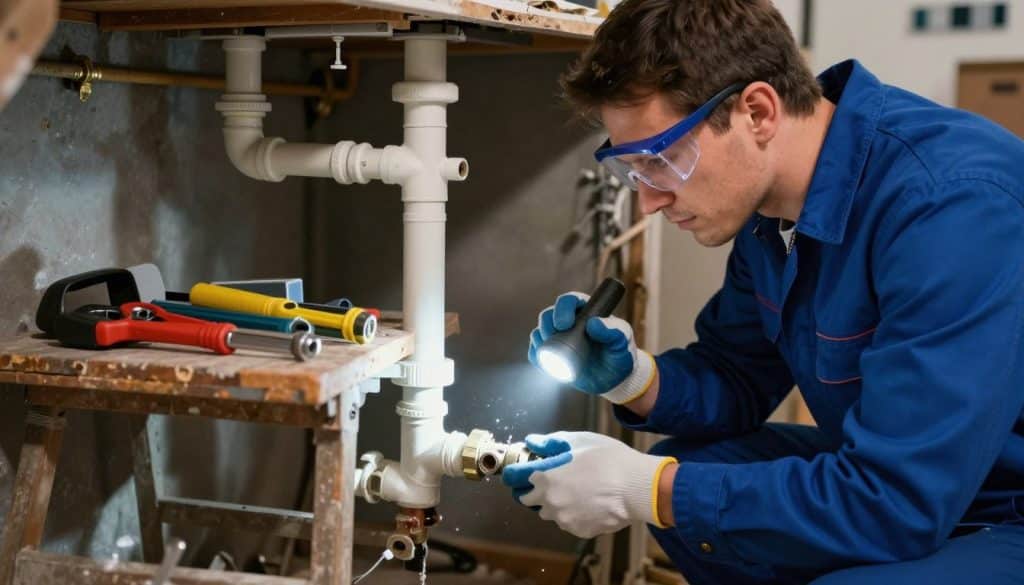
Before you touch anything, make safety your top priority. Start by isolating supply and power to the affected area, then assess risks to people and property. Small steps now can prevent bigger issues later.
Why temporary fixes are not permanent plumbing repairs
Emergency patches can limit an active leak and buy time, but they rarely hold under repeated pressure or corrosion. A quick clamp or wrap is a stopgap. Without a permanent replacement or proper joining, the same section can fail again and cause more damage.
When to stop and call a licensed plumber
- Recurring leaks or visible structural damage.
- Any leak inside ceilings, walls, or under floors.
- Uncertainty about material, fittings, or how to restore safe pressure.
- When gas lines or electrical hazards are present—do not attempt fixes yourself.
We encourage homeowners to shut off supplies and wait for pros if they feel unsure. J Sewer & Drain Plumbing Inc. offers responsive services across Chicago, and we prioritize safety, transparency, and lasting repairs. Call us when you need durable, code-compliant solutions.
How to Identify Your Pipe Type and Choose Compatible Repair Products
Knowing which material runs behind your wall saves time and prevents costly mistakes. We walk you through simple clues to tell copper, galvanized steel, PVC, CPVC, and PEX apart, so you select safe, code‑aware products for the job.
Copper vs. galvanized steel vs. PVC vs. CPVC vs. PEX
Copper looks metallic and feels solid; it often leaks at pinholes or soldered joints. Galvanized steel is heavy, threaded, and may show rust or scaling at fittings.
PVC and CPVC are rigid plastics—PVC is white and common for non‑heat lines; CPVC is cream or off‑white and rated for hotter temperatures. PEX is flexible tubing, often red, blue, or white, and connects with crimps or push fittings.
Matching products to potable lines and sizing concerns
Choose products labeled for drinking‑line contact when the line serves sinks, showers, or appliances. Materials must carry a potable‑water rating to meet code and avoid contamination.
Diameter matters: small sections need slim clamps or couplings, while larger lines require heavier coupling systems or slip fittings. Also, check product pressure and temperature ratings—some patches work on low pressure but fail on higher systems.
- We help you ID materials by look and feel, so you don’t guess when buying parts.
- We explain which products are compatible with metal, rigid plastic, or PEX connections.
- If you’re unsure of material or diameter, we’ll confirm it and recommend a safe, lasting solution.
Contact us and we’ll inspect the line, confirm diameter and material, and advise on code‑compliant products or permanent options for Chicago homes and businesses.
Diagnosing the Leak Source and Severity
Identifying the source and scope of a leak quickly lets you limit harm and choose the right fix. We guide you through simple checks so you know what to expect and when to call for professional help across Chicago and nearby areas.
Small pinhole drips, joint seepage, and visible cracks
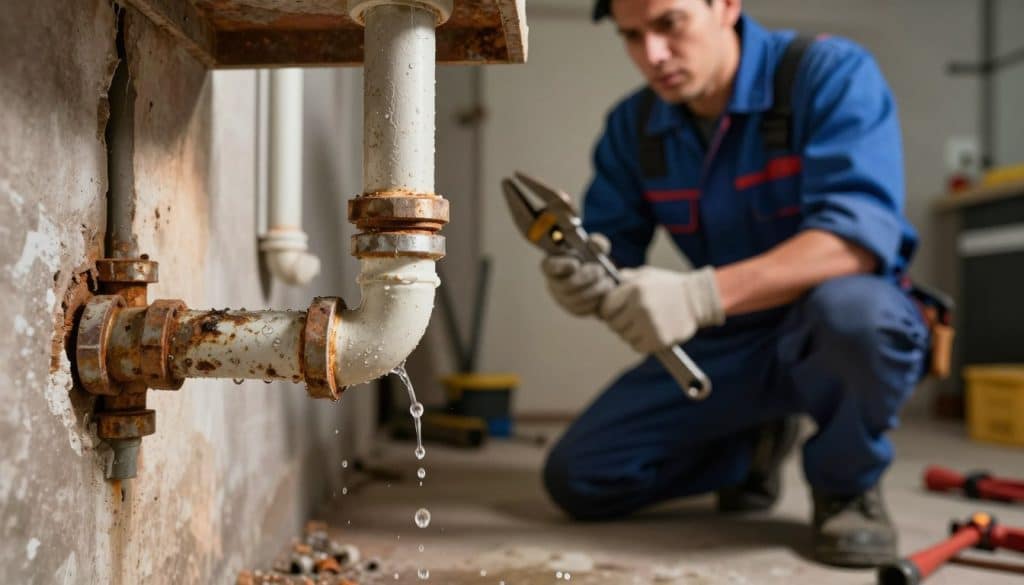
Start by categorizing what you see: a pinhole spray, a slow joint seep, or a clear crack. Pinhole and joint leaks can drip for months and lead to mold and rot if left unchecked.
Hidden leaks behind walls, ceilings, and under floors
Quiet leaks often show subtle signs — musty smells, peeling paint, or an unexplained spike in your bill. Check for soft spots in ceilings and floors before tearing finishes out.
We offer non‑invasive detection to pinpoint hidden routes and limit demolition when possible.
Signs of an underground line issue outside
- Persistent soggy or greener patches in the yard.
- Hissing or rumbling sounds near the ground, and sudden low water pressure.
- Cracks or sinking in pavement above a failing line.
Severity ties directly to property risk — unchecked leaks can cause mold, structural damage, and drain or infrastructure failures. If you suspect a leaking pipe or an underground line issue, call us. We’ll locate the source, explain options, and help you act quickly to protect your home or business.
Water Pipe Repair: Temporary Fixes You Can Do in an Emergency
When a sudden leak starts, a few quick steps can limit damage and buy you time for a permanent fix. Below are safe, short-term methods to reduce pooling and protect finishes until our team arrives.
Self-fusing wrap tape stretches and overlaps so it bonds to itself and compresses around the hole. Some varieties work even if you can’t fully shut off the supply. Use firm tension and wrap well past the damaged area.
Epoxy putty
Clean and dry the surface, roughen it, then knead the putty until uniform. Press it firmly over cracks or small holes and smooth the edges. It sets fast but is a stopgap, not a permanent join.
Repair cast kits
These combine a sealing putty with a resin-impregnated wrap. Apply the putty first, then wrap and allow the resin to harden for stronger reinforcement under moderate pressure.
Clamps and rubber-gasket band fixes
Position the gasket over the leak and center the metal band. Tighten evenly; do not overtighten, which can deform the line and worsen the leak.
- Remember: pressure and material condition affect how long a temporary patch holds.
- We recommend calling us promptly so we can evaluate and complete a permanent, code-compliant repair.
How to Repair a Leaking Pipe Step by Step and Test Your Work
A careful, repeatable approach will help you stop active leaking and confirm the fix holds under pressure. Follow these steps to make a safe temporary fix and test it before you restore full service.
Prepare the surface for a lasting bond
Shut off the supply and remove standing liquid from the area. Wipe the metal or plastic clean of dirt, grease, and mineral buildup.
Dry the section thoroughly. For some sealants, roughen the surface with sandpaper so the material grips better.
Apply the patch and restore pressure slowly
- Follow the product instructions and center the patch over the damaged area.
- Allow curing time before testing—some putties set quickly, others need longer.
- Open the supply valve slowly, increasing pressure in stages while watching the joint.
Check for recurring leaks and when to stop
Watch the repair point closely for several minutes and again after 30–60 minutes. Some leaks reappear as pressure stabilizes.
If the seal fails, do not keep re-patching repeatedly. Repeated fixes waste time and can cause more damage. Call J Sewer & Drain Plumbing Inc. for a durable, code‑compliant solution.
Cleanup and reduce mold or structural risk
- Remove pooled liquid, dry surfaces, and increase airflow with fans or dehumidifiers.
- Inspect nearby finishes and insulation for damp spots that may hide damage.
- Consider professional drying or mold remediation if materials stayed wet for long.
We’re ready to help across Chicago if you need a permanent fix, testing tools, or full restoration after repeated leaks. Call us when you want experienced, family‑focused plumbing care.
Fixing Burst Pipes and High-Water-Pressure Problems
When a main line fails, the volume and force of the flow make every second count. Fast shutoff limits damage and gives you time to choose the right fix. A true burst is different from a slow leak — it releases large flow quickly and can flood rooms or compromise infrastructure.
Common causes include corrosion in older metal and steel lines, water hammer shockwaves from closed valves, and sudden pressure spikes from supply issues. These conditions often point to a system problem, not just one bad section.
How pressure and flow change the outcome
High pressure and fast flow can defeat temporary patches. Thin walls or corroded sections fail under stress, and clamps or wraps may slip or split over time.
When replacement is the safer option
Replace a section when you see repeated failures, visible thinning, or extensive corrosion. A new segment restores strength and reduces the chance of future emergencies.
- Act fast: shut off supply to limit damage and call for diagnosis.
- Check home pressure; consider a PRV to keep water pressure in a safe range (commonly 50–70 psi).
- Have professionals evaluate whether a section replacement or full line upgrade is right for your home.
We will diagnose root causes, test system pressure, and recommend durable pipe repair or replacement that protects your property long term. Call J Sewer & Drain Plumbing Inc. for experienced, homeowner-focused service across Chicago.
Slip Couplings and Section Replacement for Copper and CPVC Pipes
For short runs of damaged copper or CPVC, replacing a small section often beats repeated patches. This method restores strength and reduces the chance of more leaks later.
Cutting the damaged part with square, clean cuts
Shut the supply and cut out the damaged part of the line with a tubing cutter or saw. Make square, clean cuts so the coupling seats evenly.
Deburr and smooth each edge. Sharp burrs can damage seals and cause future failure.
Push-to-connect slip couplings and marking insertion depth
Measure the pipe diameter and mark insertion depth on both ends using the coupling’s depth gauge. Slide the slip coupling fully onto one end, then back over the other using the release tool if needed.
Align depth marks so the fitting seats correctly. Test under low pressure first and watch the joint.
- When to replace: choose section replacement when leaks cluster around a weak area or material looks thin.
- Material note: confirm copper vs. PVC compatibility and buy rated products.
If you’re unsure about code, material compatibility, or high pressure systems, we can complete the work professionally and to code. Call us for help with any permanent repair.
Repairing PEX Pipe Leaks at Connections
PEX connection leaks usually show up at fittings long before the tubing itself fails. We reassure you this is common and fixable with the right tools and testing.
How crimp rings fail and what go/no-go testing checks
Crimp rings can under-seat, skew, or be compressed unevenly. Under-crimping lets a slow leak form as system pressure rises.
A go/no-go gauge measures ring diameter and clearance. Passing the gauge shows the crimp meets factory specs for a dependable seal.
Re-crimping correctly to stop leaks without damaging the line
If the ring fails the gauge, cut the fitting and reuse a fresh ring and fitting when required. Use a calibrated PEX crimp tool and mark insertion depth before you crimp.
- Remove the old ring and clean the tubing end.
- Slide a new ring on, insert the fitting to the depth mark, then crimp squarely.
- Test with the go/no-go gauge, then pressurize slowly and watch for leaking.
- Confirm the connection type—crimp, clamp, or push-fit—before you use tools.
- Re-crimping more than once risks damaging the tubing; call us if access is tight or the leak persists.
We are ready to help across Chicago when you want a secure, code‑aware fix and professional testing.
When to Call a Pro for Leak Detection, Water Line Repair, or Gas Line Safety
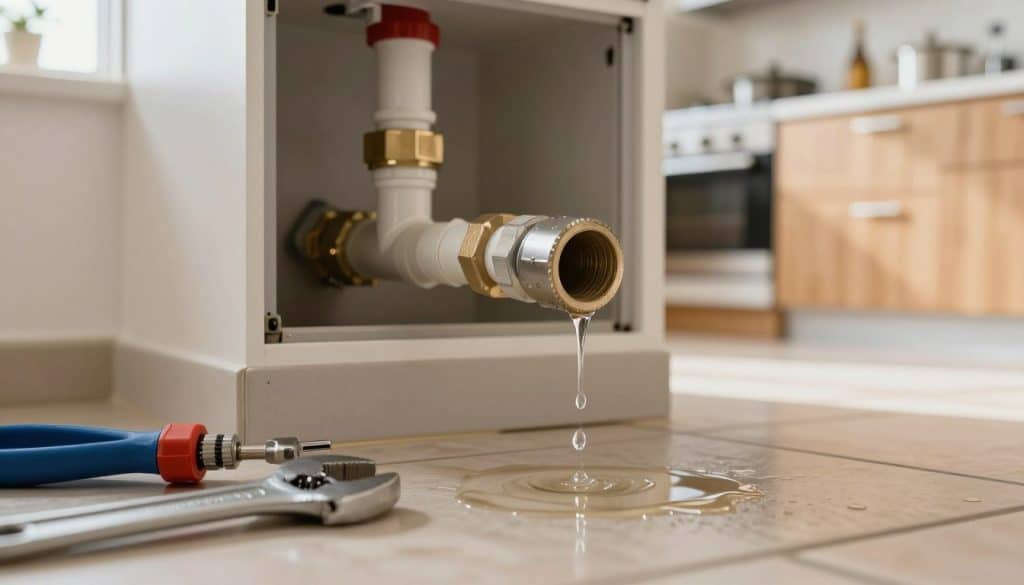
Not all leaks announce themselves loudly—small clues can point to large, hidden problems under slabs or behind walls. If you notice warm spots, the sound of running water with no tap on, or new cracks in floors or drywall, call us right away.
Warning signs of slab leaks and major infrastructure damage
Warm floors, unexplained increases in bills, or soggy patches outside suggest a slab or underground line problem. These issues can harm foundation and landscaping and need professional leak detection.
Trenchless vs. traditional excavation for water line repairs
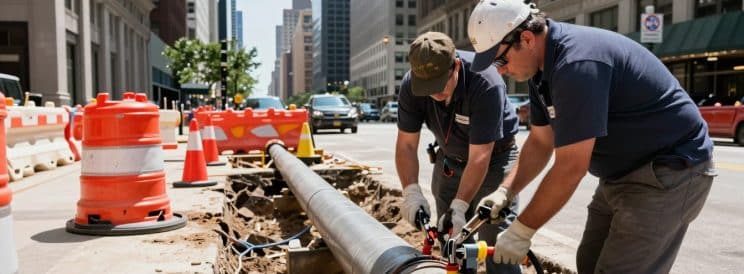
Trenchless methods limit digging and shorten project time. Traditional excavation may be needed for severe damage or complex access. We evaluate the site and recommend the least disruptive option that meets code.
Gas line safety: what to do if you smell gas and why not to DIY
If you smell gas or hear hissing, leave immediately, go to a safe location outside, and call 911 from a phone away from the building. Do not switch lights, use phones, or try DIY fixes on gas lines—call professionals trained in gas safety.
Commercial plumbing impacts and minimizing downtime for businesses
Leaks and burst lines can close stores or interrupt services. We prioritize fast diagnosis, temporary containment, and efficient pipe repair or replacement to reduce lost revenue and wasted time.
- Red flags: suspected slab leaks, recurring leaks, sudden pressure drops, or visible infrastructure damage.
- We provide: expert leak detection, trenchless and traditional options, gas safety response, and commercial plumbing services.
Call J Sewer & Drain Plumbing Inc. now for a 24-hour response, Monday–Saturday: (773) 968-2704 or jsewerdrainplumbing@gmail.com. We serve Chicago and nearby areas from 3343 N Monticello Ave, 3017 N Elston Ave, and 809 Ridge Rd, Wilmette—help is close when it matters most.
Conclusion
When a leak starts, quick, calm choices make the biggest difference. Stop the flow, put safety first, and use short-term patches only to buy time. Slow pressure restoration and thorough drying help reduce recurring leaks and mold risk.
Identify the part and types involved, choose compatible products, and test any patch carefully. Temporary fixes can limit waste and protect finishes, but a lasting plan prevents repeat damage.
For dependable pipe repair and trusted plumbing services in Chicago, call J Sewer & Drain Plumbing Inc. at (773) 968-2704 or email jsewerdrainplumbing@gmail.com. We offer 24-hour response, Monday–Saturday, and treat every customer like family.