

Have you ever wondered how much damage a few inches of water can do to your home, and how sump pump installation in basement could stop it before it starts?
At J Sewer & Drain Plumbing Inc., we treat every customer like family. We explain how a properly placed system collects groundwater, moves water away from your foundation, and prevents moisture and long-term structural harm. Reliable protection, safe power connections, and clear discharge routing are the essentials we focus on.
Serving Chicago, IL and nearby areas, we combine two generations of hands-on experience with a caregiver mindset. Our team is available Monday through Saturday, 24 hours. Call (773) 968-2704 or email jsewerdrainplumbing@gmail.com for an assessment, replacement, or to learn more about installing a sump pump that works for your property.
Key Takeaways
- A correct setup helps protect your basement from flooding and moisture.
- Placement, power safety, and discharge routing determine long-term success.
- Seasonal rain in Chicago makes a reliable system a smart investment.
- We offer family-owned service, clear communication, and prompt responses.
- Contact details and local offices are provided for quick support.
Why a Sump Pump Matters for Basement Flooding, Moisture, and Foundation Protection
When groundwater creeps into lower levels, it can quietly lead to costly repairs if left unchecked. We help Chicago-area homeowners spot common warning signs and weigh clear options, so you feel confident about protecting your property.
Common warning signs you may need help
Look for recurring dampness, musty odors, water marks on walls, or seepage after storms. These signs often mean rising hydrostatic pressure or a high groundwater level under your slab.
How these systems reduce risk
Simple action prevents long-term harm: water collects in a pit, the pump activates, and water is routed away before it spreads. That reduces mold risk, lowers water damage potential, and relieves stress on your foundation.
Which homes face higher risk now
- Low-lying or flood-prone neighborhoods
- Areas with heavy seasonal rain or high water tables
- Older homes with porous block or no drainage system
If your lower level takes on water repeatedly or you plan to finish the space, choosing the right type of system is a proactive step. We offer clear, family-first guidance and local service when you need expert help.
Choosing the Right Sump Pump System for Your Basement
The right model balances noise, power, and durability for your home’s conditions.
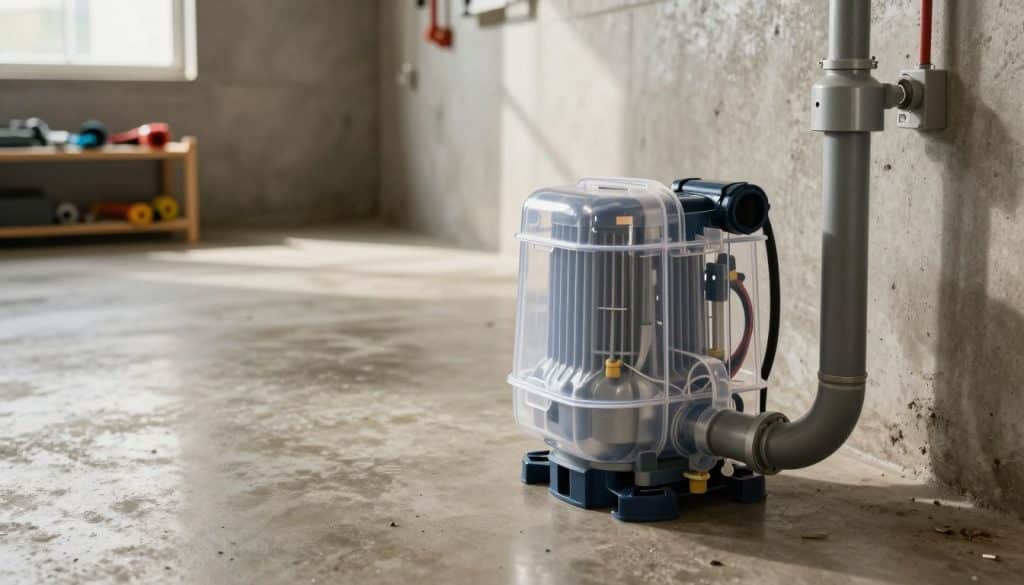
Submersible units sit in the pit and run quietly. They usually offer more power and last longer, especially with cast iron housing that handles heat and wear.
Pedestal designs cost less and are simpler to service. They are louder and often less durable, but they can make sense for unfinished spaces or tight budgets.
- Choose 1/3–1/2 HP for typical homes; use 3/4 HP for high-volume conditions.
- Battery backup systems keep water out during outages when storms hit hardest.
- Reliable float and switch operation is critical—test movement and activation regularly.
We focus on safety and performance so your sump pump installation in basement areas protects real conditions, not just ideal ones. Contact us for a clear recommendation tailored to your property.
Planning Your Sump Pump Installation in Basement for Best Drainage
Good drainage starts with choosing the exact low spot where water gathers and planning around it. We begin by surveying your lower level to find the true collection point and to map a clear, code-conscious plan.
Finding the lowest collection point
Identify where water pools after storms or where dampness repeats. Placement at this point makes the system effective rather than cosmetic.
Choosing a safe electrical location
Pick a spot near a reliable power source and a GFCI outlet. Dry, accessible power keeps operations safe and maintenance simple.
Mapping discharge and routing
We plan a discharge route using a solid discharge pipe that leads at least 10 feet from your foundation to an approved outlet when allowed. Sealing the wall hole around the pipe prevents leaks and pests.
When perimeter drain tile is needed
If groundwater seeps along footings, a perimeter drain tile with pitched perforated pipe to the pit may be required. These projects can need permits and concrete repairs; we help you navigate approvals and restore the area cleanly.
- We show how to pick the best location and maintain access for service.
- We map a discharge plan that prevents water cycling back to your foundation.
- We assist with permits, restoration, and safe, code-focused work across Chicago, IL.
Tools and Materials You’ll Need Before You Start
Before you start any work, gather the right parts and tools so the job goes smoothly and safely. We keep this list practical for homeowners and ready for on-site checks.
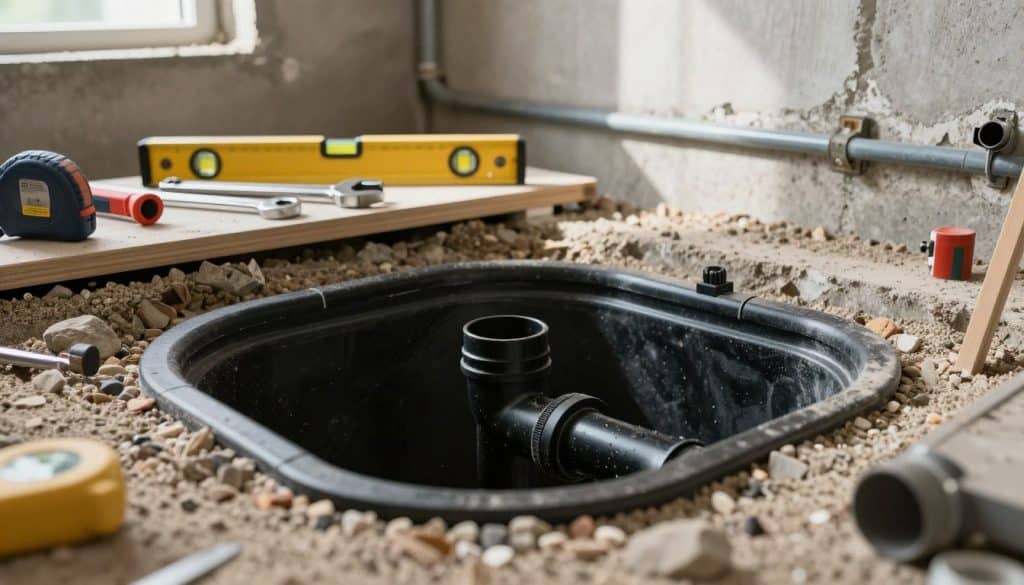
Core components you should have
Checklist: a reliable sump pump (choose submersible or pedestal), a sturdy sump basin, PVC pipe and fittings, and a check valve to stop reverse flow.
Jobsite essentials and why they matter
Bring gravel for backfill, a level to set the basin true, and silicone sealant for pipe penetrations. Proper piping and fittings prevent leaks and protect long-term performance.
- Drill with hole saw for wall or pipe holes.
- Concrete cutting tools (jackhammer or demolition hammer) if the floor needs opening, plus dust control and PPE.
- Measure the sump pit carefully and pick a basin size that avoids short cycling.
We’re happy to support Chicago homeowners who prefer professional help. If you’d like us to review your checklist or supplies, J Sewer & Drain Plumbing Inc. is ready to assist.
How to Install a Sump Pit and Sump Basin in an Existing Basement Floor
Preparing a reliable pit under your floor starts with safe concrete removal and a plan that fits your home’s soil and layout.
Cutting and excavation: mark the hole, control dust, and plan debris removal before you break the slab with a jackhammer or demolition hammer. Dig the pit to match the basin size; common guidance is about 2 feet deep and 18+ inches diameter, though soils and foundation conditions may change that.
Leveling and gravel: set the sump basin true so the pump sits straight and the float moves freely. Place 3–4 inches of gravel under the basin for drainage and stability, then backfill around the sides with compacted gravel to prevent shifting.
Optional prep steps: consider basin perforations or a coarse screen to improve water entry and reduce debris entry. These steps help extend system life and make the next pump installation step more reliable.
- We protect air quality and structure during concrete removal.
- We size the pit so water collects efficiently, not just to make a hole.
- We ensure the basin is stable, level, and ready for pump installation.
Installing the Pump, Float Switch, Check Valve, and Discharge Pipe
Careful final assembly ensures your system responds reliably when water rises. We place the sump pump flat on a stable gravel bed so it cannot tip, ride, or short cycle. Proper spacing inside the basin extends life and reduces wear.
Set the float switch so the float moves freely without rubbing the walls. Test travel and activation at the desired water level, and adjust the switch stop if needed.
Install a check valve on the discharge line to stop reverse flow back to the pit. Route PVC piping so the discharge pipe leads at least 10 feet from your foundation to avoid re-entry and saturation.
Seal wall penetrations and joints with silicone or approved sealant to prevent moisture and odors. Keep electrical cords dry, plugged into a GFCI outlet, and secured away from dripping water.
- We make sure connections are tight and visible before you close the basin lid.
- We verify the final pump installation and power protection for lasting peace of mind.
For careful, family-first service across Chicago, IL, J Sewer & Drain Plumbing Inc. handles these details so your home stays protected.
Testing the System and Preventing Common Sump Pump Installation Problems
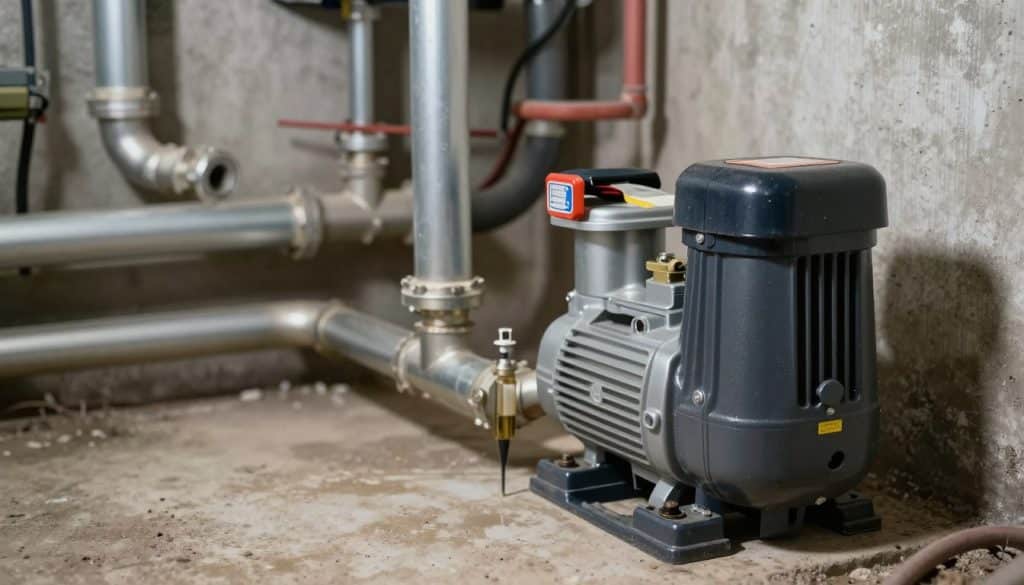
A quick, careful check with water lets you see the system work and catches small problems early. We walk you through a calm, step‑by‑step test so you can make sure the unit turns on, runs smoothly, and fully clears water from the pit.
How to test: plug the system into a GFCI outlet and slowly add water until the float activates. Watch the discharge outside and confirm steady flow through the discharge pipe. Stop when the float shuts the unit off.
- Listen for unusual sounds or vibration that suggest mechanical issues.
- Check for leaks at fittings, loose clamps, or poor drainage that reduce flow.
- Verify the float switch moves freely and does not rub the basin wall.
Troubleshooting common issues: no power often links to a tripped breaker or GFCI; a stuck float usually needs debris removal; weak discharge can mean clogs or a restricted outlet. If you see signs of water damage or persistent moisture, call us for a safe inspection.
Finish with safety: secure the basin lid to keep out debris and pests, and make sure electrical connections stay dry and accessible. For regular maintenance, test the system every few months and clean the pit once a year.
If you prefer, we’ll perform professional testing, adjustments, or repairs across Chicago. Contact J Sewer & Drain Plumbing Inc. for dependable checks and prompt service.
Conclusion
Taking a few careful steps now prevents water from causing long-term harm to your foundation.
We summarize the homeowner-focused path: choose the right unit, pick the best location, build a stable pit, route discharge at least ten feet from your foundation, add a check valve, secure a safe GFCI outlet, and test the system thoroughly. Regular maintenance keeps components moving and reduces the risk of flooding, moisture, and costly damage.
If you need professional help to install sump or to perform a pump installation, call J Sewer & Drain Plumbing Inc. We are family-owned, two-generation, established 2017, serving Chicago and nearby areas.
Call (773) 968-2704 | jsewerdrainplumbing@gmail.com. Offices: 3343 N Monticello Ave, 3017 N Elston Ave, Chicago, IL; 809 Ridge Rd, Wilmette, IL. Monday–Saturday: 24 hours Open.