Have you ever wondered about sewer pipe lining vs replacement and which approach truly protects your home and your budget when a failing sewer line needs repair?
Welcome to J Sewer & Drain Plumbing Inc., your trusted family-owned plumbing ally in Chicago, IL. We began as a two-generation team in 2017, and we treat every customer like family.
Each week homeowners and property managers ask us whether trenchless lining or full replacement is the better solution. There is no one-size-fits-all answer.
In plain language, lining means installing a new inner sleeve to seal leaks without major digging, while replacement removes and installs a new run when damage is extensive.
Our role is to reduce stress and disruption, keep systems code-compliant, and guide your decision with clear, honest advice. A professional camera inspection is the starting point—we don’t guess when your sewer pipe is involved. Call (773) 968-2704 or email jsewerdrainplumbing@gmail.com to schedule and feel confident in your home.
Read on to learn how each method works, typical costs and timelines, and how to choose the right solution for Chicago properties.
Key Takeaways
- Weigh trenchless lining against full replacement based on damage, access, and long-term risk.
- A camera inspection is the essential first step for an accurate plan.
- We prioritize minimal disruption, clear pricing, and code-compliant repairs.
- Costs and timelines vary; we’ll explain typical ranges for Chicago-area projects.
- Our advice is rooted in family values, professional expertise, and honest recommendations.
Why Chicago Property Owners Compare Pipe Lining and Sewer Pipe Replacement
In Chicago, tight lots and old infrastructure force property owners to compare two very different repair paths.
Many buildings here have aging sewer lines, mixed materials, and shallow runs that make excavation difficult. Corrosion, shifting soil, root intrusion, and normal wear cause repeated clogs, slow drains, odors, and backups. These symptoms point to urgent repair needs.
Common causes of damage in Chicago homes and buildings
- Material age: older cast iron or clay increases failure risk.
- Root intrusion: tree roots enter joints and accelerate deterioration.
- Ground movement: freeze-thaw cycles and settling shift lines out of alignment.
How excavation and property disruption affect your decision
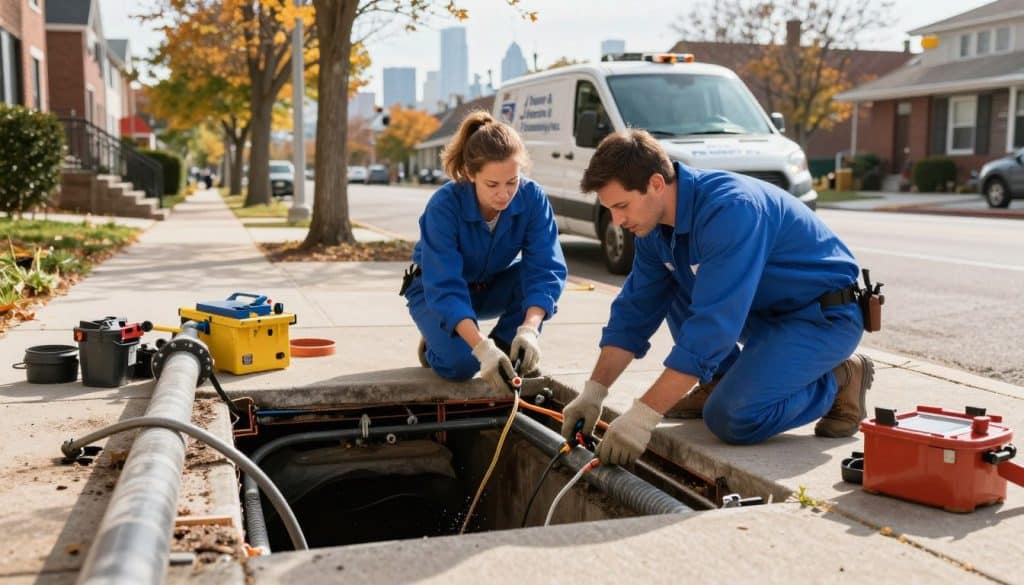
Excavation can mean torn yards, removed sidewalks, and disrupted tenants. On tight lots, access limits the methods we can use and raises restoration costs.
We weigh access, disruption, and long-term reliability before recommending any solution. A camera inspection gives the facts we need to make the right call for your property and budget.
What Sewer Pipe Lining Is and How the CIPP Process Works Today
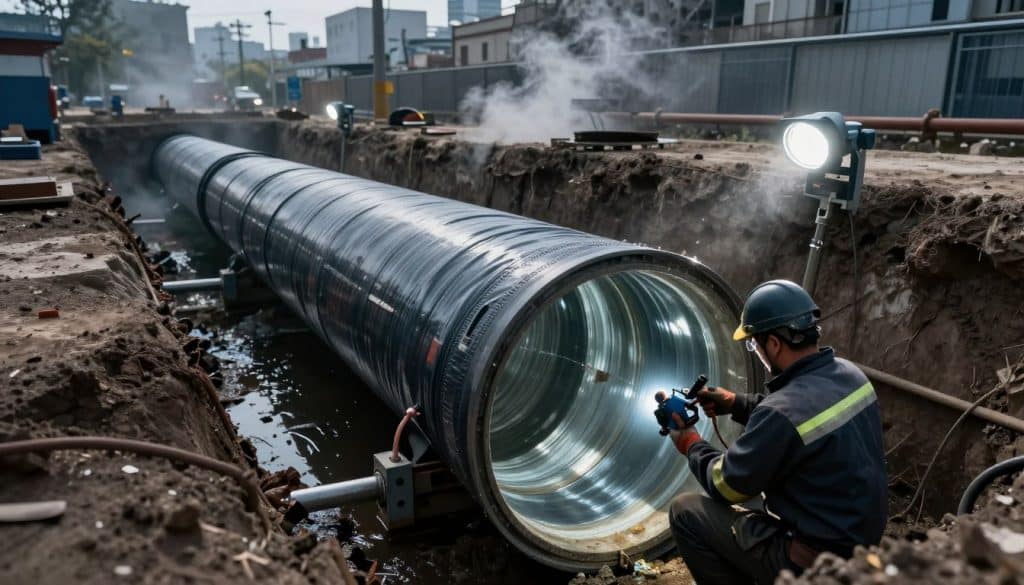
Modern CIPP methods let us fix damaged runs from the inside, with far less disruption to your yard and schedule. This trenchless process creates a durable, structural inner sleeve — a “pipe within a pipe” — without full excavation.
Here’s how we approach the work, step by step:
- Camera inspection: CCTV inspection pinpoints breaks, roots, and alignment before any work begins.
- Cleaning: We clear debris and scale so the liner can bond properly.
- Liner installation and curing: A resin-impregnated liner is placed inside the existing pipe and cured to form the new interior.
- Verification: A final camera pass and robotic cutting restore service connections and confirm the result.
The resin-saturated liner handles many common problems: cracks, small leaks, corrosion, and moderate root intrusion. Severe collapse or extreme offset may still need traditional replacement, but many homeowners benefit from quicker turnaround and less restoration work.
Industry improvements like UV curing and robotic inspection have reduced cure times and improved accuracy. That means faster repairs, consistent performance, and a longer-lasting solution for your sewer line.
What Sewer Line Replacement Involves (Traditional Excavation Method)
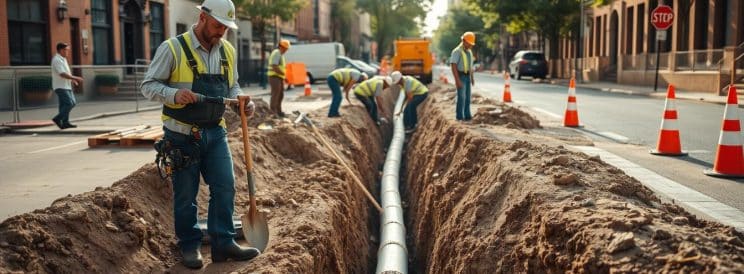
For severe collapses or code-driven upgrades, traditional excavation and installation of a new pipe remain the surest path. We start with access planning, then dig down to the failing run so we can remove the damaged section safely.
Here’s the practical process we follow:
- Excavation to reach the damaged run, which may mean digging through a yard, concrete slab, or hardscape.
- Removal of the old pipe and any debris, then fitting and joining a new pipe—commonly PVC for durability.
- Backfill, compaction, and surface restoration so your yard or driveway is returned to use.
Where this method shines is obvious: collapsed sections, large alignment problems, or projects that must meet newer code requirements. A full pipe replacement can serve your property for decades—industry guidance often cites a life up to 100 years for modern materials.
Be aware: the work extends beyond the line itself. Site access, safety controls, disposal, and restoration add time and cost. We discuss these factors up front so you can weigh doing it once versus repeated repairs.
Sewer pipe lining vs replacement: Pros and Cons Side by Side
Choosing the right repair route affects your yard, budget, and how soon your home is back to normal.
Disruption and access: Trenchless pipe lining needs small entry points and usually spares a lawn or slab. Full excavation often means digging through landscaping, concrete, or hardscape to reach the failing run.
Project time expectations: Lining projects commonly finish in hours or days, cutting downtime. Traditional replacement can take weeks when excavation, permitting, and restoration are required.
- Upfront cost vs total costs: Replacement may look similar in material cost, but restoration and site work raise the final price.
- Environmental impact: Lining produces less waste and uses far less excavation, which lowers disturbance and disposal needs.
- Longevity: A full pipe replacement can approach a century of service in many cases, while lining delivers multi‑decade performance when the existing pipe is a good candidate.
We weigh these factors for your property, matching the method to your goals—preserve landscaping, minimize disruption, or invest in the longest life possible.
Cost and Timeline Benchmarks Homeowners Actually Ask About
Homeowners ask us for two clear numbers: the expected cost and the likely time frame. We use industry benchmarks to give realistic ranges, then tailor estimates after a camera inspection.
Typical cost range: For many residential projects, industry-cited figures fall around $15,000–$25,000. That range covers materials, labor, and basic restoration, but final costs depend on scope and access.
- Typical timeframes: Total project time often runs about 11–26 days for a full replacement and roughly 3–6 days for pipe lining, depending on prep and curing.
- Hidden cost drivers: Excavation depth, concrete removal, landscaping repair, permits, and difficult access can raise costs and extend time.
- Budget perspective: Lining can be more budget-friendly because it usually reduces restoration work and shortens the work window.
We always stress that a camera inspection turns general estimates into a real plan. That step lets us show you what’s included in costs and what might increase your total outlay over the life of the solution.
How to Choose the Right Repair Method for Your Sewer System
Deciding the right repair starts with a clear look at the damage and the site constraints that affect your home.
Extent of damage: Minor cracks, small leaks, and moderate corrosion often mean lining is a strong option when the existing run still has structural integrity. We assess whether the damaged pipe can accept a long-lasting inner sleeve.
When replacement is required: Severe collapse, large deformation, or code-driven upgrades make full pipe replacement the responsible choice. In those cases, only a new line meets safety and performance needs.
Materials and age: Cast iron and clay lines age differently than PVC. Older, mixed systems may need replacement sooner. We weigh material condition so your system lasts longer.
Root intrusion and recurring clogs: Repeated tree root problems sometimes justify a new run, though lining can stop many root-related issues if alignment is acceptable.
Property limits: Tight lots, finished basements, and limited access steer the decision toward less disruptive methods when safe. Our expert inspection guides the final recommendation.
- Get an inspection first — that informs any decision.
- Balance long-term reliability, disruption, and budget.
- We recommend the method that protects your system and your property.
What to Expect From a Professional Camera Inspection and Recommendation
Before any work begins, a professional camera pass maps the problem so we can plan precisely. We use that footage to show you the condition of your line and explain the options in plain language.
How CCTV camera inspection locates trouble and guides liner placement
Our camera run travels the full length of the run to find cracks, offsets, and root intrusions. It measures distance and diameter so we can decide if a liner can be placed safely.
Decision-ready reporting: condition, alignment, diameter, and repair options
We deliver clear, documented findings:
- Video clips and photos that show problem areas and exact distances.
- Notes on alignment, diameter changes, and structural concerns that affect pipe repair choices.
- Practical options—when a liner is viable and when full replacement planning should start.
Without this level of inspection, repairs can fail or be the wrong method for your system. We aim to give you a calm path forward, the right solution for your property, and transparent next steps from our plumbing team.
Chicago-Area Sewer Repair Help From J Sewer & Drain Plumbing Inc.
We know urgent plumbing needs cause stress, so we focus on clear plans and careful execution. Welcome to J Sewer & Drain Plumbing Inc., your trusted family-owned plumbing ally in Chicago, IL.
Established in 2017 as a two-generation company, we treat every customer like family. Plumbing is our passion, and we are proudly integral to the Chicago community.
- Service area: Chicago, IL and nearby areas — we coordinate service calls from local offices.
- How we help: We base each solution on a professional inspection so you get the right method without pressure.
- Our promise: Reduce disruption, protect your property, and restore reliable function with workmanship you can trust.
Business hours: Monday to Saturday — 24 hours open. Call (773) 968-2704 or email jsewerdrainplumbing@gmail.com to schedule an evaluation.
Locations for service coordination:
- Chicago Office: 3343 N Monticello Ave, Chicago, IL 60618
- Wilmette Office: 809 Ridge Rd, Wilmette, IL 60091
- New Location: 3017 N Elston Ave, Chicago, IL 60618
We combine professional workmanship with a caring, family-first approach. Expect clear communication, upfront expectations, and careful in-home work so you can feel confident and worry-free with the results.
Conclusion
When a damaged run threatens your home, the right repair starts with clear facts, not guesses. Both lining and full replacements are valid methods. The best choice depends on inspection results, damage severity, and what fits your property.
Remember the big decision points: disruption and excavation, upfront cost versus long-term costs, and expected life of the finished work. If the damaged pipe keeps its shape, a lining can restore function with less disruption. Severe collapse or major upgrades usually need full replacements.
We encourage treating this as a planning decision. Call J Sewer & Drain Plumbing Inc. to schedule an inspection, review options, and get a realistic project plan from a family team that puts your property and safety first.