
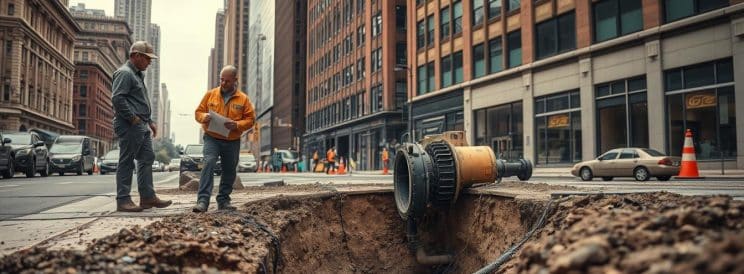
Curious how much you should budget when underground problems force a decision—repair or full replacement?
We are J Sewer & Drain Plumbing Inc., a family-owned, two-generation team serving Chicago, IL since 2017. Every customer is treated like family, and we focus on clear guidance so your home budget starts with facts, not guesswork.
Costs can range from $500 to $20,000 depending on length, method, materials, access, permits, and restoration. We set expectations up front and explain why small repairs and major projects look very different on the final bill.
Our approach is diagnostic-first: we locate the problem, discuss trenchless versus excavation options, and protect your property throughout the process. For planning or urgent help, call us at (773) 231-8869 or email [email protected]. Visit our Chicago hub at 3343 N Monticello Ave, Chicago, IL 60618. We’re available Monday to Saturday: 24 hours Open.
Key Takeaways
- We provide practical buyer’s guidance so you know what to expect before approving work.
- Prices vary widely—$500–$20,000—based on access, method, materials, and restoration needs.
- We use a diagnostic-first process to avoid unnecessary digging and expense.
- Our family-owned team treats your home with care and clear communication.
- Contact us any day Monday–Saturday at (773) 231-8869 or [email protected] for planning or emergencies.
Chicago Sewer Line Replacement Cost Snapshot for Today’s Homeowner
Before you decide, it helps to see how national averages map to Chicago realities. We translate broad figures into practical budgeting so you know what to expect.
National context: Projects typically range from $500 to $20,000, with many homeowners falling in a $3,000–$6,000 band. Industry benchmarks often quote a per-100-feet figure to make comparisons easier.
- national average: about $3,500 per 100 feet.
- Chicago metro benchmark: roughly $3,620 per 100 feet (≈ +3% vs national).
- Regional range: $2,450–$4,870 per 100 feet depending on access and obstacles.
What “per 100 feet” usually covers is the base pipe work. It does not always include permits, deep trenching, or yard restoration. A low initial number can rise when heavy restoration is needed, while trenchless methods often protect landscaping and lower total costs.
We serve Chicago, IL and nearby neighborhoods with clear guidance and family-first service. Start with a camera inspection and a written scope so your final replacement cost stays steady and predictable.
What Sewer Line Replacement Really Includes
Knowing exactly what the job covers gives homeowners clarity and control. We define the path that carries your home’s wastewater, often called the sewer lateral, and explain which portion is typically your responsibility so you can plan without surprises.
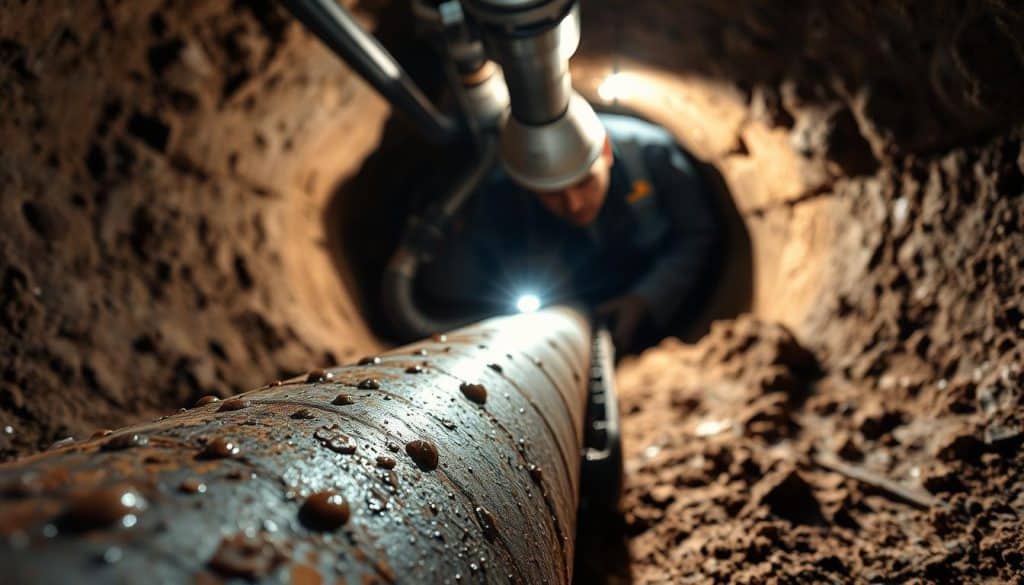
The sewer lateral and homeowner responsibility
The lateral is the main pipe that carries waste from your home to the public system. On most properties, the homeowner cares for the segment on private land. That means access, permits, and any excavation inside your yard are usually your responsibility.
Replacement vs repair vs spot/sectional fixes
Replacing sewer line involves more than swapping pipe: accessing the run, removing failed sections, installing new pipes, and verifying connections and flow. We explain each step so property managers and homeowners understand the full scope.
- Repair: Targeted fixes for narrow damage or a single bad joint.
- Spot/sectional fixes: Best when damage is isolated, like root intrusion or a short collapse.
- Full replacing sewer line: Considered when pipes show widespread decay, repeated backups, or multiple failure points.
We recommend a camera inspection first; evidence guides the right choice, reduces surprise work, and protects your yard. Our team teaches you the options so you can choose the approach that fits your property and budget with confidence.
Key Factors That Drive Sewer Line Replacement Cost
Understanding what drives a project’s price helps you compare bids with real clarity. We break down the main factors so Chicago homeowners and property managers can spot fair proposals and avoid surprises.
Length and the meaning of per linear foot
Length is one of the largest drivers. Many contractors quote a figure per linear foot so you can scale estimates.
Watch whether that number covers permits, restoration, or only pipe and labor. A quoted per linear amount is only useful once diagnostics confirm the run and obstacles.
Depth, access difficulty, and on-site equipment
Deeper runs require more shoring, safety time, and heavy equipment, which raises labor and equipment needs.
Tight yards, shared driveways, or fences add hours and sometimes special machinery. We plan to protect landscaping and reduce disruption.
Home age, materials, and contractor quality
Older homes often have legacy routing or fragile materials. Pre‑1940 properties can be about 1.5x more complex to work on.
Choose a contractor who provides a clear scope, permit readiness, and workmanship guarantees. Higher-quality crews can lower long‑term risk even if initial bids seem higher.
Location matters
Regional labor rates, local permit rules, and Chicago metro standards affect totals—remember the local benchmark of about $3,620 per 100 foot when you compare bids.
- Length scales material and labor needs.
- Depth and access dictate equipment and safety time.
- Age and materials add complexity on older properties.
- Contractor quality influences durability and follow-up work.
Bottom line: diagnostics and a camera inspection make per linear proposals meaningful. We start there so your final figure reflects real conditions, not guesswork.
Pipe Materials and Price: PVC, HDPE, and Cast Iron
Material choice matters: it shapes durability, installation method, and how much we need to protect your yard and home. We explain common options so you can match a solution to your property.
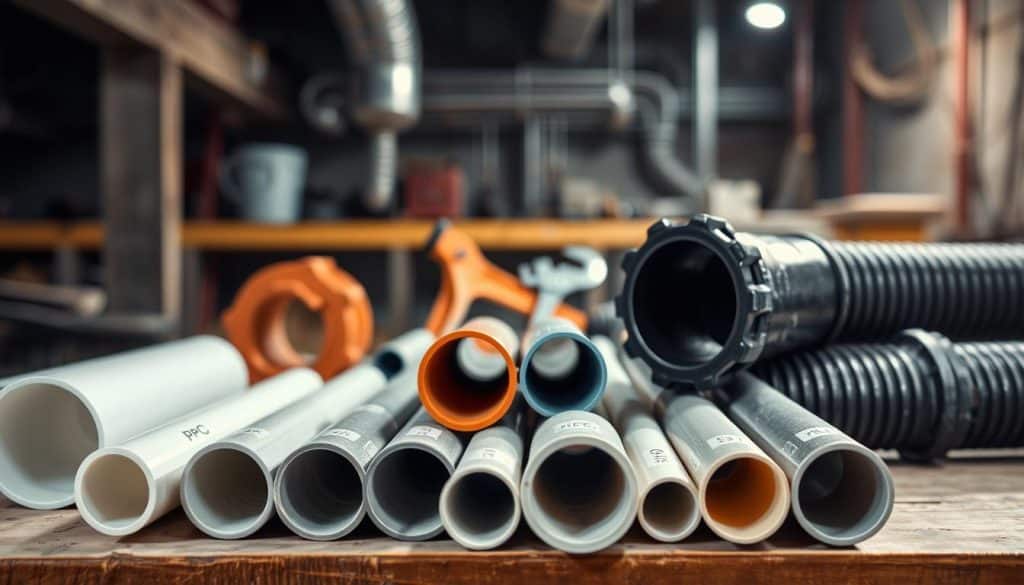
Most common replacement materials and when each makes sense
PVC/ABS: PVC is the most common material for residential work. It is cost‑effective, easy to join, and installs quickly. For many Chicago homes, PVC offers long service life and straightforward repairs.
HDPE: HDPE pipe costs a bit more, but its flexibility makes it ideal for trenchless jobs and routes with bends. We often recommend HDPE when minimizing excavation is a priority.
Cast iron: Cast iron performs well against external pressure and heavy loads, but it can corrode internally over decades. Installing cast iron tends to be pricier and more labor intensive.
How existing materials affect plans
When older clay or cast iron runs are present, removal and transitions add time. Fragile clay requires careful excavation to avoid collateral damage. Working around legacy cast iron can mean more cutting, fittings, and protective measures during replacing sewer work.
- Match material to access: flexible materials help avoid big digs.
- Think long term: choose durability and low maintenance.
- Older pipes: expect extra care and slightly longer timelines.
Traditional Excavation vs Trenchless Sewer Line Replacement
Deciding between digging or a trenchless method starts with what we find on camera. A clear inspection shows whether full trench work is required or a less invasive approach will serve your home long term.
Traditional excavation: when it’s required and why restoration drives costs
Traditional excavation means open trenching to reach the run. It’s required for severe collapses, multiple failure points, or when code changes demand complete access.
Base excavation rates commonly range from $50–$200 per foot. The hidden driver is restoration: rebuilding yards, hardscapes, or driveways can add $3,000–$8,000 to the final bill.
CIPP lining: typical ranges and best-fit situations
Cured-in-place pipe (CIPP) offers rehabilitation without full removal when the existing pipe is largely continuous. Typical ranges run about $70–$150 per foot, often totaling $7,000–$15,000 for a 100‑foot project.
Pipe bursting: full replacement with less digging
Pipe bursting replaces the pipe by fracturing the old while pulling in new pipe. It often avoids major surface repairs and generally sits between $60–$200 per foot depending on access and material.
How to choose the right method
- Match the method to the damage type and access points.
- Trenchless options reduce downtime and protect landscaping when feasible.
- Choose excavation when collapse or regulatory needs leave no alternative.
We’ll recommend the safest, least disruptive option for your property and explain trade-offs clearly. An inspection-backed plan is the best way to protect your investment and avoid repeat work.
Sewer Line Replacement Cost Breakdown by Method and Linear Foot
We break down typical per-foot ranges so you can judge quotes like a confident buyer. Below is a concise, buyer-friendly summary that shows how method and site conditions shape totals.
Typical cost per linear foot ranges
- Excavation: $50–$200 per linear foot (≈ $5,000–$20,000 per 100-foot project).
- CIPP lining: $70–$150 per linear foot (≈ $7,000–$15,000 per 100-foot project).
- Pipe bursting: $60–$200 per linear foot (≈ $6,000–$20,000 per 100-foot project).
- Spot/sectional repair: $150–$250 per linear foot (20 ft ≈ $1,500–$5,000).
- Point repair: $300–$600 per repair for isolated fixes.
Why a 100-foot project can swing widely
Per-foot numbers sound tidy, but totals jump when deep digs, driveways, or major restoration are needed. Labor, permits, and landscaping can add thousands beyond the per linear estimate.
When smaller repairs make sense
A single crack often fits a point repair, saving immediate money. Sectional fixes work when damage is limited. We recommend inspection-backed scopes so you don’t pay twice, and we’ll help you decide whether to repair or replace based on evidence and long‑term value.
Pre-Replacement Costs: Inspections, Diagnostics, and Planning
A careful diagnostic phase saves time and prevents unnecessary digging around your property. We begin every project with an inspection so the recommended work matches what we actually find.
Camera inspection: locating damage to avoid unnecessary excavation
Our camera inspection pinpoints damage fast. This lets us decide if trenchless service is possible or if excavation is needed.
Permits, code compliance, and why timelines can impact labor
Permits and local codes add steps that affect scheduling and labor time. Proper permitting protects your home and speeds final approval.
- What to expect: we locate problem areas, assess pipe condition, and outline recommended work.
- Why it matters: inspection findings shape a clear scope so you don’t pay for unnecessary digging.
- Who does it: an experienced plumber handles buried utilities, sanitation precautions, and precise connections.
We serve Chicago and nearby areas with transparent diagnostics and trusted services. To schedule an inspection or ask questions, call us at (773) 231-8869 or email [email protected]. Open Monday–Saturday: 24 hours Open.
Post-Work Costs Homeowners Forget: Trenching, Backfill, and Restoration
Finishing the underground fix is only half the job—restoring the surface often brings surprises. We want you to plan for what comes after the pipes are fixed so your home and yard return to normal quickly.
Trenching and excavation pricing ranges you may see
Trenching is sometimes billed separately: expect roughly $4–$12 per linear foot or up to $70 per cubic yard when crews haul spoil away.
Excavation increases when access is tight near a deck or narrow Chicago lot, and that raises labor time.
Yard repairs, landscaping, and grading after work
Backfill, compaction, and grading matter for long‑term drainage and settling prevention. Typical landscaping repair budgets run about $2,000–$5,000 depending on scope and season.
Driveway, sidewalk, and deck repair considerations
Hardscape repairs commonly add $1,000–$3,000; full restoration packages often fall in a $3,000–$8,000 range. Planning access points can reduce how much concrete or asphalt we disturb.
- Common forgotten items: compaction testing, reseeding, and fence or deck edge repairs.
- Our promise: transparent estimates that call out trenching, excavation, and restoration so you won’t see surprises after work begins.
How to Save Money Without Cutting Corners
You can protect your yard and your wallet with a clear, inspection‑backed plan. We focus on practical steps that lower bills while preserving long‑term performance.
When trenchless options reduce total bills
Trenchless methods often reduce overall disturbance, so you may avoid major driveway or landscaping restoration. Even if per‑foot pricing looks similar, avoiding heavy restoration helps you save money on final invoices.
When a targeted repair beats full replacement
A focused repair can be the right choice when camera inspection finds one isolated failure. Choosing a sectional repair instead of full replacing sewer saves funds now, and lets you plan larger works only if deterioration spreads.
Prepare your property to minimize labor and equipment time
Clearing access, marking sprinklers and utilities, and moving potted plants cuts crew hours and equipment needs. These small steps reduce labor and lower the odds of extra restoration work.
- Do: schedule a camera inspection first.
- Do: protect landscaping and mark buried utilities.
- Don’t: attempt heavy DIY with unfamiliar equipment—call professionals.
We balance short‑term savings with long‑term value. Our transparent scopes make sure the choice to save money never sacrifices safe, lasting results.
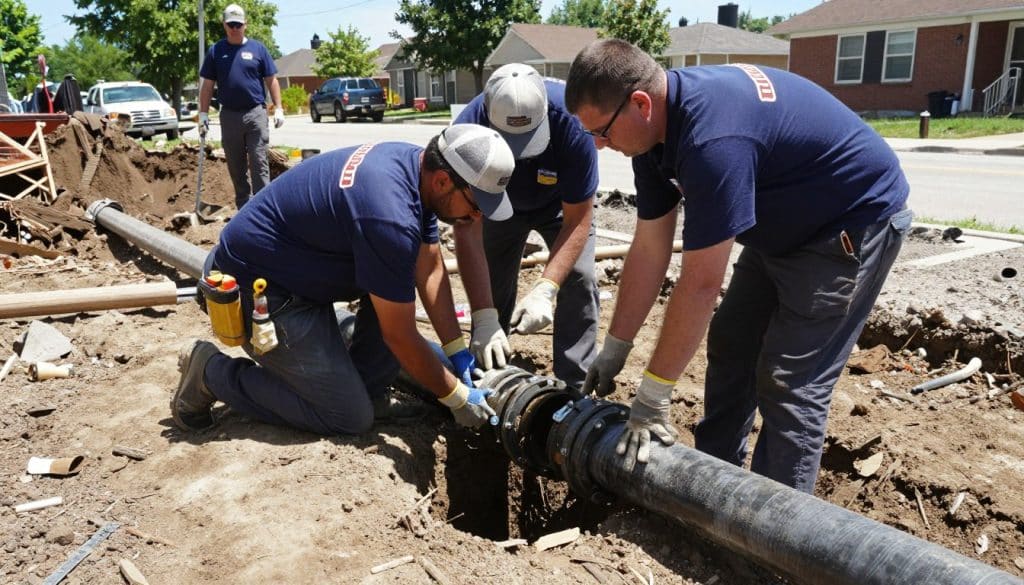
Conclusion
Smart inspections and honest scopes make big projects feel simple and fair. We recommend starting with a camera inspection so your plan matches real conditions, not guesswork.
Remember: total figures depend on length, method, materials, access, permits, and restoration. Use the Chicago benchmark of about $3,620 per 100 feet as a planning reference, then let evidence guide the final plan.
We treat every customer like family. We’re a two‑generation, family‑owned team established in 2017, serving Chicago, IL and nearby areas. For inspection‑driven guidance, call (773) 231-8869 or email [email protected].
Local offices: 3343 N Monticello Ave, 3017 N Elston Ave, Chicago, IL; 809 Ridge Rd, Wilmette, IL. We’re open Monday to Saturday: 24 hours Open. Let us help you plan the most responsible path forward for your home.
FAQ
What factors most affect sewer line replacement costs in Chicago?
Several elements influence pricing: the length of damaged piping, depth and access difficulty, the material being installed (PVC, HDPE, cast iron), and whether we use traditional excavation or a trenchless method like CIPP lining or pipe bursting. Labor, required equipment, local permit fees, and the need for restoration of driveways or landscaping also shape the final number.
How do we determine whether to repair a section or replace the entire run?
We start with a camera inspection to locate the damage and assess pipe condition. If damage is localized and surrounding pipe is sound, a sectional repair or point fix can save money. If multiple failures, root intrusion, or widespread corrosion exist, full replacement often prevents repeat problems and can be more cost-effective long term.
What are the pros and cons of trenchless methods versus traditional excavation?
Trenchless options like CIPP lining and pipe bursting minimize surface disruption and often reduce restoration expenses, making them ideal where landscaping, driveways, or sidewalks would be impacted. Traditional excavation can be necessary for complex layouts or very shallow/deep pipes but typically increases restoration time and expense.
How much does per-linear-foot pricing vary by method?
Pricing depends on method and site conditions. Excavation tends to have a lower material cost but higher restoration expenses. Trenchless methods usually cost more per linear foot upfront but can lower total project cost by cutting back on labor and surface repairs. A camera inspection and on-site estimate give the most accurate per-linear-foot number for your property.
Will my age of home or existing materials change the project scope?
Yes. Older homes with cast iron or clay piping often require more work due to corrosion or collapse, and connecting new piping to old systems can add complexity. We evaluate material transitions and recommend options that balance longevity with budget.
What pre-replacement steps should homeowners expect and budget for?
Expect a camera inspection, diagnostic fees, and possible permit costs. These steps help avoid unnecessary digging and ensure code compliance. Scheduling and permit timelines can affect labor scheduling, so we factor those into the estimate.
What post-work costs are commonly overlooked?
Many homeowners forget landscaping repair, driveway or sidewalk restoration, and final grading. Backfill, compaction, and reseeding or hardscape repairs can add to the invoice, so we include restoration options in our upfront estimate.
How can we save money without sacrificing quality?
Choose trenchless methods when they fit the site, consider sectional repair when damage is limited, and prepare the property to reduce on-site labor time. We provide transparent options and explain trade-offs so you can pick the most cost-effective, long-term solution.
Do permits and local codes affect project timing and price in Chicago?
Yes. Chicago permits, inspections, and code requirements influence both schedule and cost. We handle permitting and ensure work meets local standards, which protects your property and avoids costly rework.
Why is a camera inspection worth the upfront fee?
A camera inspection pinpoints damage, measures pipe condition, and helps us recommend the right method. It reduces guesswork, prevents unnecessary excavation, and often saves money by allowing targeted repairs instead of full replacement when appropriate.
How do material choices affect long-term value?
Modern materials like PVC and HDPE resist roots and corrosion and generally last longer than older cast iron or clay. Investing in higher-quality piping can reduce future repairs and provide better value over time; we discuss warranties and expected lifespans during estimation.
Who is responsible for the lateral on a property in Chicago?
Typically, homeowners are responsible for the lateral from the house to the municipal connection. We explain municipal boundaries, coordinate necessary inspections, and advise on responsibilities so you clearly understand the scope before work begins.
How soon can work start after an inspection and estimate?
Timing depends on permit approval, weather, and crew availability. Once permits are secured and you approve the estimate, we schedule the job promptly and keep you informed through each step to minimize disruption.
Can J Sewer & Drain Plumbing Inc. provide financing or payment options?
We offer transparent pricing and discuss payment options during the estimate. For larger projects, we can present financing alternatives or phased approaches to help manage cash flow while preserving system integrity.