
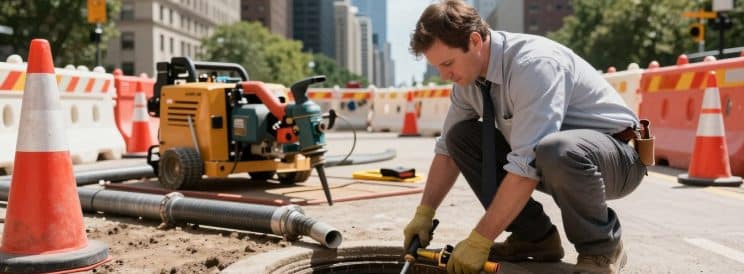
Have you ever wondered why a small underground problem can turn into a major, wallet-draining emergency so quickly?
We’re J Sewer & Drain Plumbing Inc., a family-owned, two-generation Chicago-area company established in 2017. We treat every customer like family, and we focus on transparent, protective service that keeps your home safe.
We’ll explain what drives sewer line repair cost in Chicago, share national benchmarks—typical replacements average about $3,319–$3,500, with a normal range near $1,388–$5,323—and show why your final number can vary based on property layout and method used.
Our team serves Chicago, IL and nearby areas, with 24-hour availability Monday through Saturday. Call (773) 968-2704 or email jsewerdrainplumbing@gmail.com for prompt help.
Visit us: 3343 N Monticello Ave, 3017 N Elston Ave, Chicago, IL; 809 Ridge Rd, Wilmette, IL.
Key Takeaways
- We explain the main factors that influence prices so you can budget confidently.
- National benchmarks set expectations, but site conditions and methods change the final amount.
- Our approach emphasizes diagnostics first, protecting your home and yard from unnecessary work.
- Fast action matters in Chicago homes due to seasonal ground movement and older infrastructure.
- Contact us 24 hours Mon–Sat at (773) 968-2704 or jsewerdrainplumbing@gmail.com for local support.
How sewer line problems show up in Chicago homes
A slow drain or a bubbling toilet may seem minor, but they can reveal deeper issues affecting your property. We want you to spot early signs so we can protect your home and yard with safe, code-aware solutions.
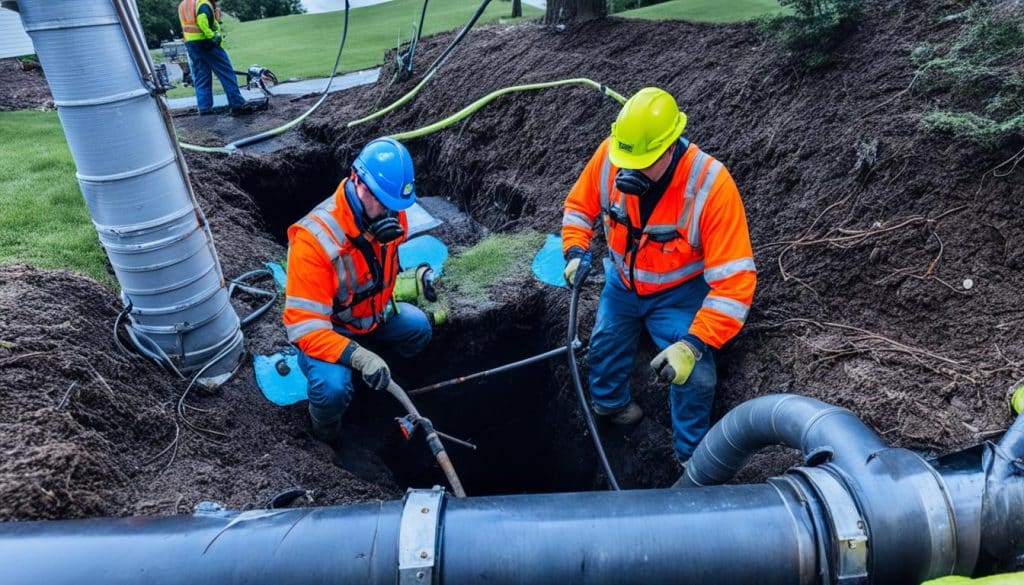
Indoor warning signs
Look for slow drains in multiple fixtures, backups after running appliances, bubbling toilets, and persistent sewer odors.
One slow sink is often a simple clog, but repeated trouble across your home usually points to the main sewer line and calls for professional inspection.
Outdoor clues
Keep an eye on wet spots or patches of unusually lush grass along the likely pipe path.
Sunken areas, small sinkholes, or new foundation cracks near where the run heads out to the street are also red flags.
Why acting fast matters
Addressing symptoms early limits property damage, reduces health risks from raw wastewater, and often lowers overall clean-up and restoration needs.
In Chicago, older materials and tight lots make early detection especially important to protect driveways, yards, and finished spaces.
- Document what you see—photos, which drains, and how often—so our team can diagnose your system faster.
- Call us when multiple signs appear; quick action helps avoid larger excavations and bigger disruptions to your home.
Average sewer line repair and replacement costs in the United States
Understanding national price benchmarks helps you plan a realistic budget before we visit your property. We’ll share clear, practical numbers so you can compare bids without feeling rushed.
Typical cost range and national averages homeowners see today
National averages put a full replacement near $3,319–$3,500, with many projects falling in the $1,388–$5,323 band. Simpler jobs may start around $1,000, while complex scenarios can climb toward $20,000.
Cost-per-linear-foot ranges to know before you request an estimate
Per-foot pricing helps you compare quotes fairly. Expect overall replacement rates around $50–$250 per foot.
- Trenchless methods: commonly $60–$250 per foot.
- CIPP (pipe lining): typically $90–$250 per foot.
- Pipe bursting: usually $60–$200 per foot.
These figures generally include labor and the chosen method, but they often exclude restoration—concrete, landscaping, or slab work can add to the final number. Planning ahead helps you schedule the job around family needs and avoid surprises.
Sewer line repair cost factors that change your final estimate
Many factors shape the final estimate for underground pipe work, and knowing them helps you avoid surprises. We start with safety, transparency, and code compliance so your property stays protected.
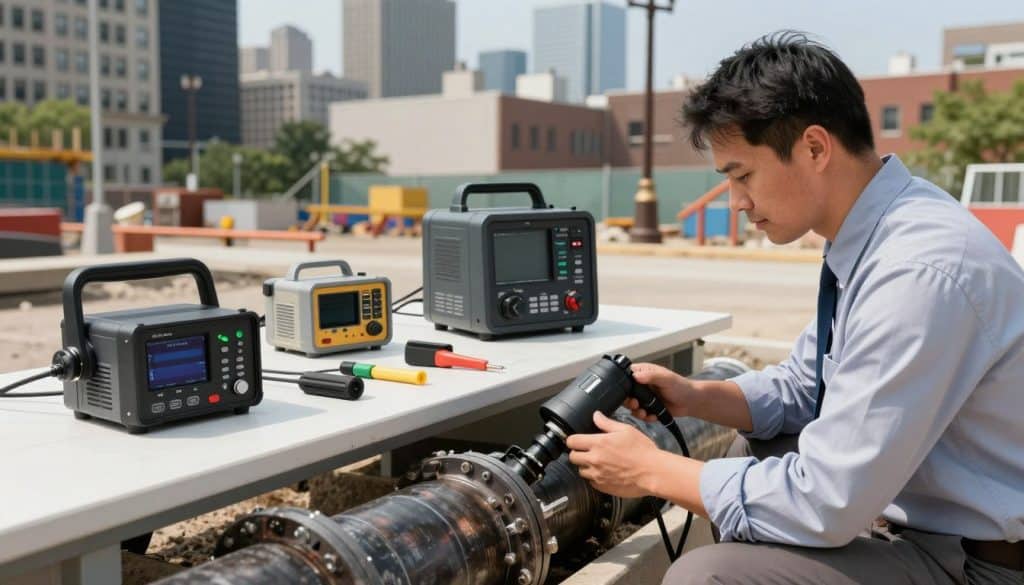
Video camera inspection pricing and why it helps
Inspection typically runs $100–$500. A camera pinpoints the problem so we avoid needless excavation and limit disruption to your yard and landscaping.
Length, depth, and access
Longer runs, deeper trenches, or tight access increase labor and equipment time. Deeper work requires added safety steps and raises the per-foot figure.
Pipe material and route
Material matters: PVC and ABS are common and affordable; older cast iron, clay, copper, or Orangeburg often need more work or upgrades.
Excavation, restoration, permits, and emergencies
Trenching may be $4–$12 per foot; trenchless work often runs $60–$250 per foot. Under-slab access can add about $300–$350 per foot. Cleanup is usually $200–$500, and hardscape or landscaping repair varies widely.
- Permits and inspections keep the job legal and documented; fees often start near $200.
- After-hours service commonly adds 25%–50% for emergency response.
We document every step, so you get a clear, fair estimate that matches your actual conditions—not a generic number.
How to get an accurate sewer line cost estimate step by step
Getting a clear, reliable estimate starts with a precise inspection so you know what the job really needs.
Step 1 — Professional inspection. Most projects begin with a video camera inspection ($100–$500). This confirms if you need a simple repair, a spot replacement, or full sewer line replacement.
Step 2 — Map the scope. Define whether the work is a partial fix, spot work, or full replacement. That keeps every bid apples-to-apples and avoids surprise charges later.
Compare methods and bids
Get about three quotes. Ask which method they propose, how access will be handled, how long the job takes, and what restoration they include.
Confirm warranty, licensing, and inclusions
- Request written warranty terms and proof of license and insurance.
- Make sure bids list materials, labor, restoration, and disposal.
- Watch for unusually low offers that may cost you more money later.
Local support you can trust: We guide you through inspection, comparisons, and final selection. For a straightforward estimate in Chicago, call (773) 968-2704 or email jsewerdrainplumbing@gmail.com. We’re available 24 hours Monday–Saturday to help your plumbing needs.
Choosing the right repair method for your line and your property
Choosing the best approach for underground pipe work depends on the damage, access, and how much disruption you can tolerate.
Traditional excavation — or dig and replace — is often the practical choice when sections are collapsed, materials are severely deteriorated, or the run won’t accept a cured lining. It provides a full replacement and is the most certain long-term fix for complex failures.
Trenchless solutions
CIPP lining and pipe bursting minimize yard and hardscape disturbance. Trenchless usually ranges from $60–$250 per foot; CIPP lining commonly sits at $90–$250 per foot, while pipe bursting is often $60–$200 per foot.
Common scenarios and typical ranges
- Cracked or broken pipes: often $600–$1,050 for targeted repairs.
- Root intrusion: removal plus follow-up can run $100–$600, depending on damage.
- Clogs and blockages: clearing is typically $200–$300, higher for severe cases.
Material decisions
When replacing sewer line sections, we weigh matching existing materials versus upgrading to modern pipe for fewer future failures. Our priority is a safe, long-lasting replacement that protects your yard and foundation while limiting repeat visits.
Ways Chicago homeowners can save money without cutting corners
Small actions today can prevent big expenses later for any Chicago homeowner. We focus on choices that protect your yard, your health, and your wallet.
Choose trenchless when it makes sense
Trenchless methods often cost more per foot but save on heavy restoration. If your driveway or landscaping is valuable, less digging means fewer restoration bills.
Fix small problems early
Schedule a timely inspection when you notice early signs. Targeted fixes for small cracks or root intrusion usually take less time and reduce the chance of a full failure.
Plan restoration and check insurance
Ask contractors to show restoration estimates up front. Landscaping or concrete repairs can add hundreds or thousands to the final bill.
Review your homeowner insurance and consider sewer warranties or add-ons. Many policies exclude normal wear and clogs, so know your coverage before work begins.
Pick experience and clear documentation
- Hire licensed plumbers with local Chicago experience.
- Require a written scope, timeline, and warranty to avoid paying twice.
- Schedule work before it becomes an emergency to avoid after-hours premiums.
Protecting your property is the real saving. Preventing backups, mold, and repeat visits keeps long-term costs down and gives you peace of mind.
Conclusion
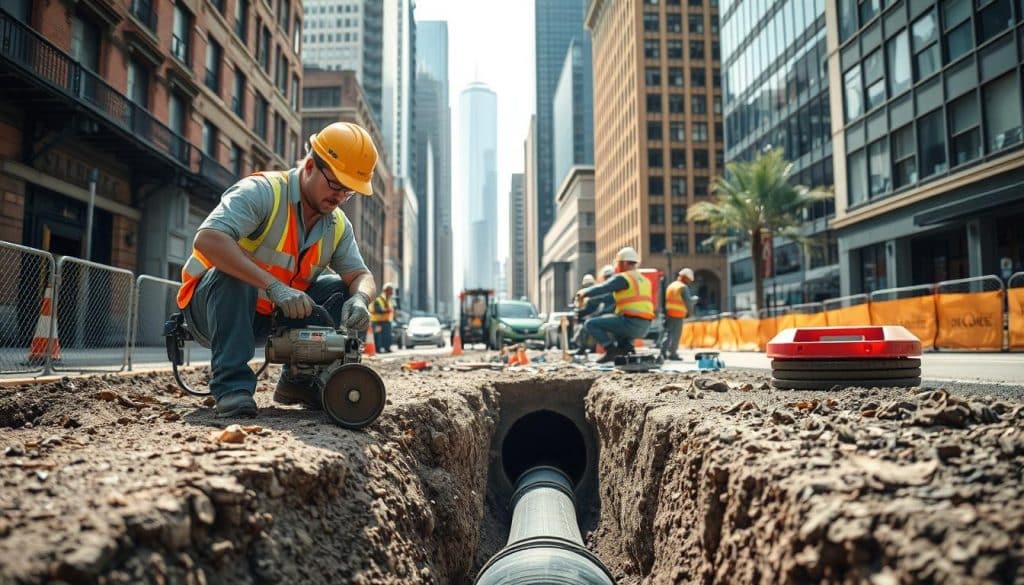
A timely inspection is the simplest way to turn an unknown problem into a clear plan you can budget for.
Confirming the issue early helps you avoid larger work and keeps the overall cost manageable. National replacement averages sit near $3,319–$3,500, with many projects in the $1,388–$5,323 range.
Video camera inspection ($100–$500) often shows whether a spot repair, partial line replacement, or full sewer line replacement is needed. Acting in an emergency can raise prices, so prompt action matters.
Choosing modern materials can extend service life—commonly 50–100 years—so the goal is lasting protection, not repeat visits.
We’re J Sewer & Drain Plumbing Inc., a family-owned, two-generation team established in 2017. Call (773) 968-2704 or email jsewerdrainplumbing@gmail.com. We’re open 24 hours Monday–Saturday and serve Chicago and nearby areas.
Offices: 3343 N Monticello Ave, Chicago, IL 60618; 3017 N Elston Ave, Chicago, IL 60618 (New Location); 809 Ridge Rd, Wilmette, IL 60091.