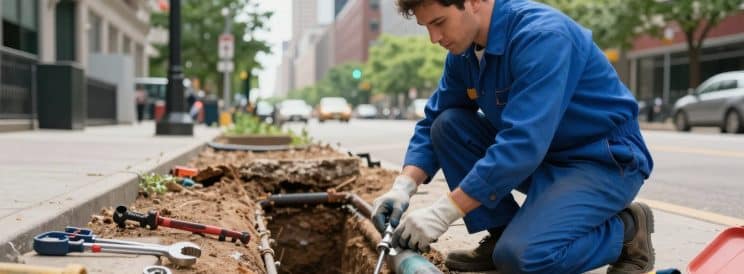
Have you ever wondered how fast a small pipe problem can turn into a costly, unhealthy mess for your home, especially when you need sewer line leak repair?
We’re J Sewer & Drain Plumbing Inc., a family-owned, two-generation Chicago plumbing team founded in 2017. We treat every customer like family, and plumbing is our passion.
We serve Chicago, IL and nearby areas, and we’re available Monday through Saturday, 24 hours open. If you need immediate help, call (773) 968-2704 or email jsewerdrainplumbing@gmail.com to schedule and feel confident in your home.
Damage to underground lines can release harmful material into the ground and your yard. That’s why we show you how to spot early signs, act fast, and choose safe, cost-effective solutions.
In this short guide, we explain common causes, how a video inspection confirms the problem, and which repair options fit different situations. Our approach focuses on protecting your household, your property, and your investment.
Key Takeaways
- Recognize early signs quickly to limit damage and health risks.
- Speed matters: small issues can worsen over a short time.
- Video inspection pinpoints the problem for smarter solutions.
- We prioritize caregiver-style service for homeowners and managers.
- Contact us any time at (773) 968-2704 or jsewerdrainplumbing@gmail.com.
Why sewer line leaks are urgent for homeowners in Chicago
Hidden breaks under your yard can quickly create unsafe conditions for your family and property. We focus on clear steps so you can act calmly and confidently.
Health and safety risks from leaking sewer lines
Contaminated moisture and waste can carry bacteria and odors into living spaces. That exposure raises short-term illness risks and longer-term concerns like mold growth.
We protect your household first by advising containment and safe practices while we confirm the problem with inspection tools.
How leaks cause costly property damage over time
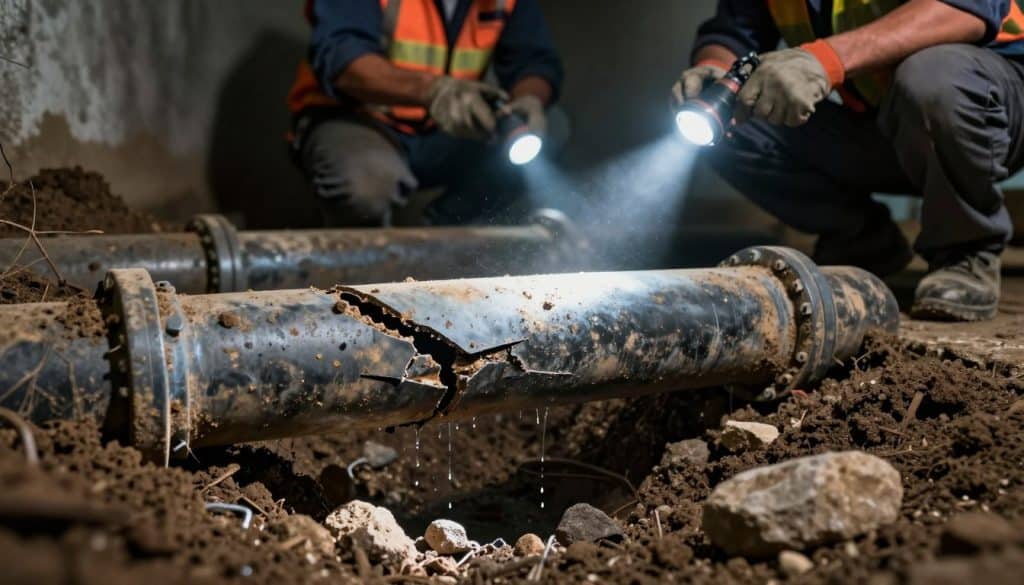
Ongoing wetness undermines soil, damages patios and sidewalks, and can cause settlement near foundations. In Chicago, freeze/thaw cycles and older pipes make small problems grow fast.
- Repeated backups or slow drains often signal a failing system.
- Early intervention keeps fixes local and lowers total restoration costs.
- Acting quickly reduces contamination cleanup and the risk of pests.
As a family-owned Chicago company, we treat you like family and guide homeowners through safety, confirmation, and permanent planning.
Common signs of sewer line damage you shouldn’t ignore
Noticing odd sounds, smells, or soggy spots in your yard can be the first clue of a failing pipe. We want you to act early so your family and property stay safe.
Gurgling toilets and unusual drain noises
Gurgles, bubbling, or strange drain noises often happen when air is trapped by a blockage or when flow is interrupted. These sound clues are easy for a homeowner to spot and should prompt a quick inspection.
Sewer odors around the property
Persistent, rotten smells in the yard, near exterior walls, or in the basement usually point to a crack or failed joint. Strong odors are an early warning you should not ignore.
Ground changes, structural warning signs, and pests
- Ground clues: Greener grass, dead patches, or standing water over the pipe run may mean contamination or collapse under the turf.
- Structure clues: Foundation cracks, settlement, or small sinkholes can follow soil washout from a damaged run.
- Bio/pest clues: Rodents, insects, and mold thrive where moisture and waste collect, signaling hidden problems.
Quick self-check: walk your yard after several days without rain, note recurring noises, and record smells or wet spots. If symptoms repeat, call J Sewer & Drain Plumbing Inc. — we’ll prioritize a fast, local response to protect your home.
What causes sewer line leaks and cracks
A gradual build-up of pressure, roots, or debris is often the real cause behind sudden home plumbing trouble. We explain common causes plainly, so you can protect your home and choose the right action when we inspect.
Tree roots infiltrating pipes
Roots seek moisture, slip through tiny openings, and grow inside pipes. They cause recurring clogs and push existing cracks wider over time.
Grease, sludge, and debris buildup
Hair, oil, paper, and accumulated sludge narrow the bore. Narrowing raises internal pressure and makes weak spots fail sooner.
Aging materials and wear
Older pipe materials become brittle after years of use. Joints and transitions show early signs of wear and invite breaks or cracks.
Outside forces and city issues
- Earth movement or nearby construction can shift soil and add uneven pressure.
- City backups or surges in the municipal system can stress your private runs and cause backups or extra strain.
- Poor design—wrong slope or sharp bends—encourages chronic clogs and premature failure.
Next step: confirm the cause with a targeted inspection so we recommend the right repair and protect your property long term.
Immediate steps to take when you suspect a sewer leak
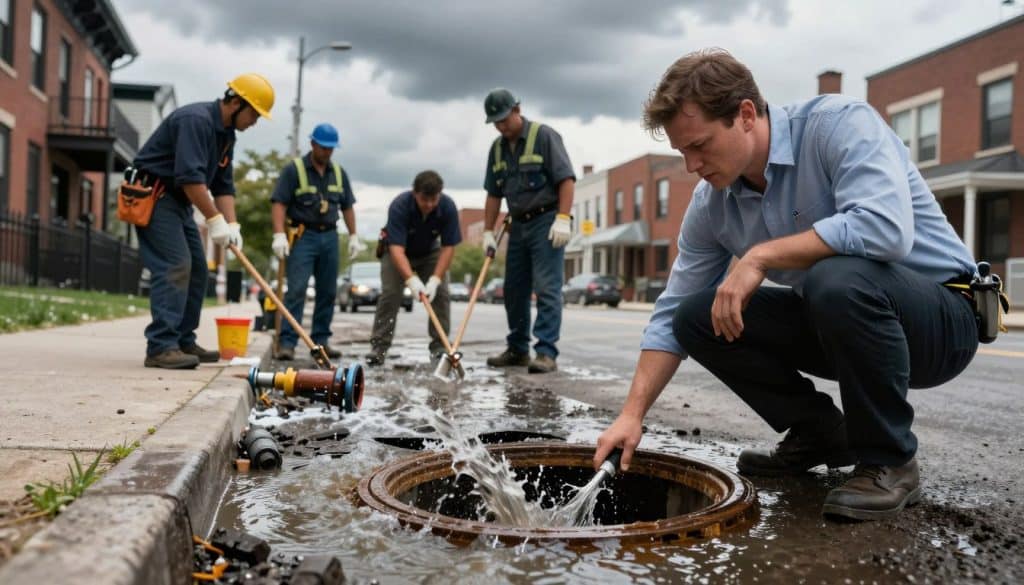
When you spot sudden wet patches or strong odors, quick, calm action can keep small problems from becoming major ones. Stop using fixtures and limit flow so the situation stabilizes while help is on the way.
Stop water use and prevent the leak from getting worse
Turn off faucets, avoid flushing toilets, and shut off washing machines. Use fixture shut-off valves if available. If the source is active, close the main control valve by the meter in the basement to stop water at the source.
Protect your home and yard from contamination and damage
- Keep children and pets away from wet areas and standing water.
- Limit tracking by using towels at doorways and ventilating affected spaces.
- Avoid DIY fixes that expose you to sewage or make damage worse.
Document symptoms and the affected area to speed up repairs
Note what drains are slow, where odors are strongest, and when symptoms began. Take clear photos or short video of wet areas, soil changes, or basement seepage.
Next step: Call J Sewer & Drain Plumbing Inc. for emergency advice and dispatch at (773) 968-2704 or email jsewerdrainplumbing@gmail.com. We’ll guide you and protect your property while we respond.
How to confirm the problem with a sewer line inspection
We begin with a clear diagnostic so your options rest on facts, not guesswork. A precise inspection helps us plan the right method and keeps disruption small.
Why a video pipe inspection is the fastest way to locate damage
Video inspection uses a camera that travels through the pipe to show exact problem spots. It pinpoints cracks, separated joints, root intrusion, corrosion, bellies, and heavy buildup quickly.
What plumbers look for during diagnostics
On camera we note the type and approximate size of the pipe, and the exact area of damage. That tells us whether a localized fix, cleaning plus lining, or full replacement makes sense.
- Visible cracks or separated joints
- Roots growing inside the pipe and scale buildup
- Bellies that hold water and signs of corrosion
- Blockages that restrict flow
We’ll explain access points we use, share video clips or stills, and outline clear next steps. This approach reduces unnecessary digging and focuses work only where your piping actually needs attention.
Temporary leak control for common pipe materials while you wait for a plumber
Before a professional team arrives, smart temporary steps can lower risks and contain water. These are short-term measures only; schedule professional service promptly.
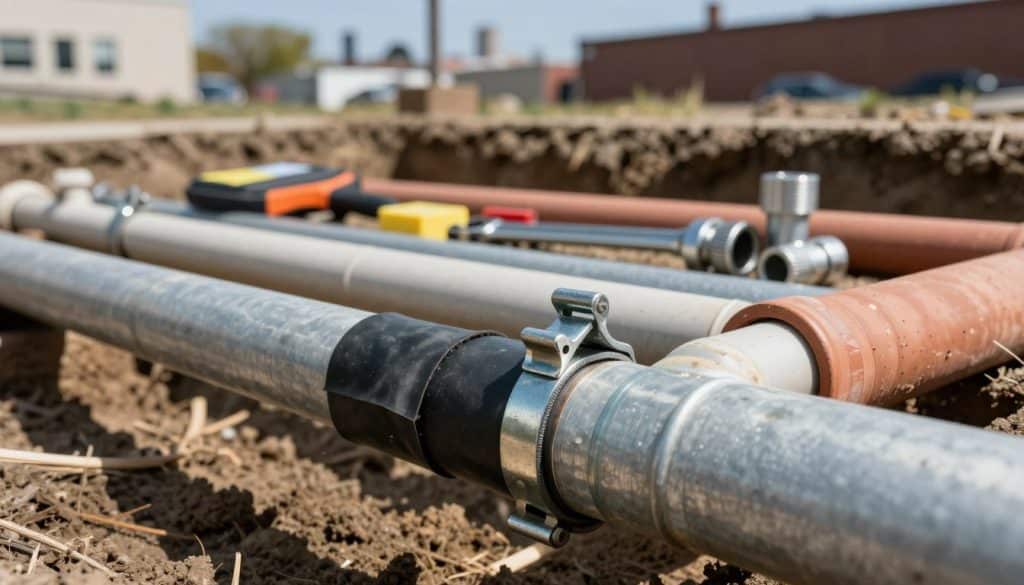
Basic tools and materials to have on hand
- Wrenches (household and plumbing), utility knife, bucket.
- All-around repair clamps in common sizes (1/2″, 3/4″, 1″, 1 1/4″) and stainless hose clamps.
- Rubber gasket material, quick-set hydraulic cement, PVC primer and glue.
Material-specific stopgaps
Copper: apply a rubber-gasket repair clamp or cut and fit a compression coupling if you can shut off the water first.
PVC: use a slip coupling with primer and glue for a cut-out, or a rubber patch secured with hose clamps when space is tight.
Galvanized steel and cast iron: these pipes can be fragile—use clamps or rubber patches, replace no-hub clamps rather than reusing old hardware.
Lead lines: avoid DIY—small problems can escalate quickly and need professional handling.
PEX: remove the damaged section and fit a push-fit coupling or approved repair clamp.
Short-term fixes and safety
Never work on an active, in-use pipe—always shut off water first. Duct tape is only a very short-term stopgap and needs close monitoring. We urge scheduling a professional inspection to confirm a lasting solution and keep your home safe.
Sewer line leak repair options for a lasting fix
Not every pipe problem needs a full replacement; the best choice balances longevity with minimal disruption.
When excavation and traditional replacement make sense
We recommend open excavation when a run is severely collapsed, badly misaligned, or beyond lining. This method accesses pipe under soil, concrete, or asphalt and lets us fully replace damaged sections.
Expect days on site, restoration of hardscape and landscaping, and debris removal as part of total cost and time.
Trenchless options that limit digging
After video inspection, trenchless sewer repair methods often fix problems with small access pits. These methods reduce surface damage and speed completion.
- CIPP lining: a resin-saturated sleeve cures in place, sealing cracks, roots, and corrosion and can extend service life up to about 50 years.
- Mechanical sleeve point repair: a pressed sleeve seals localized cracks quickly, sometimes while water remains in the pipe.
- Internal pipe coating: epoxy sprayed inside a drained run seals widespread cracks and smooths the interior for better flow.
We start with transparent guidance based on inspection, your property needs, and disruption tolerance. We aim for long-lasting solutions that protect your home with clear costs and honest timelines.
When to call J Sewer & Drain Plumbing for emergency sewer repairs
If multiple drains slow at once or ground suddenly settles, those are urgent signals to phone a pro right away. Fast action limits health risks and reduces the scope of property damage.
Leak severity signals that require same-day professional service
- Sewage backing up into tubs or showers.
- Multiple drains clogged at the same time.
- Strong indoor sewer odor that won’t dissipate.
- Sudden yard flooding near the pipe path or sinkhole signs.
How fast response reduces damage, downtime, and restoration costs
When we respond quickly, we limit soil destabilization and contamination spread. That lowers restoration time and total costs for the homeowner.
Service area coverage in Chicago, IL and nearby areas
Service Area: Chicago, IL and nearby areas. We dispatch locally to reach you fast and start safe, effective solutions.
Chicago and Wilmette office locations for scheduling and support
Contact and locations
Call (773) 968-2704 or email jsewerdrainplumbing@gmail.com for quick scheduling, repair advice, or a site visit.
-
- Chicago Office: 3343 N Monticello Ave, Chicago, IL 60618
- Wilmette Office: 809 Ridge Rd, Wilmette, IL 60091
- New Location: 3017 N Elston Ave, Chicago, IL 60618
Hours: Monday to Saturday: 24 hours open. J Sewer & Drain Plumbing Inc., established 2017, family-owned and two-generation, treats every customer like family and protects your home like our own.
Conclusion
Early action matters: get help when you notice odd smells, repeated slow drains, or damp spots in the yard. A prompt video inspection reveals what’s inside the pipe and guides the right repair or replacement choice.
Temporary controls can reduce damage while you wait, but lasting solutions come from a clear diagnosis and the right method — targeted fixes, trenchless options, or full replacement when needed.
We serve Chicago, IL and nearby areas with family-first, transparent plumbing service. Call J Sewer & Drain Plumbing Inc. at (773) 968-2704 or email jsewerdrainplumbing@gmail.com. Hours: Monday–Saturday, 24 hours open.
Offices: 3343 N Monticello Ave, 3017 N Elston Ave, Chicago, IL 60618; 809 Ridge Rd, Wilmette, IL 60091.