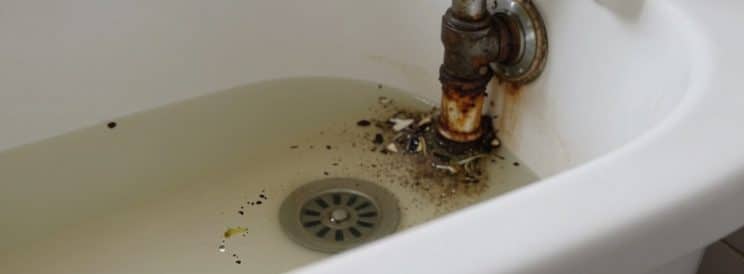
Have you ever opened your bathroom and wondered why a sewage backup in tub is causing raw water to rise from your bathtub—what does that mean for your house and your family’s health?
We know how alarming this problem feels. We also know most of the time it points to a blocked or damaged sewer line near the bathroom, not the bathtub itself.
In this short guide we lay out calm, step-by-step actions you can take right now to protect your home and health. We explain common causes—hair, grease, food debris, tree roots, and foreign objects—and how a clogged sewer line can force wastewater up through the lowest drain.
As a family-owned, two-generation team serving Chicago since 2017, J Sewer & Drain Plumbing Inc. treats every customer like family. We focus on clear, practical advice and fast, professional service across Chicago, IL and nearby areas.
If you need help immediately, call us any time Monday–Saturday: we are available 24 hours at (773) 968-2704 or email jsewerdrainplumbing@gmail.com.
Key Takeaways
- Raw water in a bathtub usually signals a sewer or sewer line flow restriction, not a tub defect.
- Act quickly to limit damage to floors, walls, and belongings and to reduce health risks.
- Common causes include hair, grease, food, tree roots, and foreign objects blocking drains.
- We diagnose with the right tools and offer lasting fixes; transparent, family-first service.
- Call J Sewer & Drain Plumbing Inc. any time Monday–Saturday at (773) 968-2704 for fast help.
What to Do Immediately When Sewage Backs Up Into a Bathtub
A sudden flow of wastewater into a bathtub demands quick, calm action. Stop all water use at once — no flushing, no showers, and no sink use. Extra water can raise the level and spread damage through your home.
Keep people and pets away from the affected area. Treat visible wastewater as a health risk; ventilate the room if you can and avoid direct contact. Small children and pets should be relocated until the area is safe.
- No water use: running water can worsen the problem and push more into lower fixtures.
- Quick scope check: test nearby drains and toilets — slow or multiple slow fixtures often point to a main sewer issue.
- Avoid chemical drain cleaners and aggressive DIY tools; they can harm pipes and complicate repairs.
- If you see sewage coming up in more than one fixture, or you can’t restore normal flow, call professionals.
- Call us anytime Monday–Saturday — we’re available 24 hours at (773) 968-2704 to guide you and dispatch help across Chicago, IL and nearby areas.
We’ll help you stabilize the situation safely. Our family-style care focuses on health and fast, practical steps so you don’t face plumbing issues alone.
Why You’re Getting a sewage backup in tub
If water returns up a lower fixture, the main pipe may be blocked and the system is rerouting flow. We want you to understand the basics so you can act quickly and safely.
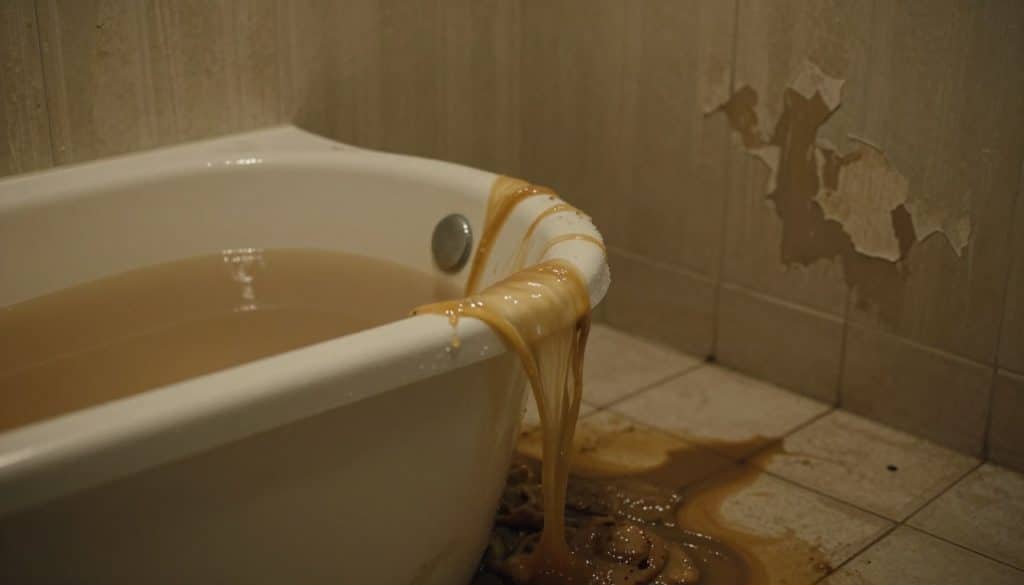
How a clogged main sewer line forces sewage up through the lowest drains
The lowest drain wins—when the main sewer line is clogged, wastewater looks for the easiest exit. In many homes the bathtub or shower sits at the lowest point, so it becomes the release.
Why flushing the toilet can trigger sewage coming up in the bathtub
A fast toilet flush sends a surge of water down the line. If the line can’t move that surge, pressure pushes wastewater up through other open fixtures, often the bathtub.
How a blocked vent pipe can slow drains and contribute to backup
Vents balance air pressure in the plumbing. A blocked vent makes drains sluggish, causes gurgling, and raises the risk that a main restriction will force sewage coming into your bathtub.
- Warning sign: multiple slow fixtures usually point to the main sewer line, not a single drain.
- Next step: professional video inspection to see the line before guessing repairs.
Common Causes of Sewer Line Blockages in Chicago-Area Homes
Many common habits quietly create the clogs and blockages we clear every week. Below we explain the typical causes we see around Chicago and what you can do to prevent repeat problems.
Tree root intrusion
Tree roots seek moisture and can enter a cracked line through tiny joints. Once inside, roots expand and form dense mats that stop flow. This is especially common with older pipe materials and shifting soil after heavy rain.
Grease, fats, and oils
Kitchen grease cools and solidifies on pipe walls, trapping debris. Over months it narrows the usable diameter and leads to repeated clogs. Never pour cooking oil down the drain; collect and discard it instead.
Everyday debris and non-biodegradable items
Hair, soap residue, and ordinary bathroom debris combine with grease to form stubborn blockages. “Flushable” wipes and other non-biodegradable things do not break down like toilet paper and often become the core of a sudden stoppage.
- Old or damaged materials: clay, Orangeburg, and cast iron can crack, deform, or trap debris.
- Foreign objects: small toys and hygiene products cause abrupt blockages, common in multi-tenant buildings.
- Prevention: avoid flushing non-degradable items, collect grease, and inspect older lines regularly.
We treat customers like family and focus on prevention as well as repair. If you manage a property, regular checks of your sewer line and pipes cut down costly repairs and keep residents safe.
Warning Signs Your Main Sewer Line Is About to Back Up
Early clues around the house can tell you the main sewer line is starting to strain. Catching these warning signs early often prevents costly repairs and protects your home.
Multiple slow drains across the house
If more than one drain moves slowly, especially the lowest fixtures, this pattern is a strong sign the problem sits in the main line. Slow sinks, showers, and toilets together mean the issue is not a single trap.
Gurgling sounds from toilets, tubs, and shower drains
Gurgles happen when trapped air forces its way through a partial obstruction. When toilets or showers make odd noises, treat that as a warning to act before a full blockage occurs.
Foul odors and standing water near drains or cleanouts
A persistent sewer smell or wet spots near an outdoor cleanout signals trouble. Standing water around floor drains or low areas can mean the line is failing, not just a local drain clog.
Water migrating between fixtures
When using one fixture causes water to rise somewhere else—like a bathtub filling while a sink runs—that movement is a classic way main line stress reveals itself.
- Act early: early diagnosis often lets us solve problems with cleaning rather than major repair.
- Property managers: recurring symptoms across units require prompt attention to protect tenants and reduce restoration costs.
- Next step: call us for fast, professional diagnostics across Chicago, IL so we can confirm the cause and recommend the safest fix.
How Professionals Diagnose the Problem Without Guesswork
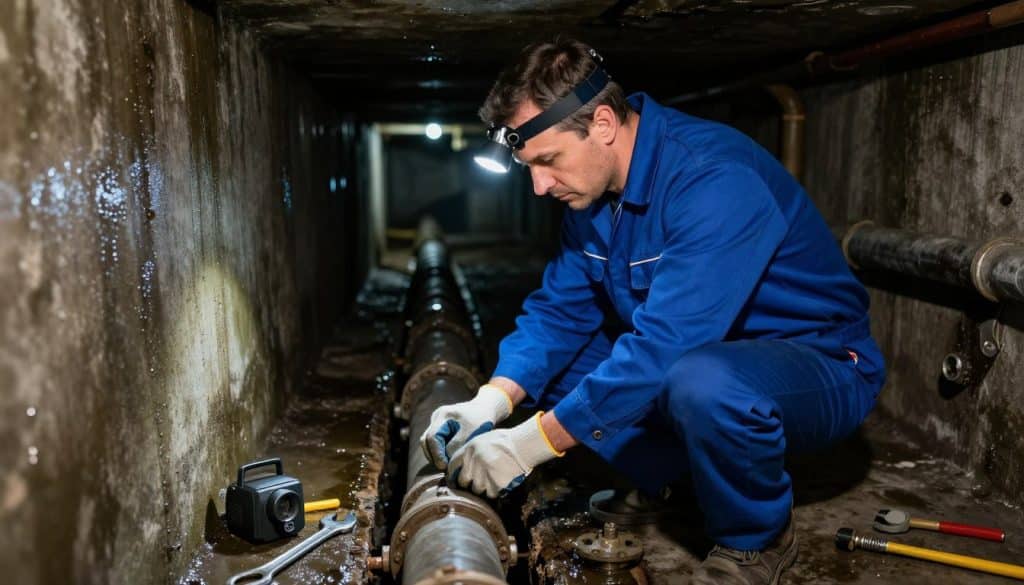
A clear inspection stops guesswork and shows exactly what’s wrong inside your pipe. We start with a high-definition video inspection to see real-time conditions inside the sewer line.
Video inspection: what the camera reveals
The waterproof camera travels through the line from a cleanout. It pinpoints clogs, cracks, tree roots, and offsets.
This lets us show you the issue and explain the repair options plainly.
Why the main cleanout is the best access point
Opening the cleanout gives safe, direct access for both inspection and cleaning. Only trained professionals should open it — pressure or water can escape unexpectedly.
What we evaluate to choose the right repair
- How much of the line is blocked versus how much the pipe is damaged.
- Whether roots or solid blockages are the main problem, and how far they extend.
- Which cleaning or repair will limit disruption and protect your property.
We serve Chicago-area homes and explain findings in plain language. If your drains are acting up, call our plumber team at (773) 968-2704 to schedule an inspection and a safe, targeted solution.
How to Fix a Clogged Sewer Line and Stop the Backup
A clear plan — inspect, clear, repair — prevents repeat plumbing problems.
Mechanical snaking for common blockages
We start with a video inspection to confirm the cause. A mechanical snake uses a rotating auger to break up hair, soap, and small debris. This is a cost-effective first step when the line has no major damage.
Hydro jetting to remove heavy buildup and roots
High-pressure water scours grease and mineral layers and can cut through tree roots that cause recurring clogs. We choose jetting carefully if older pipes show wear to avoid further damage.
Repairs, replacement, and when to call a plumber
Targeted repairs fix cracks or offsets so the problem does not return. Full replacement is best when the pipe is collapsed or chronically failing.
- Our way: inspect first, clear the drain safely, then repair the line.
- Call us now: (773) 968-2704 or jsewerdrainplumbing@gmail.com — Chicago, IL and nearby areas.
- Hours: Monday–Saturday, 24 hours open. We’re family-owned and focused on lasting, transparent service.
Conclusion
A quick, correct response reduces health risk and cuts the cost of repairs.
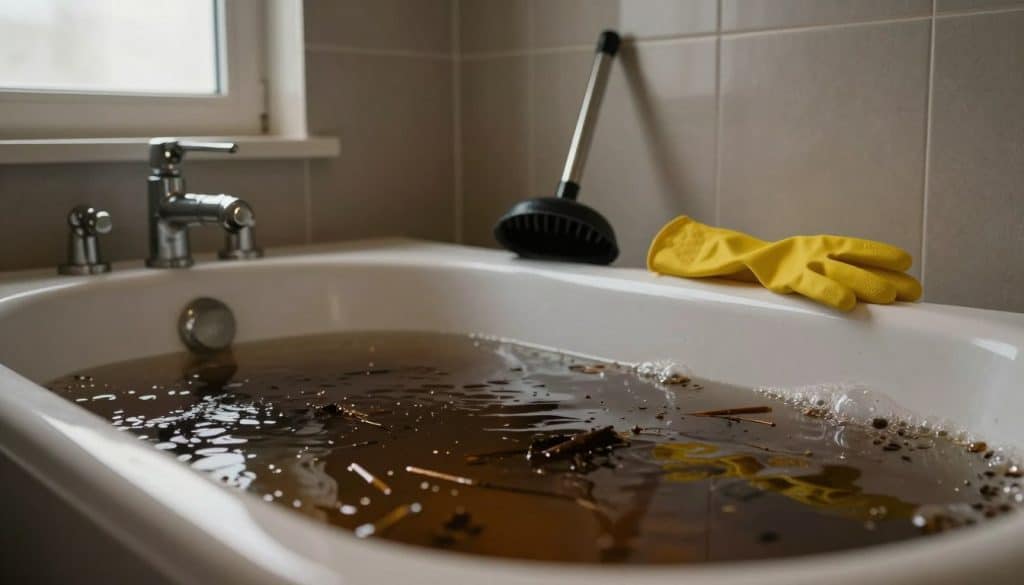
When raw water or sewage comes up from a bathtub, the issue is usually a sewer line flow problem. Stop water use, protect your floors, and get a professional video inspection to remove guesswork.
Early action limits damage and keeps your family safe. Common fixes include snaking, hydro jetting, repairs, or replacement based on what the camera shows.
We are J Sewer & Drain Plumbing Inc., a family‑owned, two‑generation team serving Chicago since 2017. Call (773) 968-2704 or email jsewerdrainplumbing@gmail.com for immediate help.
Locations: 3343 N Monticello Ave, 3017 N Elston Ave, Chicago, IL; 809 Ridge Rd, Wilmette, IL. Hours: Monday–Saturday, 24 hours open, serving Chicago, IL and nearby areas.