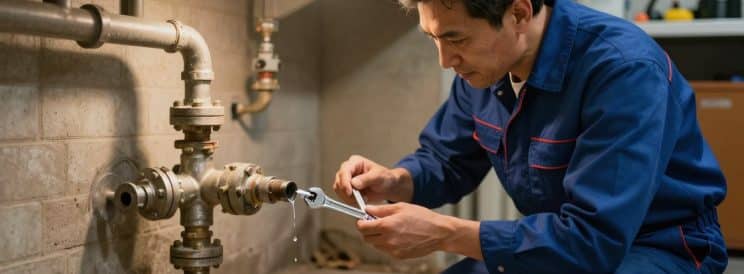
Could one strange smell or hiss in your home be a silent threat—and mean you need to repair gas pipe leak issues right away? We know that question can raise alarm. As a family-owned Chicago team, we treat every customer like family and want you to act with calm and confidence.
Natural gas is flammable and can create serious health and safety risks. We explain what immediate steps to take, what warning signs to watch for, and when to call a licensed plumber.
In this short guide we cover common signs—like a rotten-egg odor, hissing sounds, odd appliance behavior, and sudden higher usage—and clear actions: shutoff, ventilate, avoid sparks, and evacuate if needed.
Our goal: help you protect your home, tenants, and property, and show when a situation can be handled safely and when our team should step in for gas line work in Chicago and nearby areas.
Call (773) 231-8869 or email [email protected] to schedule and feel confident in your home.
Key Takeaways
- Recognize key signs such as odor, hissing, and unusual appliance noise.
- Prioritize immediate safety: shut off, ventilate, avoid sparks, and evacuate.
- We provide clear guidance but emphasize calling a licensed plumber for many situations.
- J Sewer & Drain Plumbing Inc. is a family-owned local team serving Chicago since 2017.
- Know when to stop DIY—repeated leaks, corrosion, or uncertainty mean call for professional help.
Gas leak warning signs and what to do immediately
A faint rotten-egg smell or a steady hiss can be the first sign something is wrong with a home gas line. Trust your senses: odor, a whistling sound at a valve, or strange noises from gas appliances are primary signs to notice right away.
Other clues often get missed. Headaches, dizziness, nausea, dying plants, bubbles in standing water near a line, or a sudden spike in your monthly bill can all point to a hidden problem.
Take these steps in the first minutes: don’t switch lights or use electronics indoors, avoid any open flame, and if safe, open windows and doors to ventilate. Alert everyone and evacuate the house, keeping a safe distance.
- Shut off at the meter: use a wrench to turn the rectangular tab so it sits perpendicular to the line (parallel = on).
- Indoor shutoffs: turn a ball-valve handle slowly until it is perpendicular to the line.
- Do not re-enter until professionals confirm it’s safe; carbon monoxide and fire risk remain if appliances malfunction.
We encourage Chicago homeowners and property managers to act calmly and call for help if you suspect leaking gas. We’re available Monday–Saturday to support your family’s safety.
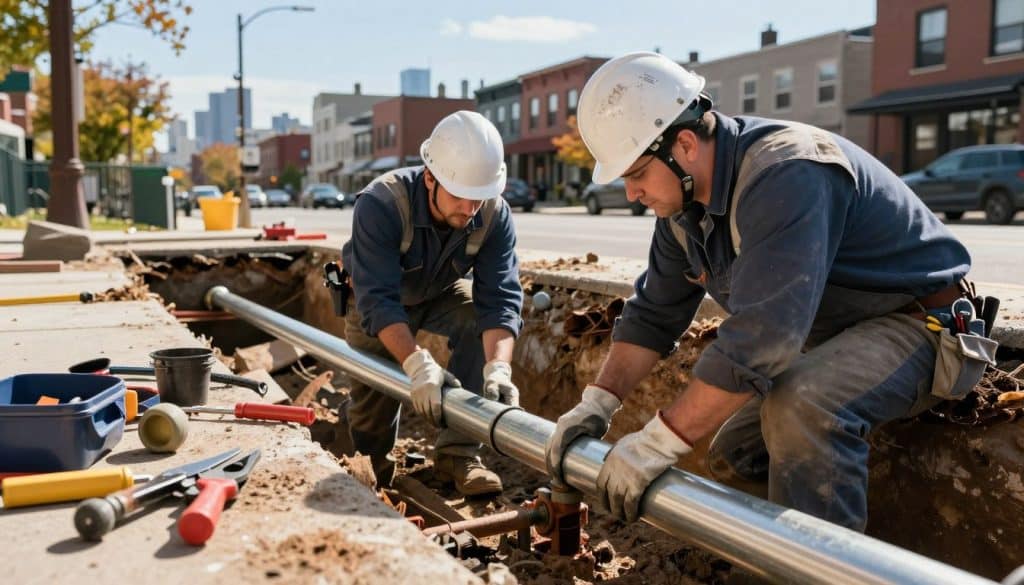
Safety gear and gas leak detection tools to prepare before any gas line work
A calm, prepared approach with the right gear helps you find problems quickly and stay safe.
We recommend basic personal protective equipment before you begin any work: a rated respirator, safety glasses, durable gloves, and closed-toe shoes. These items protect you while you inspect fittings and exposed sections of a line.
Use a combustible gas detector to detect gas presence; do not rely on a carbon monoxide alarm for this job. A detector designed for natural gas will help you pinpoint trace gas near joints and valves.
Tools to have on hand
- Adjustable wrench and pipe wrench for shutoffs and connections.
- Gas pressure test kit and a pipe cutter for controlled checks and section removal.
- Yellow Teflon tape, pipe dope, fittings, sandpaper, and acetone to prepare and seal threads.
Confirming a suspected leak the right way
After you identify a likely spot, apply soapy water to fittings and watch for steady bubbles—this is a clear sign of escaping gas. Work slowly, starting near appliances and following the line outward, so you can isolate the problem area without disturbing multiple connections.
If you find multiple bubble points, heavy corrosion, or damaged pipes, stop and call a licensed plumber. Proper detection helps protect your home and lets you decide if a DIY fix is appropriate or if professional service is needed.
How to repair gas pipe leak safely for minor, localized issues
Start every small, localized fix by turning off the main supply and airing the house well. Safety first: open windows, move people away, and confirm no smell or hissing before you touch any fittings.
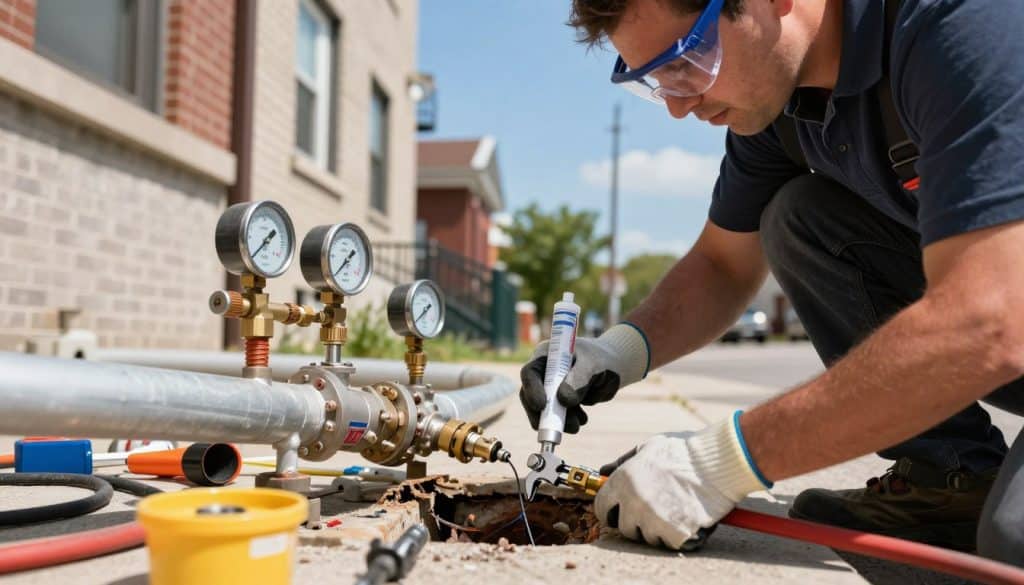
Expose the line and relieve pressure
Remove covers to reveal the section you will work on. Carefully crack the line fittings with the correct wrench to relieve any residual pressure. Move slowly and stop if you hear a hiss or detect odor.
Prep surfaces and reconnect correctly
Clean the connection area with acetone, then scuff with sandpaper so sealants bond well. When reassembling, align threads and hand-start fittings before using a wrench.
Seal, replace, and test
- Use yellow Teflon tape made for lines, or approved pipe dope at threaded joints.
- Replace any damaged pipe section with compatible material and fittings when a patch won’t hold.
- Restore service slowly, then test gas with a detector or a soapy water solution at each joint.
If the fix does not hold, turn the main off again and call a plumber. We treat every customer like family and will help keep your house and property safe across Chicago and nearby areas.
When to call a licensed plumber for gas line repairs in Chicago, IL
Knowing when to call a licensed plumber can protect your household and prevent small problems from becoming emergencies.
We guide you on when a DIY approach is ok and when to call a professional. Focus on age, visible corrosion, and repeated failures. If a line shows heavy rust, multiple bubble points, or past fixes that did not hold, a technician should assess the full system.
Certain signs need immediate attention: a strong odor near the meter, symptoms among people in the home, or issues around critical gas appliances like a furnace or water heater. In those cases, call plumber help right away.
- We weigh DIY vs professional by age of the line, extent of corrosion, and repeated leaks.
- Repeated leaks often mean failing threads or material—professionals diagnose and stop the cycle.
- Pros use advanced leak detection to find hidden failures and follow local codes for safety.
Contact J Sewer & Drain Plumbing Inc. Family-owned, two generations strong, established 2017. Open Monday–Saturday, 24 hours. Call (773) 231-8869 or email [email protected] for fast guidance and scheduling.
Service area: Chicago, IL and nearby areas. Offices: 3343 N Monticello Ave, 3017 N Elston Ave, Chicago, IL; 809 Ridge Rd, Wilmette, IL. We focus on safety first, clear communication, and the most reliable path—tightening a connection, replacing a damaged section, or advising broader gas line repairs.
Conclusion
Act quickly and calmly—your first priority is to secure the area and reduce ignition risk.
If you suspect a leak, follow the steps: avoid sparks, ventilate if safe to do so, evacuate, and shut off the gas at the meter when possible. Watch for the key signs: a rotten-egg odor, a steady hiss, odd appliance behavior, headaches, or bubbling water near a line.
For minor, local fixes the basic sequence helps: shutoff, expose the section, work carefully on fittings, use proper sealant, then test thoroughly. Over-tightened threaded joints often cause repeat problems and can turn a small issue into a larger one.
Carbon monoxide and fire risk make a cautious stance smart—when in doubt, call plumber help. We treat every customer like family and serve Chicago, IL and nearby areas. Contact J Sewer & Drain Plumbing Inc. for clear, safe guidance and dependable plumbing support.
FAQ
What should I do first if I smell rotten eggs or hear a hissing sound in my home?
Leave the area immediately, avoid using electronics or light switches, get everyone outside, and call 9-1-1 and the utility company from a safe distance. Do not try to investigate with a flame or create any spark that could ignite gas.
What common signs indicate a hazardous line issue besides odor or sound?
Look for dizziness, headaches, or nausea in household members, dying houseplants near the meter or line, bubbling in standing water, or unexplained increases on your utility bill. These clues suggest you should evacuate and seek emergency help.
How do I turn off the supply at the meter or indoor shutoff without creating a spark?
Use a non-sparking wrench if available, open doors and windows first for ventilation, and turn the valve perpendicular to the pipe to stop flow. If you’re unsure, leave the area and let the gas utility or a licensed technician shut it off.
What personal protective equipment should we use before attempting any limited line work?
Wear flame-resistant clothing, eye protection, and gloves rated for plumbing tasks. Ensure proper ventilation and keep a fire extinguisher and a phone outside the work area. If you suspect carbon monoxide, vacate and let professionals test the air.
Which tools reliably help confirm a line issue before touching fittings?
Use an electronic combustible gas detector for quick, safe checks. For visual verification, apply a soap-and-water solution to fittings and watch for steady bubbles. Never use an open flame for testing.
What immediate steps should I take before attempting a small, localized fix on a leaking section?
Turn off the supply, ventilate the space thoroughly, and relieve residual pressure at fittings. Only attempt minor work if the leak is tiny, you have the right tools, and you know local codes—otherwise call a licensed technician.
How should we prepare a pipe surface for a reliable seal when making a repair?
Expose the affected section, remove covers, clean grease and debris with acetone, and scuff the metal with sandpaper to promote adhesion. Use compatible fittings and avoid contaminating the prepared surface before sealing.
What sealing materials are appropriate for threaded connections on residential lines?
Use yellow PTFE tape designed for fuel gas or a propane-rated pipe compound (“pipe dope”). Apply tape in the thread direction and do not over-apply; excess material can prevent proper seating of fittings.
When should we replace a damaged section instead of patching it?
Replace any section with corrosion, multiple leaks, gouges, or where previous repairs repeatedly fail. A new, code-compliant length of material with correct fittings reduces future hazards and liability.
How do we confirm the repair held and the line is safe to restore service?
Test all joints with an electronic detector and a soap solution while the supply is on. Listen for hissing, check for odor, and monitor appliances. If any sign persists, shut the line off and call a licensed plumber.
What does it mean if a repaired section keeps failing and bubbles recur after testing?
Recurrent bubbles usually indicate underlying corrosion, incorrect materials, or improper installation. Repeated failures are a clear sign to stop DIY attempts and call a licensed professional to assess and replace the system if needed.
When is it better to hire a licensed plumber in Chicago instead of attempting a DIY fix?
Hire a pro when lines are old, corroded, buried, pass through walls or slabs, or when leaks reoccur. Also call a licensed technician for appliance connections, meter work, or whenever you’re uncomfortable performing the task safely.
How can we contact J Sewer & Drain Plumbing Inc. for line detection or emergency service in the Chicago area?
Contact J Sewer & Drain Plumbing Inc., open Monday–Saturday, 24 hrs, at (773) 231-8869 or [email protected]. We dispatch licensed technicians throughout Chicago and nearby suburbs.
Where are J Sewer & Drain Plumbing Inc.’s service locations?
Our offices serve Chicago and nearby areas from 3343 N Monticello Ave, Chicago, IL 60618; 3017 N Elston Ave, Chicago, IL 60618; and 809 Ridge Rd, Wilmette, IL 60091. Call us for same-day assessments and safety testing.