

Curious about the real numbers behind a typical toilet project, and whether your next upgrade will be simple or costly? How much does a plumber charge to install a toilet?
We open with that common homeowner question so you can compare quotes with confidence. This short guide explains what “installed” pricing usually covers, the national average cost range, and why some jobs stay simple while others grow into full plumbing repairs.
J Sewer & Drain Plumbing Inc. is a family-owned, two-generation company serving Chicago, IL since 2017. We are local, community-rooted, and open Monday–Saturday: 24 hours Open.
Typical installed cost runs about $300–$800 for most units, but can dip near $200 for a budget fixture or climb past $5,000 for luxury smart models or complex site work.
We’ll help your home avoid leaks and water damage, and we preview what drives cost: fixture choice, labor, disposal, and hidden issues under the floor. Call (773) 231-8869 or email [email protected] to schedule and feel confident in your home.
Key Takeaways
- Installed pricing includes fixture, basic labor, and disposal in many cases.
- Average cost varies widely: budget to high-end smart toilets.
- Site conditions and hidden damage can raise final totals.
- Working with experienced plumbers protects your home from leaks.
- We offer local, family-first service in Chicago, ready to guide your choice.
Toilet Installation Cost in the United States Today
A clear snapshot of national costs lets you avoid surprises when planning your bathroom project.
Typical price ranges: Most installations in the U.S. fall between $300 and $800, with budget jobs near $200 and luxury smart toilets rising past $5,000. These figures usually include the fixture, basic labor, and simple supplies.

Why estimates vary
Estimates change based on several factors: model choice, required repairs, and whether electrical work is needed for advanced features. Local labor rates and the bathroom’s condition also drive costs, so we recommend a small contingency for hidden issues.
Typical time to complete
Most jobs finish in 1–3 hours when the work is a like-for-like swap. If the job expands into new plumbing, flooring repair, or electrical hookup, the installation time — and cost — will rise accordingly.
- We define replacement versus new installation so your quote matches the scope.
- Pick your model, confirm measurements, and request comparable quotes for fair comparison.
- Scheduling and site readiness in Chicago affect how quickly we complete your project.
We aim for clear expectations and dependable service, and we’re ready to guide you through choices that save water and improve flush performance while protecting your home.
How much does a plumber charge to install a toilet?
Start with realistic labor benchmarks, then factor in materials and site conditions for an accurate budget. We want you to compare quotes confidently and protect your home from leaks and hidden damage.
Average labor and what it covers
Typical labor runs between $150 and $400, with some estimates up to $450 for more complex work. This usually covers shutting off water, disconnecting supply, removing the old fixture, setting the new bowl, reconnecting the line, and leak testing.
Mid-range installed totals homeowners see
For mainstream models that stay in the same location, most totals fall into a moderate bracket. Homewyse (Jan 2026) lists a mid-range benchmark of about $635–$1,151 per toilet under favorable conditions.
Getting fair quotes for your project
- Ask what the quote includes: removal, disposal, wax ring, new supply line.
- Confirm exclusions: floor repair, flange replacement, code upgrades.
- Remember materials and extras move the total cost up or down.
We recommend written quotes and clear line items so your Chicago-area job finishes clean and leak-free.
What’s Included in the Total Cost to Install a Toilet
Knowing exactly what your quote covers helps you avoid surprise expenses during a toilet replacement. We itemize costs so you can see the appliance, labor, and small parts that make the job watertight.
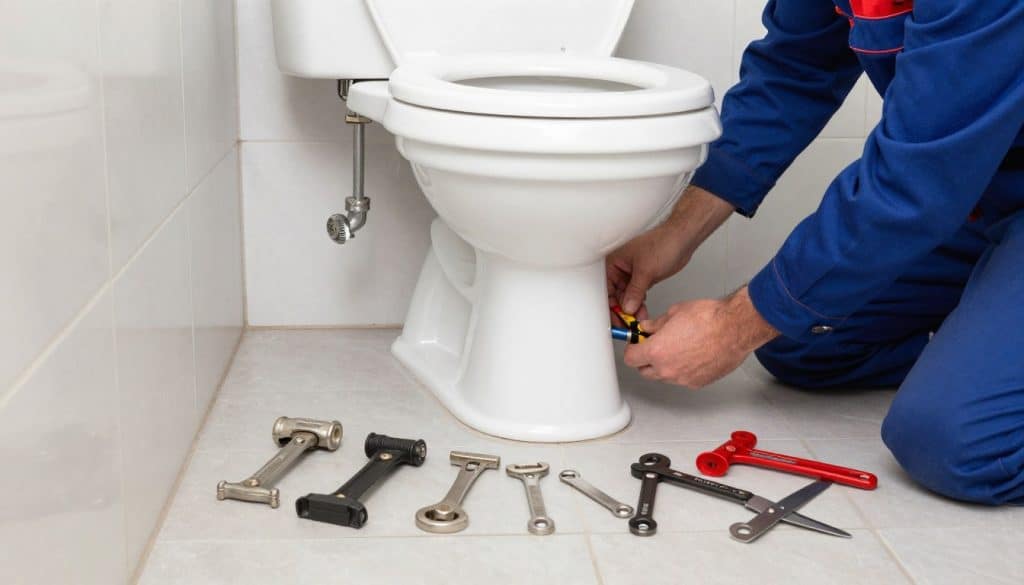
Price tiers for the toilet itself
Budget models meet basic needs and lower the initial bill. Mid-range options balance performance and comfort. Premium fixtures add features, which raise the total cost but may save water over time.
Common supplies and materials
Mounting bolts, connectors, and seal components are standard. Basic supplies often run $15–$50. Upgrades or specialty parts can push materials nearer to $100.
Old toilet removal and disposal
Removal can be free, or add $25 to several hundred dollars depending on hauling and local rules. Disposal fees typically range $50–$200 in metro areas.
Possible add-ons we watch for
- Flange replacement and a new wax ring — often under $100 — prevent leaks at the base.
- New water supply line if the old one is corroded.
- Floor repair when hidden water damage appears after lifting the bowl.
We prioritize transparent estimates and the right components so your new toilet stays secure and your home avoids long-term water damage.
Choosing a New Toilet: Options That Change Installation Costs
Different toilets models change scope, labor, and long-term water use. Your choice affects comfort, reliability, and whether the project stays simple or grows into more work.
One-piece vs. two-piece: One-piece units sit together for easier cleaning, but they cost more and weigh more during installation. Two-piece models are lighter and cheaper up front, which can shorten labor time.
- Wall-mounted: These save floor space but need in-wall components and extra framing, which expands installation and may raise costs.
- Bidet toilets and bidet upgrades: Non-electric bidet seats often fit existing plumbing; electric or built-in bidet upgrades require extra connections.
- Smart toilets: These add comfort and features, but electrical access can become part of the project if an outlet isn’t nearby.
Seats, flush, and comfort: Seat upgrades like soft-close or heated models range widely and are sometimes sold separately. Choose bowl shape and chair height for comfort and ADA needs. Water-saving features — dual-flush or 1.28 gpf models — cut bills and protect your home from wasteful use.
Brand and quality: Pick known brands with available components and service. We help you weigh upfront cost versus long-term repairs so your bathroom investment performs well for years.
Labor and Site Factors That Can Raise Your Toilet Installation Price
Small changes at the jobsite can turn a quick swap into a multi-hour project. We scope work up front and communicate if we find issues that affect your final bill. Our goal is to protect your home and keep surprises to a minimum in Chicago and nearby suburbs.
Moving the fixture or changing lines
Re-routing drains, vents, or supply piping is one of the biggest price drivers. Moving plumbing often requires cutting into subfloor or adding new venting. Labor and materials increase when drains are relocated or electrical access is added for smart models.
Hidden leaks and water damage found during removal
When we lift the old bowl, we frequently find failed seals or slow seepage. Catching leaks early prevents greater water damage and mold. If damage is present, repair work increases time on site and the labor portion of your quote.
Flooring and drywall repairs tied to replacement
Subfloor repairs can cost about $8–$24 per square foot, depending on finish. Drywall patching runs roughly $50–$100 per square foot when walls need attention. The type of floor—tile, vinyl, or wood—affects materials and time.
- We explain pricing clearly and add a contingency for unknown damage.
- Even with issues, we prioritize watertight work and clean finishes.
- Written estimates list labor, materials, and expected time for your project.
DIY Toilet Installation vs. Hiring a Plumber
A like-for-like swap can be a doable DIY project, but small mistakes can lead to costly water damage. We want your choice to protect your home, save time, and avoid surprises.
DIY toilet install costs, tools, and common pitfalls
DIY costs usually include the new fixture plus basic supplies and tools. Expect supplies such as wax ring, bolts, and a supply line to run about $15–$50. If you need tools or extra materials, budget another $50–$100.
Common pitfalls we see: improper wax ring compression, overtightened bolts that crack porcelain, an uneven set that causes rocking, and slow leaks that appear later. Those mistakes often lead to hidden water damage under the floor.
When hiring a professional protects your home from leaks and water damage
Hire a plumber when you find soft flooring, signs of past leaks, or if pipes and flange work are needed. Professionals test seals, verify stable mounting, and reduce long-term risk.
- When DIY is reasonable: straight like-for-like swaps with solid floors and clear access.
- When to call us: suspected leaks, flange replacement, or electrical work for smart features.
- Get quotes: compare scope, materials, labor, and verification steps—not just the lowest number.
We recommend written quotes and professional testing when you’re unsure. That helps keep your home dry, clean, and worry-free.
Conclusion
Plan with confidence by matching your new fixture to existing connections and requesting an itemized quote. Typical installed cost runs about $300–$800, with labor generally $150–$400 (sometimes up to $450). Most jobs finish in 1–3 hours, while Homewyse (Jan 2026) cites mid‑range benchmarks near $635–$1,151. High‑end smart units can exceed $3,000 for the unit and $5,000+ installed.
Choose a comparable model, confirm measurements, and verify disposal and parts are included. That simple approach usually keeps your bathroom project budget-friendly and avoids water damage later.
We are family‑owned, two‑generation, serving Chicago, IL and nearby areas since 2017. For clear quotes and scheduling, call or email us with your toilet type and site notes.
J Sewer & Drain Plumbing Inc. | Phone: (773) 231-8869 | Email: [email protected] | Hours: Monday–Saturday: 24 hours Open. Offices: 3343 N Monticello Ave, 3017 N Elston Ave, Chicago, IL; 809 Ridge Rd, Wilmette, IL.
FAQ
What influences the total cost for installing a new toilet in Chicago?
Local labor rates, toilet model, removal and disposal of the old toilet, any flange or water line work, and possible repair of water damage or subflooring all affect final pricing. At J Sewer & Drain Plumbing Inc., we evaluate your bathroom layout, required parts, and site conditions before giving a transparent estimate.
What are typical price ranges for toilet replacement and installation?
Budget toilets with basic installation start at lower price points, while mid-range models with standard labor land in the middle. Premium or specialty units, like wall-hung or smart toilets, push totals higher due to extra parts and time. We provide breakdowns so you see materials and labor separately.
Why can one estimate differ substantially from another?
Estimates vary because of differences in toilet quality, extra parts (flange, wax ring, supply line), time required, and unforeseen site issues such as hidden leaks or damaged flooring. Permits and electrical work for smart units also increase costs. We always inspect first to reduce surprises.
How long does a standard toilet installation typically take?
Most standard replacements take about one to two hours on site when the flange and plumbing are in good condition. If we find damage, need to move plumbing, or install a wall-hung model, the timeline expands. We schedule realistically and keep you informed throughout the job.
What does labor usually include when hiring our plumbers for toilet installation?
Labor covers removal of the old fixture, inspection of the flange and drain, setting and sealing the new toilet, connecting the water supply, testing for leaks, and cleanup. If additional repairs or new parts are needed, we list those separately on your estimate.
What are common mid-range “installed” totals homeowners see?
Mid-range totals combine a quality two-piece toilet with professional installation and standard parts. Prices reflect local Chicago labor and typical supplies. We give clear quotes tailored to your selected model and any needed site work.
Which parts and supplies may add to the installation bill?
Common additions include a new flange, wax ring or wax-free seal, braided water supply line, closet bolts, and new shutoff valves. If the floor or drywall needs repair after removal, those materials and labor add to the total. We explain each component on our invoice.
Are removal and disposal fees usually included?
Removal of the old toilet is often part of the service, but some circumstances require a disposal fee—especially for heavy or damaged fixtures. We state disposal charges up front so there are no surprises on completion.
How do one-piece and two-piece toilets change installation costs?
One-piece toilets are heavier and can cost more to set, but they often need fewer seals. Two-piece models are lighter and usually quicker to install. Either style can be installed efficiently, yet labor estimates reflect the unit’s size and handling needs.
What extra work is required for wall-mounted and wall-hung models?
Wall-mounted units need a sturdy carrier system, in-wall support, and often plumbing relocation. That structural and plumbing work increases labor, materials, and time compared with standard floor-mounted toilets. We assess structural needs before quoting.
Do bidet upgrades or smart toilets affect the project cost?
Yes. Bidet attachments are generally affordable additions, while integrated bidet toilets and smart models may require electrical circuits, outlet installation, and additional plumbing work. Those factors raise the total and require coordination with licensed electricians when needed.
How much should I expect to pay for seat upgrades and comfort features?
Basic replacement seats are inexpensive, but heated seats, slow-close lids, or specialty shapes cost more. If the seat is part of a smart or bidet system, installation complexity and price increase accordingly. We help match features to your budget and needs.
Can choosing a water-saving model reduce future utility costs?
Low-flow and dual-flush toilets cut water use and can lower monthly bills, especially in older homes. While initial cost may be higher for high-efficiency models, savings on water over time and potential local rebates make them a smart choice. We can recommend options that balance flush performance and conservation.
How do bowl shape, height, and ADA features impact price?
Elongated bowls and comfort-height designs usually cost more than basic round, standard-height bowls. ADA-compliant toilets can require different rough-ins or space considerations. Those choices affect both the fixture cost and the installation approach.
How do hidden leaks or water damage discovered during removal affect the job?
Finding leaks or rot means we must pause installation and repair the damaged area, which raises labor and material costs. Repair work protects your home from future problems, and we provide clear, itemized quotes before proceeding with restoration and reinstallation.
What happens if the toilet rough-in must be moved?
Moving the rough-in requires rerouting drain and supply lines and possibly opening the floor or wall. This is a more complex project with higher labor and materials costs. We evaluate feasibility and present a plan with timelines and pricing.
Can I install a toilet myself, and what are common DIY pitfalls?
DIY installations can save on labor, but common pitfalls include poor sealing leading to leaks, incorrect flange alignment, overtightened bolts that crack porcelain, and missing hidden damage. If you aren’t comfortable with plumbing basics, hiring us protects your home from leaks and water damage.
When should I choose professional installation over DIY?
Hire our licensed team when the project includes plumbing moves, suspected water damage, specialty toilets, or when you want warranty-backed workmanship. Professional installation minimizes risk, ensures proper seals and flushing performance, and preserves your home’s structure.
How do we provide transparent pricing and quotes for toilet installation?
We perform an on-site inspection, list all parts and labor, and itemize potential add-ons like new flanges or flooring repairs. At J Sewer & Drain Plumbing Inc., our estimates are clear, and we discuss options so you choose the balance of cost and quality that fits your home.
Do you serve Chicago and nearby neighborhoods for toilet installations?
Yes. J Sewer & Drain Plumbing Inc. serves Chicago, IL and surrounding areas, offering local expertise, prompt scheduling, and reliable service. Contact us for an inspection and a personalized, itemized quote for your toilet project.