
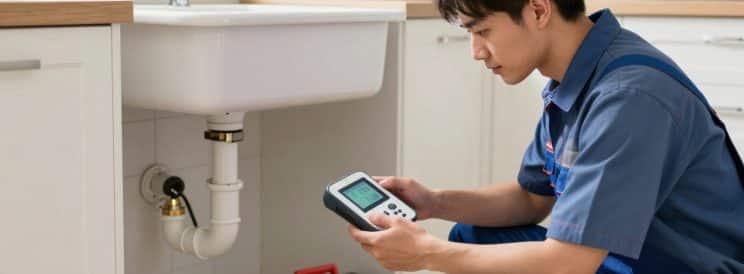
Curious whether a small drip could hide a costly problem in your Chicago home? How does water leak detection work? We ask that because plumbing issues cause billions in U.S. property damage each year, and the average claim tops $10,000.
We are J Sewer & Drain Plumbing Inc., a family-owned, two-generation company serving Chicago since 2017. We treat every customer like family and explain solutions in plain language so you can protect your property before a minor issue becomes major damage.
In this guide we’ll show what a typical detection system does, how it monitors flow or senses moisture, and how it can trigger an alarm or automatic shutoff. We frame tips around Chicago realities: older pipes, freeze risks, and hidden problems that show up as stains or warped cabinets.
Expect step-by-step explanations, clear choices for technology, safe DIY checks, and plain advice on when to call a licensed plumber. Our goal is to reduce stress, prevent damage, and help you make confident decisions for your home.
Call (773) 968-2704 or email jsewerdrainplumbing@gmail.com to schedule and feel confident in your home.
Key Takeaways
- J Sewer & Drain Plumbing Inc. is a trusted, family-owned Chicago plumber focused on protection.
- Early monitoring and sensors can stop small issues from causing major claims.
- Leak detection systems can alarm you or shut off the supply automatically.
- We outline simple DIY checks and when to call a pro for equipment and service.
- Our guide centers on safety, practical steps, and choices for homes in Chicago and nearby areas.
Why water leak detection matters for homeowners in Chicago and nearby areas
A small drip in a Chicago basement can quietly turn into thousands of dollars in repairs if left unseen. That quiet start can become major water damage, mold, and weakened structures over time.
The true cost of water damage in the United States
The average insurance claim is about $10,234. Across the country, leaks contribute to billions in property damage. Investing in early warning is usually far cheaper than remediation.
How small leaks become major home damage over time
Small leaks often hide inside walls, under sinks, or near appliances. Moisture spreads into drywall, flooring, insulation, and cabinetry, creating hidden damage and mold.
Peace of mind benefits of early detection and automatic shutoff
We want to help you protect your home and keep family life uninterrupted. Early alerts, loud alarms, app notices, and fast shutoff offer true peace mind.
- Connect a minor drip to costly repairs and mold.
- Understand national risk: average claim ~ $10,234.
- Reduce chances of thousands dollars in unexpected repairs.
Our prevention-first approach aims to prevent damage, not just fix it. Next, we’ll explain what “leak detection” can mean — from flow monitors to moisture sensors — and which detection systems fit your home.
What is a water leak detection system and what does it actually do?
Modern home systems combine pipeline monitoring and spot sensors to guard your property. A leak detection system is an active protection device that watches for abnormal flow or senses moisture where it should not be.
Flow monitoring versus spot sensors
Whole-home setups track water flow through the main line. They spot sustained or unusual use and protect every fixture downstream.
Point-of-use sensors check for surface moisture under sinks and near appliances. These are ideal for targeted risk areas.
What happens when a detector activates
When leak detectors identify abnormal patterns, you may hear a loud alert or get an app message. Some systems go further and close an internal valve to shut water to the home.
Placement and practical choice
- Usually installed at the point of entry to protect the entire water supply.
- Alert-only monitors suit low-risk homes; shutoff-capable systems fit higher risk or extended-away scenarios.
- Correct placement shortens the time water has to cause a water leak and reduces damage.
We focus on clear choices so you can match protection to your life and call on trusted plumbing support when needed.
How does water leak detection work in real life?
Everyday systems catch unusual flow patterns before they can flood a home. We’ll walk through the steps so you know what to expect and how a unit buys you time and control.
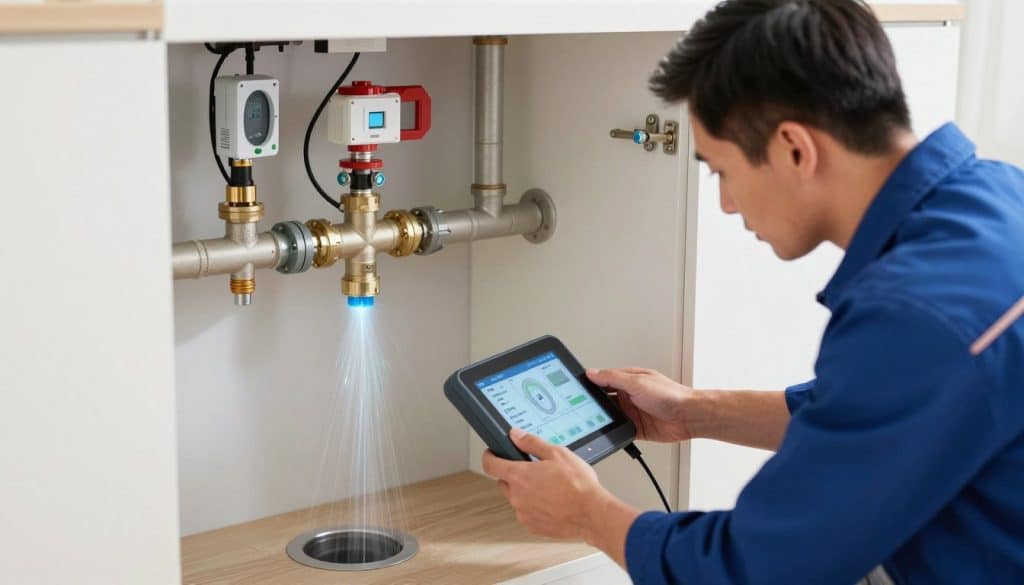
Step 1 — sensing flow and spotting abnormal use
First, a meter or ultrasonic sensor measures home water flow. It learns typical bursts—showers, dishwashers, and short cycles—and flags sustained or odd patterns.
Step 2 — confirming a problem
To avoid false alarms, the system checks duration, volume, and repeated patterns before it alerts. This confirmation reduces needless interruptions while still guarding against real issues.
Step 3 — valve activation to shut water supply
If shutoff is enabled, an internal ball valve closes to stop the water supply. That quick response limits total loss and cuts down on water damage.
Step 4 — alerts, connectivity, and remote monitoring
You’ll get an in-home alarm and an app notification over Wi‑Fi. The phone shows recent flow events so you can decide calmly and act from anywhere.
Step 5 — freeze protection and next steps
Some systems sense cold risk and stop flow to help prevent burst pipes during freezing temperatures. After shutoff, avoid using fixtures, try to find the source, and call a plumber when needed.
- Normal use: short bursts and routine cycles.
- Trigger: sustained flow or unusual patterns.
- Response: confirmation, alarm, and optional shutoff.
Core technologies behind leak detection systems
Understanding the gear behind monitoring helps you pick the right system for your house. Below we break down the main approaches and what each one is best at.
Mechanical turbine flow monitoring
Mechanical meters use an internal impeller or turbine that spins as gallons pass. The system counts rotations to estimate volume and spot sustained flow that often signals a problem.
Ultrasonic flow sensing
Ultrasonic units send sound pulses upstream and downstream and measure the time difference. That time-delay reveals flow without moving parts, reducing maintenance and false triggers.
Moisture sensors for point-of-use protection
Simple probes detect liquid when water bridges two contacts and completes a circuit. These sensors are ideal under sinks, behind washers, near dishwashers, and by heaters for early surface alerts.
Pressure and flow meter approaches
Some systems compare pressure and flow readings to estimate a leak rate. This helps tell a slow pinhole issue from a sudden failure, guiding urgency and response.
- Flow monitoring finds hidden pipe issues throughout the home.
- Moisture sensing catches local drips and appliance failures quickly.
- Combined systems give broader coverage and faster action.
Types of water leak detectors and detection systems for different areas of the home
Choosing the right protection starts with matching device types to trouble spots around your home.
Whole-house system with smart shutoff valve
A whole-house leak detection system usually installs at the point of entry and can close a valve to stop supply. This single type often offers the strongest protection for the entire home.
Water monitors that alert only
Alert-only water monitors notify you by alarm or app but don’t shut water off. They suit hands-on owners who can respond quickly, but they may fall short for vacation properties.
Wireless control monitors and shutoff valves for smart homes
These wireless control monitors and shutoff valves for smart homes integrate with Wi‑Fi. They give remote status, reliable alerts, and an option to close the line from your phone.
Spot/probe sensors
Small sensors sit under heaters, dishwashers, and washers. When moisture reaches the probe, you get an instant alert and can stop damage before it spreads.
Reverse osmosis leak detector
A reverse osmosis leak detector fits under-sink RO units. It senses pooling and can shut the unit off to protect cabinets and floors.
- Layering strategy: whole-home shutoff plus targeted sensors covers the most risk without excess devices.
Where leaks happen most and what causes water leaks
Knowing where problems usually appear helps you prioritize sensors and shutoff coverage.
Many causes water issues start with sudden pressure events. Water hammer, extreme pressures, and failing valves or fittings can loosen joints and trigger a fast leak.
Another frequent cause is corrosion and aging plumbing. Old metal and hidden pinhole leaks quietly damage cabinets, walls, and ceilings before you see signs.
Cold snaps matter in Chicago. Freezing temperatures can crack or burst pipes when ice expands, then causes sudden leaks once it thaws.
- Top trouble spots: water heater connections, water meter areas, appliances, slab-adjacent lines, and supply lines.
- Prevention: targeted sensors under sinks and a whole-home shutoff cut the time between a leak and response to prevent damage.
- Caregiver mindset: inspect key areas annually and prioritize protection where failure causes the most harm to your home and family.
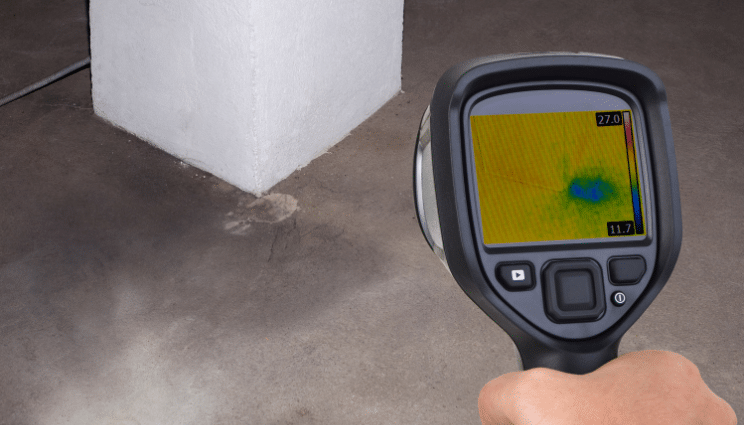
When leaks hide inside walls or slabs, we use professional tools to locate them with minimal disruption and get repairs started quickly.
How plumbers find hidden leaks using professional leak detection equipment
When a problem hides beneath finished floors, precise tools let us locate it without major demolition. This saves your time and cuts repair costs, while protecting finished spaces from further damage.
Electronic listening and acoustic tools
We use electronic listening devices and acoustic detectors to “hear” escaping fluid through walls and under floors. This narrows a search to a few feet before we open anything up.
Digital water leak detection for complex networks
In multi-branch systems, digital water leak detection filters signals and isolates leak frequencies. That helps when other noises or fixtures mask the target sound.
Hydrostatic pressure testing and flow meter checks
For closed lines, a hydrostatic test pressurizes the system and watches for a pressure or level drop. We also use a flow meter to confirm unexpected usage over time.
Video inspection and slab strategies
Camera equipment inspects drains, sewer lines, and tight areas to show breaks or intrusion. For slab situations we combine line tracing, pressure tests, and camera views to pinpoint repairs and limit disruption.
- Faster answers: precise tools reduce guesswork and unnecessary cutting.
- Less damage: targeted fixes protect your finished home areas.
- Clear next steps: we explain findings and recommend repairs with care.
How to check for a water leak at home before calling a plumber
Before you call a pro, a short home check can save time and limit further damage. We’ll walk you through simple signs to watch for, quick checks in problem areas, and when to shut water supply immediately.
Signs to watch for
Unexpected water flow when nothing is running, rising bills, damp spots, musty odors, or visible staining are strong clues of a leak. Listen at night for steady running or hidden flow behind walls.
Quick checks in high-risk areas
- Open cabinets under sinks and inspect for swelling, stains, or moisture.
- Check around laundry hookups and the base of the water heater for pooling or corrosion.
- Look along flooring edges and near appliances for warped boards or recurring dampness.
Simple at-home checklist
- Shut off fixtures and note your meter; if the meter moves, you likely have a leak.
- Listen at quiet times for running sound; trace any noise to supply lines or fixtures.
- Test sensors or alarm devices and confirm they are powered and positioned in wet-prone areas.
When to shut water immediately
Turn off the main if you see active flooding, a sudden pressure drop, or water near electrical panels. It’s better to shut water and call us than let ongoing flow cause further damage and harm to your home.
Safety first: if a problem seems hidden or recurring, stop the flow and contact J Sewer & Drain Plumbing Inc. DIY checks help, but many hidden leaks need professional diagnosis and repair to truly prevent damage.
Installation basics, placement, and what to expect during setup
Where a device sits and who installs it directly affects performance and peace of mind. We explain simple placement choices so you can decide what best fits your home.
Point-of-entry placement
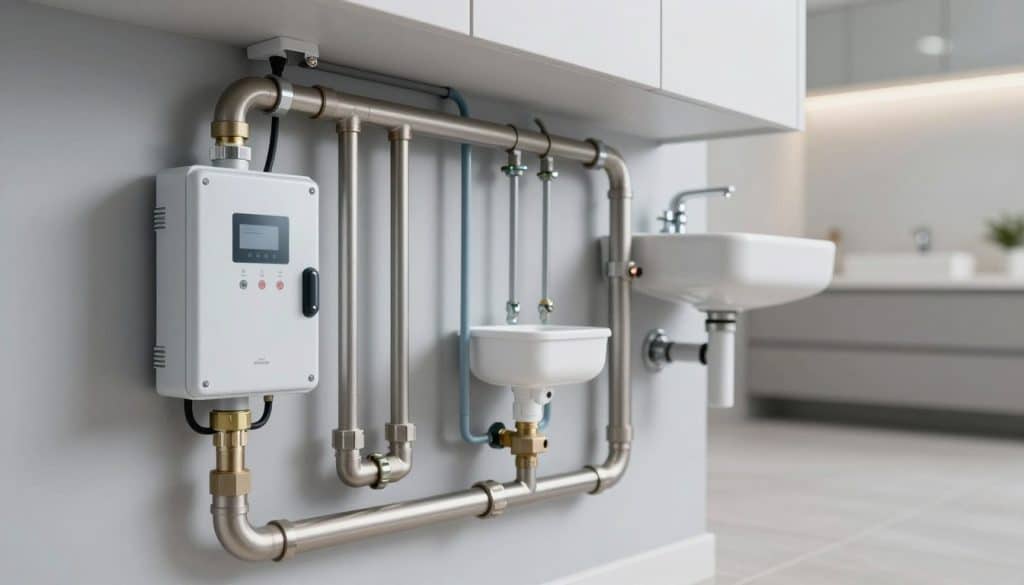
A whole-home unit is usually installed at the main feed where your water supply enters. This point-of-entry installation to protect every fixture and appliance downstream means every faucet and appliance is covered.
Point-of-use placement
Point-of-use placement for targeted leak detection in cabinets and tight spaces covers high-risk spots. Put sensors under sinks, by heaters, and behind washers to catch moisture early.
Typical shutoff installation appointment
When a shutoff-capable leak detection system is chosen, expect:
- we shut water and access the main supply lines;
- line work, valve mounting, and equipment connections;
- calibration, testing, and brief user training.
DIY vs licensed plumber
Simple monitors and some leak detection systems are DIY-friendly. Inline shutoff units usually need licensed plumbing to alter copper or solder joints and to prevent future issues.
Tip: check access around supply lines and place sensors where moisture will reach them, then test the whole system so alerts are reliable without false alarms. We’re here to help you choose and install the safest option to protect home.
Cost, value, and choosing the right leak detection system
Choosing protection for your home starts with a clear budget and a list of must-have features. We keep recommendations practical so you get protection without overspending.
Typical cost ranges and what affects price
Whole-house units commonly range from $500 to $2,500. The price rises with shutoff capability, sensing tech, and smart features.
Professional installation often adds about $200–$500 depending on access and pipe work. Alert-only water monitors are frequently near $200 and cost less to set up.
Balancing features that matter
Prioritize a loud alarm you can hear, reliable app alerts, and clear usage history that shows trends over time. Automatic shutoff prevents large losses when no one is home.
Choosing coverage for different properties
- Condos: spot sensors and affordable monitors often suffice.
- Single-family homes: whole-house leak detection systems give broader protection and peace mind.
- Rentals & vacation properties: prefer shutoff-capable systems to reduce chance of thousands dollars in damage while unattended.
We can evaluate your layout, match features to risk, and help you protect home value and family life with sensible choices.
Get expert water leak detection and plumbing help from J Sewer & Drain Plumbing
When time matters, quick, experienced service makes the difference between a small repair and major damage.
Call or email to schedule leak detection in Chicago, IL and nearby areas
Reach us: call (773) 968-2704 or email jsewerdrainplumbing@gmail.com to schedule service for your home. We serve Chicago, IL and nearby areas with clear answers and fast action.
Business hours and what “24 hours Open” means for urgent leaks
Monday–Saturday: 24 hours Open. That means we prioritize urgent reports and treat active incidents as time-sensitive. Fast response helps shut water supply and limit damage.
Visit or contact our offices
Welcome to J Sewer & Drain Plumbing Inc., a family-owned, two-generation company established in 2017. We serve our communities with care, treating every customer like family.
- Chicago Office: 3343 N Monticello Ave, Chicago, IL 60618
- Wilmette Office: 809 Ridge Rd, Wilmette, IL 60091
- New Location: 3017 N Elston Ave, Chicago, IL 60618
We identify the source, recommend safe next steps, and help prevent damage. If you suspect a line has burst or water is actively spreading, shut the water supply and contact us right away.
Conclusion
A reliable system gives you minutes to act before damage spreads through floors and walls.
Modern leak detection systems spot abnormal flow or surface moisture early, then alert you and often shut supply lines to limit harm.
Knowing the basic types—whole‑home units, point sensors, and smart shutoffs—helps you match protection to your property and routine.
Stopping problems early usually costs far less than repairing walls, floors, cabinets, and pipes after a major event.
If you see active flooding or suspect a serious leak, shut the main supply when safe and contact our team for fast, professional plumbing help.
Use this guide to check high‑risk areas, consider whole‑home coverage, and add targeted sensors. When you’re ready, schedule service via the contact section to protect your Chicago home.