Could a single, unnoticed buildup in your kitchen shut down service and cost your business thousands?
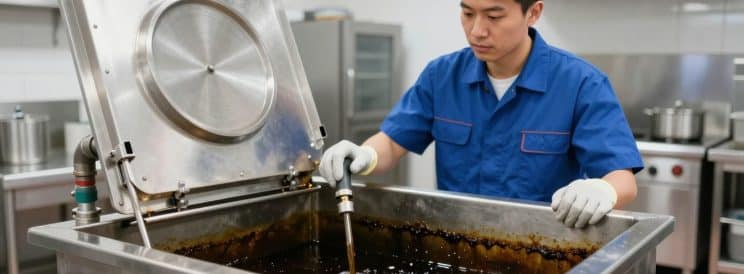
How does grease trap cleaning prevent blockages and bad odors? In plain terms, a grease trap catches fats, oils, and grease before they enter pipes and municipal sewers. We remove that accumulated grease, solids, and sludge so it does not harden in pipes or rot inside the unit.
We are J Sewer & Drain Plumbing Inc., a family-owned, two-generation plumbing ally in Chicago since 2017. We treat every customer like family, serving Chicago, IL and nearby areas from offices at 3343 N Monticello Ave, 3017 N Elston Ave, Chicago, IL; 809 Ridge Rd, Wilmette, IL.
Our service is available Monday to Saturday, 24 hours. Call (773) 968-2704 or email jsewerdrainplumbing@gmail.com to schedule reliable service, clear guidance, and work done right the first time.
Key Takeaways
- Regular maintenance keeps drains flowing and cuts the risk of costly plumbing failures.
- Proper service removes grease, solids, and sludge before they harden or rot.
- Watch for slow drains, foul smells, or backups as signs you need attention.
- We offer transparent recommendations and on-time work across Chicago and Wilmette.
- Timely upkeep helps avoid compliance issues, fines, and operational shutdowns.
Grease traps and FOG: what they do in a commercial kitchen plumbing system
In a busy commercial kitchen, a small interceptor does big protective work for your plumbing. We use straightforward terms: a grease trap is a separation chamber placed between sinks and the sewer to intercept FOG before it reaches your pipes.
How wastewater slows to separate fats, oils, and grease
The unit slows wastewater so it cools. As the flow drops, fats and oils rise to form a floating layer while heavier food solids settle as sludge. Clearer water moves on to the sewer with much less debris.
Where grease, solids, and water sit inside the trap
Inside you’ll find three zones: a top grease layer, a middle water layer, and a bottom solids layer. That layering explains why partial service leaves recurring buildup.
Why keeping FOG out of drains protects pipes and city infrastructure
When FOG stays out of your drains, your pipes stay open longer and risk of sewer system blockages drops. Local rules exist because escaped FOG can re-solidify downstream and cause costly backups.
- Simple protection: traps intercept FOG before it reaches plumbing.
- Clear zones: top grease, middle water, bottom solids explain cleaning needs.
- Community care: keeping FOG out helps city sewers and avoids fines.
Why grease traps cause foul odors and blockages when maintenance is delayed
Left unattended, a build-up inside your kitchen interceptor quickly becomes a source of persistent smells and service interruptions.
FOG buildup and food waste decomposition
Warm, wet conditions let fats and food particles break down. This process releases gases such as hydrogen sulfide that produce strong, foul odors.
Clogs, stagnation, and plumbing escalation
As sludge grows, flow slows and water stagnates. Slow drains can become recurring clogs, then backups into sinks or floor drains, and eventually overflow that halts service.
Worn lids, failing seals, and leaking smells
Old covers or damaged gaskets let gases escape into kitchens and dining areas. Even when the unit sits under a cabinet, leaking seals create obvious odor issues and staff complaints.
Ventilation faults that trap gases
Blocked or faulty venting keeps odor-causing gases inside the system and forces them out where people work and eat.
- Why this matters: lingering odors signal active decomposition, bacteria growth, and health-code risks.
- Quick action: timely maintenance addresses root causes, not just the surface smell.
- We’re ready: call us for reliable service 24 hours, Monday–Saturday, to protect staff and guests.

How does grease trap cleaning prevent blockages and bad odors?
Stopping buildup at the source saves time, money, and unexpected shutdowns. We focus on complete removal of the floating cap, solids, and residues so your drains carry waste freely and your staff works without disruption.
Removing the top layer before it hardens
The top layer of fats rises and forms a cap that can shear off and travel downstream. Early removal keeps that material from hardening in your pipes and narrowing flow.
Pumping out settled solids and sludge
Solids collect at the bottom and slow water movement. Our pump-outs clear sludge that causes stagnation and leads to backups during busy service hours.
Scrubbing internal walls and crossover areas
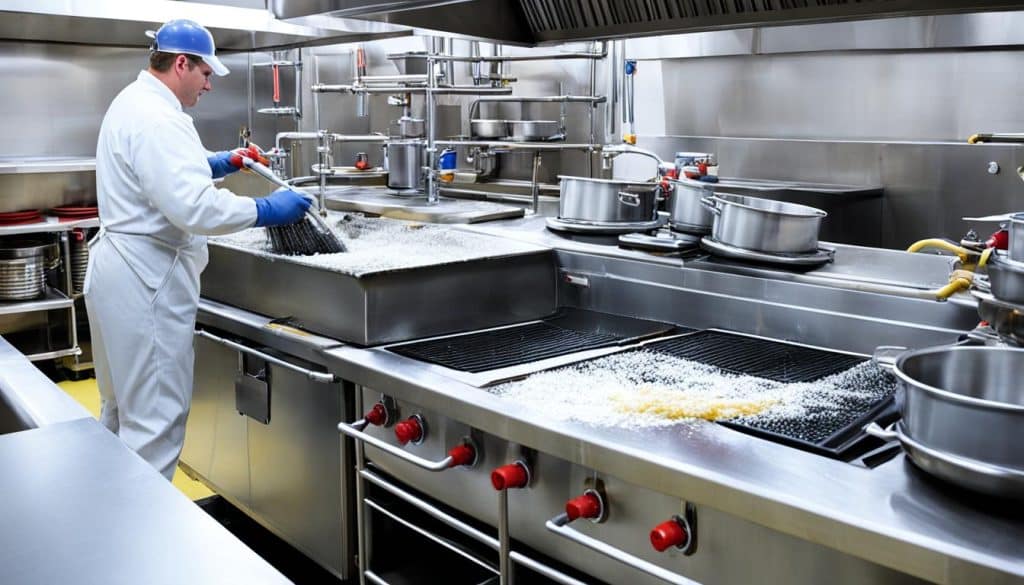
Real service goes beyond vacuuming. We wash and scrub walls, baffles, and crossover passages to stop quick recurrence of residue and new buildup.
Cutting the food source for bacteria
By removing decomposing waste, we reduce the fuel that feeds odor-causing bacteria. That controls foul odors at the source rather than just masking them.
- Direct cause-effect: proper grease trap cleaning removes material before it migrates and hardens in pipes.
- Long-term protection: regular cleaning and regular maintenance prevent emergencies better than ad hoc fixes.
- Professional value: our professional grease trap service minimizes downtime for Chicago-area kitchens.
How to tell your grease trap needs cleaning now
Small symptoms — slow sinks, surging plumbing problems — often point to a larger hidden buildup. Catching these signs early saves your kitchen time and protects business operations.
Watch for slow drains, recurring clogs, or water backing up into sinks or floor drains, especially when multiple fixtures run at once.
Peak-hour spikes reveal loss of capacity. During rush service, a unit with heavy grease and sludge cannot handle normal wastewater loads, so issues show up fast.
Odor red flags
Persistent foul smells that return after surface wiping usually mean internal decomposition, not just a housekeeping problem.
Operational clues
Sudden increases in plumbing problems during busy hours — repeated calls for the same line — indicate a pattern, not a one-off event.
- Key warning signs: slow drains, recurring clogs, water backing into sinks or floor drains.
- Why it happens: lost capacity from grease and sludge makes the trap fail under peak load.
- Next step: treat repeats as a pattern and schedule a professional assessment promptly.
Quick professional checks confirm whether the issue is trap capacity, a downstream block, venting, or a seal failure. For fast scheduling across Chicago, call J Sewer & Drain Plumbing Inc.; we offer dependable service Monday through Saturday, 24 hours.
Grease trap cleaning steps that actually work for odor control
Effective odor management combines full waste removal, tight seals, and proper venting. We lay out clear, practical steps you can expect from our services so your kitchen stays compliant and comfortable.
Schedule a professional pump-out
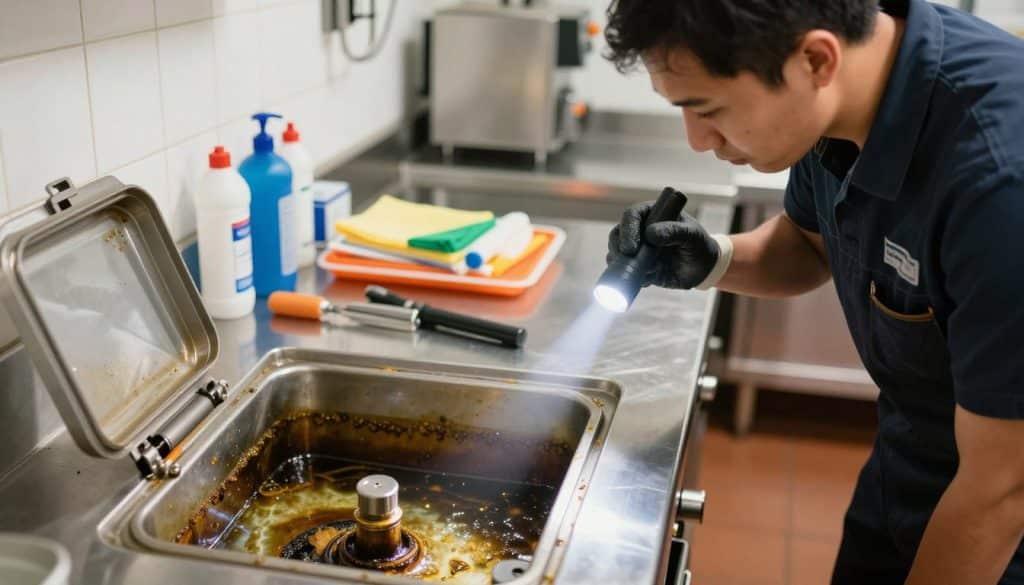
Start with a complete pump-out to remove accumulated waste, not just a surface skim. Leftover sludge keeps decomposing and fuels odors, so total removal matters for long-term results.
Inspect and replace lid gaskets
Worn seals let gases escape into work and dining areas. We inspect gaskets on every visit and replace damaged seals to keep smells contained.
Confirm ventilation is working
Blocked vents push gases back into the building. Our crew checks vents and confirms the system vents safely, reducing the chance of recurring complaints.
Use enzyme cleaners as a supplement
Enzymes can help digest residual organics between services, but they are a support tool — not a substitute for scheduled professional service and required pump-outs.
- Result: fewer odor complaints and fewer emergency calls.
- Outcome: smoother daily kitchen operations and simpler compliance with regulations.
- Our promise: we provide thorough work, clear recommendations, and a family-oriented approach you can trust.
Choosing the right cleaning frequency for your kitchen operations
The right interval depends on your menu, volume, and wastewater patterns. We help you set a plan that matches daily demands so your staff works without surprise downtime.
Many commercial kitchens schedule service every one to three months. High-volume sites need service more often to avoid loss of capacity during peak hours.
Typical service intervals and why high-volume kitchens need more frequent attention
Small operations with low-fat menus can often go longer between visits. Full-service or fried-food kitchens fill units faster and need shorter intervals.
How buildup rate changes based on menu, prep, and wastewater load
Menu choices, prep style, and wastewater volume speed accumulation. More food fats and solids mean quicker fills, so trap maintenance must reflect real use, not guesswork.
Why “chemical-only” programs can’t replace required pump-outs
Chemicals or enzymes may slow accumulation, but they do not remove settled solids. Local regulations often mandate documented pump-outs, so rely on regular maintenance and scheduled grease trap cleaning.
- We assess your operations and recommend a realistic schedule.
- Consistent maintenance reduces emergency calls, odor incidents, and costly downtime for your business.
- Next step: call us to evaluate trap size, usage, and history so we can plan service that treats you like family.
Grease trap chemicals and biological treatments: what helps, what can backfire
Not every additive helps long-term performance; some quick fixes create new problems down the line. We recommend viewing treatment programs as a support for regular maintenance, never a replacement for scheduled pump-outs.
Bacterial treatments that digest FOG over time
Bacterial options introduce live cultures that feed on oils and organic waste. Over several weeks they reduce accumulation by converting matter into water and carbon dioxide.
These products work best as an ongoing program. They are gradual, not instant, and suit sites that pair them with regular service.
Emulsifying agents: quick action, clear risk
Emulsifiers liquefy deposits fast. That sounds useful, but the liquefied material can travel and re-solidify in the sewer system.
The main risk is downstream re-solidification, which may cause sewer issues or violate rules.
- Goal: support maintenance by slowing FOG buildup while keeping pump-outs as the foundation.
- Timeline: biological programs may take weeks to stabilize; not suitable for urgent overflows.
- Cost: treatments often require monthly spend; weigh that against your actual pump-out frequency.
- Regulations: some additives are restricted under local regulations; check before use.
We favor safe, code-aligned choices for Chicago-area businesses. When in doubt, call us for guidance so your selection protects your unit, sewer, and compliance status.
Common grease trap problems and how professionals fix them
We see the same handful of problems in local facilities—each one has a clear fix that prevents repeat calls. Below we walk through common issues and the practical steps we take to restore reliable operation for your kitchen.
Water backups and overflow: clearing blockages before operations stop
Urgent response. When water backs up or an overflow threatens service, we clear the immediate blockage, remove accumulated waste, and restore safe flow fast.
Slow draining lines: when hydro jetting is needed
Stubborn deposits can harden inside pipes. We assess whether snaking will work or if hydro jetting is required to blast away deposits and return normal flow.
Recurring foul odors: diagnostic service for lasting relief
Persistent smells may come from overdue maintenance, faulty vents, or worn seals. We diagnose the source, replace gaskets if needed, and address the root cause rather than masking odors.
Corrosion and damage: protect materials by avoiding harsh chemicals
Harsh additives speed corrosion and shorten equipment life. We recommend gentle, code-compliant treatments that lengthen lifespan and cut replacement time and expense.
Clogged incoming, outgoing, and crossover lines: full-pathway cleaning
Debris and sludge collect in multiple places. Our crews clean every section—incoming, crossover, and outlet—so the unit performs without surprise recurrence.
- Fast, careful service: we prioritize minimal downtime for Chicago-area kitchens.
- Right fix for the long run: solutions that stop repeat calls, not temporary relief.
- Schedule help: call J Sewer & Drain Plumbing Inc. for prompt assessment and dependable service.
Compliance, inspections, and proper grease trap waste disposal in the United States
Keeping accurate records and following local rules saves businesses from costly citations and interruptions. Regular maintenance, commonly required every three months, reduces the chance of violations tied to odors, backups, or improper handling.
Inspectors typically review service records and proof of scheduled work. They look for clear dates of pump-outs, signs of overflow, and visible performance problems that point to missed upkeep.
Why upkeep matters
Proper care protects your license and your staff. Routine checks and documented service lower the risk of fines and health-code issues that harm your business reputation.
What inspectors expect
Expect requests for documented service, evidence of routine maintenance, and no visible overflow or leaks. Good records show the unit was treated on schedule and repaired when needed.
Responsible disposal and treatment practices
Disposal of waste and wastewater must follow local regulations. Removing waste is only half the job; correct handling and transport protect the sewer and public infrastructure.
- Use licensed service providers who document pump-outs and repairs.
- Avoid restricted additives; some products are regulated and can create compliance issues.
- Keep tidy records of dates, invoices, and seal or vent repairs to show during inspections.
We help Chicago-area businesses stay ahead of inspections with dependable service, clear documentation, and guidance that keeps your operation compliant and running smoothly.
Conclusion
Consistent maintenance makes your plumbing system reliable during busy shifts. Regular grease trap service restores flow for your drains, removes decomposing grease and waste that cause odors, and lowers the risk of blockages in pipes and the wider system.
Pair scheduled pump-outs with thorough inspections of seals, vents, and internal surfaces to stop problems from returning. We recommend practical, code-aligned cleaning that supports long-term maintenance without quick fixes.
For trusted, family-run support in Chicago, call J Sewer & Drain Plumbing Inc. at (773) 968-2704 or email jsewerdrainplumbing@gmail.com. We serve Chicago, IL and nearby areas, Monday to Saturday — 24 hours Open. Visit us at 3343 N Monticello Ave, Chicago, IL 60618; 3017 N Elston Ave, Chicago, IL 60618; or 809 Ridge Rd, Wilmette, IL 60091. We treat your business like family and act fast when time matters.