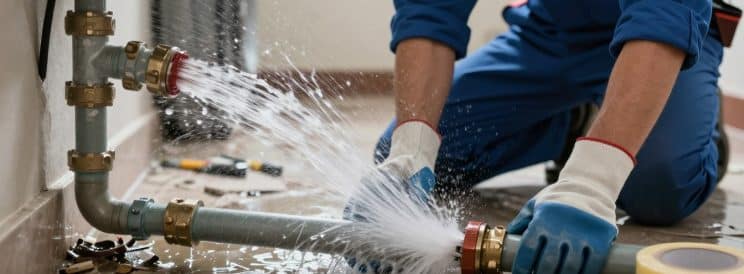
Can quick action really cut water damage before a plumber arrives? How do I fix a burst pipe temporarily? We know that a sudden leak can feel overwhelming, but calm, correct steps can limit loss while you arrange permanent repair.
We are J Sewer & Drain Plumbing Inc., a family-owned, two-generation team serving Chicago and nearby areas. We treat every customer like family and stand ready to help 24 hours Monday through Saturday.
High pressure and freezing expansion often cause a burst pipe to fail fast, and even minutes of flow can ruin floors, walls, and insulation. A temporary repair is an emergency containment step, not a long-term solution. We will help you stabilize the situation and then perform a full diagnosis and permanent repair.
Urgent? Call (773) 968-2704 or email jsewerdrainplumbing@gmail.com to schedule and feel confident in your home. Our nearby locations — 3343 N Monticello Ave, 3017 N Elston Ave, and 809 Ridge Rd — let us dispatch quickly across Chicago and nearby towns.
Key Takeaways
- Act fast to reduce water damage; short delays worsen losses.
- Temporary measures buy time but require a licensed follow-up.
- Safety comes first; shut off water when possible.
- We offer 24-hour Monday–Saturday support in Chicago and nearby areas.
- We combine family care with professional plumbing expertise.
What a Burst Pipe Emergency Means for Your Home and Why Speed Matters
When water escapes fast, every minute changes the outcome for your home. Uncontrolled flow creates an emergency because water soaks through drywall, moves under flooring, and reaches insulation within minutes.
We respond with clear priorities to protect your property and reduce stress. Stop the flow, contain visible water, and start drying. These steps lower long-term water damage and repair costs.
Water travels beyond what you see. It runs along studs, hides behind walls, and saturates under floorboards. That hidden moisture raises the chance of mold forming in 24–48 hours if drying does not start quickly.
- Why it’s an emergency: uncontrolled water, rapid saturation, rising repair bills.
- Speed matters: sooner action means less swelling, weaker drywall, and fewer hidden leaks.
- Common causes: freezing, pressure spikes, and aging materials—especially in Chicago, IL and nearby areas.
Temporary containment buys critical time so professionals can complete a lasting repair. Next, follow the safety-first checklist to avoid electrical hazards while handling wet areas.
Immediate Safety Steps to Limit Water Damage Before You Start Any Repair
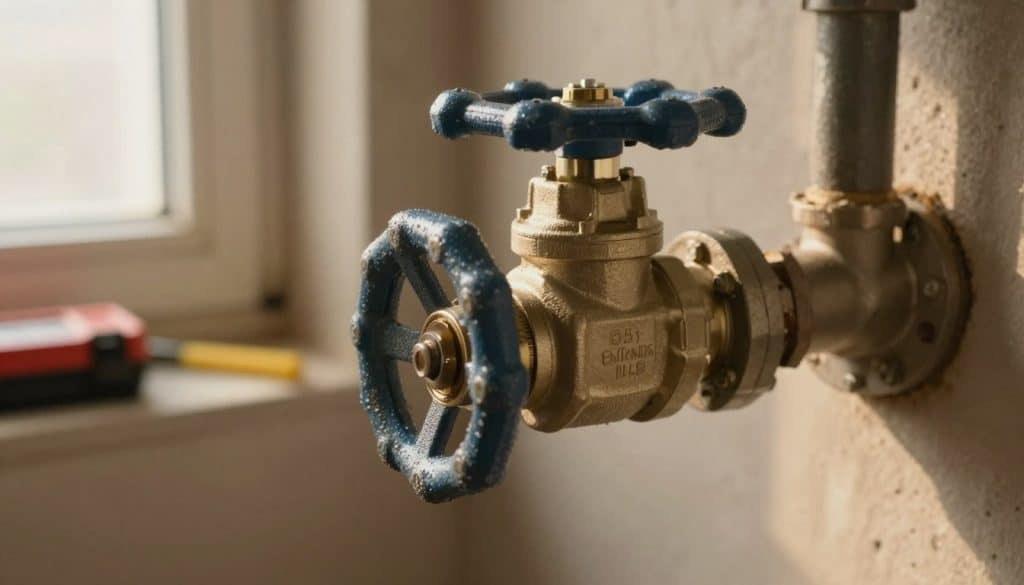
Take calm, practical steps now to prevent more water damage and electrical risk. First, locate your main water valve near the meter or entry point and turn it fully off. Confirm flow stops by opening a nearby faucet.
Shut off main water and confirm flow
Turn the main water supply valve completely clockwise until it stops. Check a tap to ensure pressure is gone. On multi-level homes, trapped pressure can keep a leak active unless lines are depressurized.
Cut power to wet areas
If water nears outlets or appliances, shut off the breaker for that zone. This reduces shock and fire risk. When unsure, call us for guidance before touching electrical panels.
Drain lines and relieve pressure
Open faucets from the highest floor down to the lowest to drain trapped water and lower pressure. Turn off the water heater and open hot taps to protect the tank and clear hot lines.
Remove standing water and dry fast
Use towels, a wet/dry vac, and fans to remove moisture. For large volumes, consider a pump. Quick drying helps prevent mold within 24–48 hours. Photograph visible damage and the leak location for insurance and our technicians.
- We will walk you through finding the valve and confirming flow stops.
- We explain why depressurizing matters on multi-level supply systems.
- We advise safe breaker shutdowns and draining sequences to protect appliances.
If you can’t locate the main valve or the leak worsens, call J Sewer & Drain Plumbing Inc. at (773) 968-2704 for emergency guidance in Chicago and nearby areas.
How do I fix a burst pipe temporarily?
Start by identifying pipe type, leak size, and water pressure; those three checks guide every useful temporary repair.
Pick the right method by confirming material (copper, PVC/CPVC, PEX, or galvanized), whether the breach is a pinhole or a split, and if household water pressure is high. High water pressure above about 60–70 psi makes many temporary seals less reliable.
Prep the surface for a lasting hold. Turn off the supply, dry the area, remove residue, and lightly roughen the surface with sandpaper or a scoring tool. That extra friction helps putty, wrap-style tape, and clamps form a stronger seal around pipe surfaces.
- Match repair products to the pipe material and to potable-water ratings when applicable.
- Use wrap or clamp methods for straight-access sections; choose putty for small leaks and cracks.
- Remember: temporary fixes stabilize leaks until we complete a permanent repair—call us if pressure or access makes a quick seal risky.
Temporary Fix Options That Work in Real Emergencies
Quick, sensible choices can stop most visible leaks long enough for professional repairs to arrive. Only proceed after you shut off water and make the area safe.
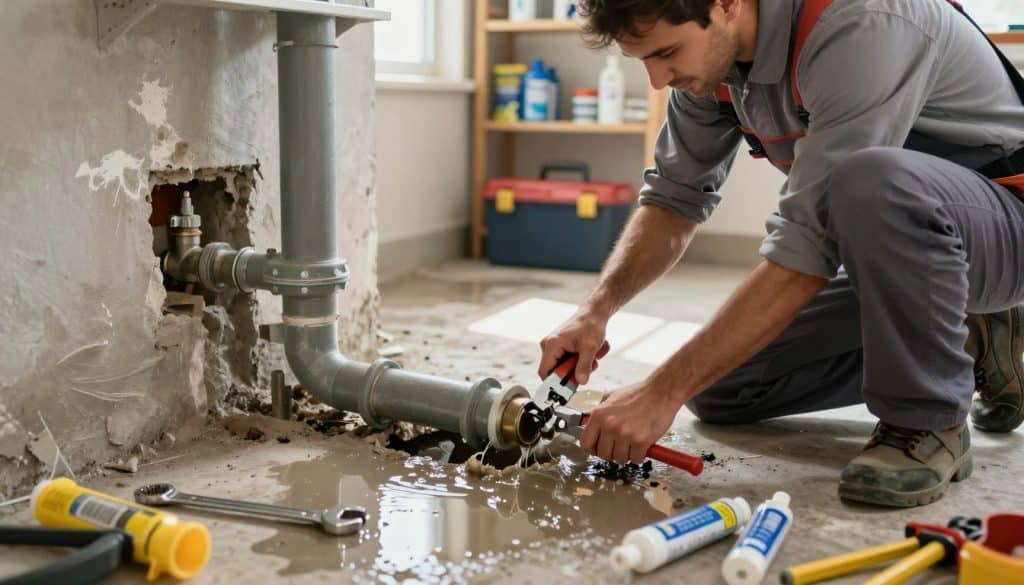
Epoxy putty works best on small cracks and pinhole leaks. Clean and dry the metal or plastic surface, knead putty until color is uniform, press firmly over the leak, and wait about 5–10 minutes to cure before restoring supply.
Repair clamp fits straight, accessible runs. Place the rubber gasket over the leak, align the metal band, then tighten bolts evenly. Do not overtighten; crushing weak walls can worsen damage.
Rubber patch with hose clamps gives a strong compression seal. Cut the patch large enough to overlap the damage, wrap it snugly, then tighten clamps on both ends for even pressure.
Self-fusing silicone tape bonds to itself when stretched and overlapped. It performs well across wide temperatures and is quick for supply-line containment.
Duct tape is only a brief backup for low-pressure, non-pressurized leaks. It is not reliable under high pressure and should not replace proper repair.
- If a temporary measure stops the leak, arrange permanent pipe repair—underlying issues often remain.
- For safe, lasting solutions, call us at (773) 968-2704 or email jsewerdrainplumbing@gmail.com. We dispatch across Chicago and nearby areas.
When a Temporary Patch Isn’t Enough: Signs You Need an Emergency Plumber
If water keeps flowing after you shut the main supply, treat the situation as critical and call trained help immediately.
Persistent flow after main shutoff can mean valve failure, an alternate feed, or complex system issues that require an emergency plumber. Continuing water can quickly cause structural weakening and costly water damage.
Stop DIY and call for professional services when you see major flooding, saturation of ceilings or walls, or leaks near outlets and appliances. Water near electrical panels raises shock and fire risks; do not enter hazardous areas.
- Red-flag: water still runs after main shutoff — call emergency plumbing services.
- Structural risk: soaked insulation, softened drywall, and failing subfloors demand prompt professional repair.
- Safe boundary: if you cannot safely access the location, step back and wait for trained technicians.
Temporary patches buy time, not permanence—repeated bursts or recurring leaks need lasting fixes by a licensed plumber. Call J Sewer & Drain Plumbing Inc. at (773) 968-2704 (open 24 hours Monday–Saturday) or email jsewerdrainplumbing@gmail.com. We serve Chicago and nearby areas from our offices at 3343 N Monticello Ave, Chicago, IL 60618; 3017 N Elston Ave, Chicago, IL 60618; and 809 Ridge Rd, Wilmette, IL 60091.
Short-Term Aftercare: Restore Service Carefully and Reduce Further Damage
Careful restoration of water service gives your seal the best chance to hold while we arrange repairs. Reintroduce water slowly so pressure rises in stages. This reduces stress on the patched section and on nearby fittings.
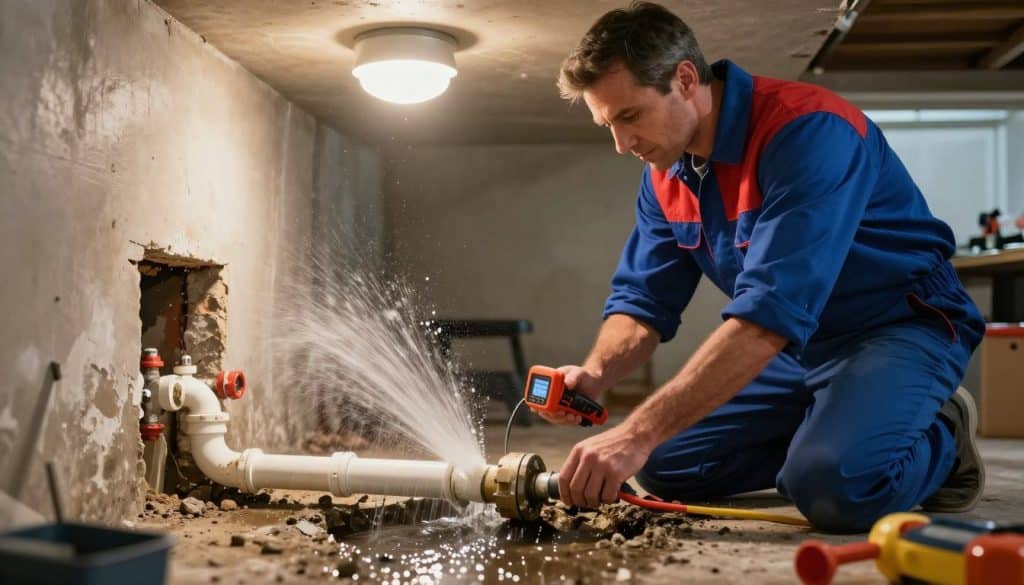
Turn water back on slowly and recheck under pressure
Open the main or local valve a little, wait, then open more. Watch the repair point for several minutes and again after normal use. If the leak returns, stop and tighten or retry the seal.
Watch for hidden leaks and signs on walls
Look for new stains, bubbling paint, soft drywall, or musty odors; these often reveal moisture behind walls. Photograph any changes and keep drying fans running to limit damage and mold growth.
Protect the water heater and hot lines
When draining lines, switch the heater to pilot or off per manufacturer guidance. Open hot taps to relieve trapped water and prevent tank stress during shutdown and refill.
- Monitoring checklist: check patched pipe, adjacent fittings, and nearby lines over the next 24–48 hours.
- Drying: maintain airflow, remove wet materials, and act fast to lower mold risk.
- Next step: schedule permanent pipe leak repair even if the patch holds—temporary measures are not permanent solutions.
Preventing Future Burst Pipes in Chicago Weather and Year-Round Conditions
Chicago winters test home plumbing; simple habits reduce the risk of costly failures. Freezing water expands about 9%, and that pressure can split lines in unheated walls, attics, basements, and crawl spaces.
Manage pressure: sustained household pressure above roughly 60–70 psi strains joints and fittings. Installing a pressure-reducing valve keeps pressure under ~60 psi and lowers stress on copper and other materials.
Signs of aging and mechanical causes
Look for rust, discoloration, mineral buildup, and recurring pinhole leaks. These are early warning signs that corrosion or aging may weaken pipes and raise damage risk.
Also watch for water hammer, ground shifting, and tree root intrusion in buried lines—these forces can crack or misalign pipes well before visible leaks appear.
Prevention checklist
- Insulate exposed pipes and winterize outdoor spigots.
- Open cabinet doors and run a slow drip during extreme cold.
- Install a PRV, schedule annual inspections, and consider smart leak detection.
- Replace outdated galvanized lines; prioritize copper or PEX upgrades when appropriate.
We offer inspections and routine maintenance across Chicago and nearby areas to reduce emergency calls and extend system life. Call us to set up seasonal checks and targeted repairs that keep your water flowing safely.
Conclusion
Timely action can limit loss and give professionals the space to deliver a lasting repair.
First, stop the supply, cut power if needed, and drain lines to relieve pressure. Next, dry the area, apply the best temporary seal, then restore water slowly while watching the repair point.
If electricity and water may meet, pause work and call for trained help to protect your household and property. Temporary patches bridge to permanent service; an inspection prevents repeat leaks and hidden damage.
For emergency plumbing help, contact J Sewer & Drain Plumbing Inc. Call (773) 968-2704 or email jsewerdrainplumbing@gmail.com. We are open 24 hours Monday–Saturday and serve Chicago, IL and nearby areas. Locations: 3343 N Monticello Ave, 3017 N Elston Ave, Chicago, IL; 809 Ridge Rd, Wilmette, IL.
We treat every customer like family and we’re here to protect your home.