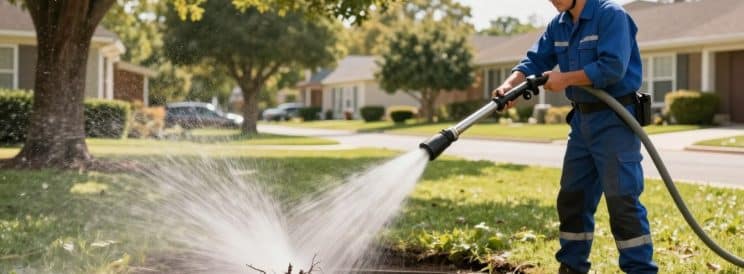
Have you wondered if a high-pressure wash can clear stubborn blockages and save your yard from a digging job? Or can hydro jetting remove tree roots from pipes?
We answer that question plainly and with care. At J Sewer & Drain Plumbing Inc., a family-owned, two-generation team serving Chicago, IL and nearby areas, every customer is treated like family. We are open Monday–Saturday, 24 hours, and ready when your sewer shows trouble.
High-pressure water — used by professionals — can clear severe root intrusions and restore flow in a damaged sewer line, but it does not stop new growth if cracks or seams remain. We explain what this service clears, what it cannot fix, and how to move forward.
In neighborhoods with mature trees and older lines, this is a common cause of recurring drain problems. If your sewer is backing up or you suspect roots, call us at (773) 231-8869 or email [email protected] for fast, honest guidance.
Key Takeaways
- Hydro jetting can clear severe intrusions and restore normal flow.
- It won’t prevent regrowth if pipe entry points stay open.
- We show how to spot signs, confirm intrusion, and clear the line safely.
- Older sewer lines near mature trees are at higher risk.
- For urgent backups, contact J Sewer & Drain Plumbing Inc. at (773) 231-8869.
Why tree roots invade sewer lines and pipes in the first place
Roots hunt water and food, and sewer lines often give both. We explain this simply so you can protect your home and yard.
How roots sense moisture and nutrients
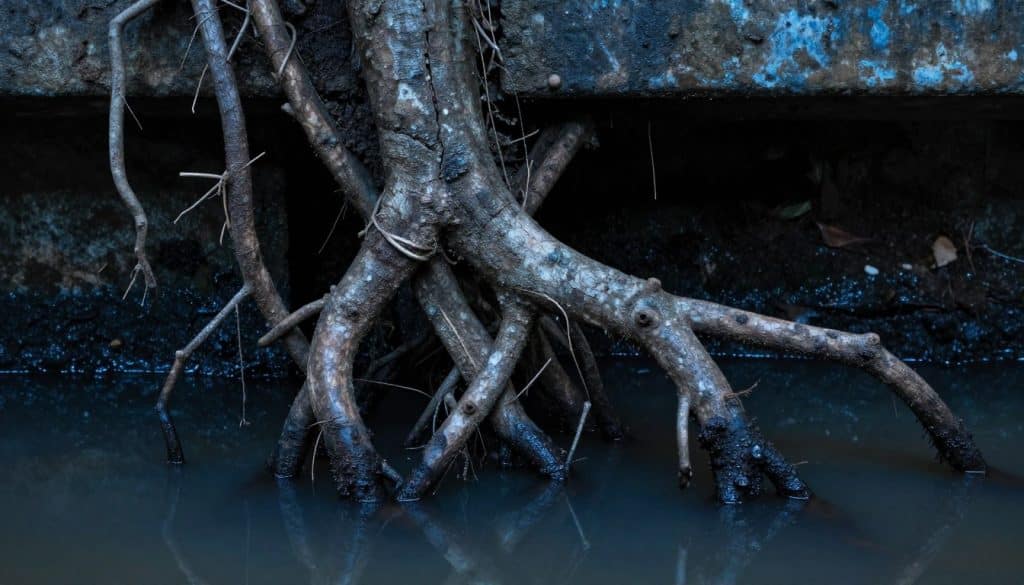
Living roots follow tiny amounts of moisture and organic nutrients that leak from a sewer line. A small crack or loose joint gives off enough moisture to guide roots, sometimes from 50–100 feet away.
Materials and conditions that invite intrusion
Older clay, concrete, and cast-iron lines crack as they age. Those weak spots, plus seams and hairline fractures, become entry points. Even PVC can fail if installed poorly or shifted by soil movement.
- Why it happens: Sewer lines carry the organic matter that roots crave.
- How it grows: Once a root penetrates, it thickens and widens the gap, drawing more growth.
- Prevention: Regular inspections and timely repairs stop small intrusion before it becomes a blockage.
At J Sewer & Drain Plumbing Inc., we help homeowners and property managers across Chicago, IL, understand these risks and plan inspections that protect your sewer line and landscape.
Warning signs of tree roots in your sewer line at home
Notice slow water leaving your sink or tub? That small annoyance can signal a larger problem below ground. Early signs help you act before serious damage or health risks develop.
Slow drains, backups, and gurgling toilets that signal a blockage
Slow drains in sinks or tubs, repeated clogs, and backups that return after DIY fixes are common early signs. A toilet that gurgles or flushes weakly can mean trapped air and reduced flow in the main sewer line.
If multiple fixtures back up at once, suspect a main line issue rather than an isolated trap. That escalation often indicates a serious blockage that needs professional inspection.
Outdoor red flags like odors, sinkholes, and unusually fast-growing trees
Outside, persistent sewer odors or soggy patches near your foundation point to restricted flow or leaks. Soft spots or sinkholes form when a damaged sewer line leaks and washes away soil.
A tree or patch of grass that looks unusually lush may be feeding on nutrients seeping from the line. These landscape clues often appear before visible collapse.
- Act early: Prompt inspection limits damage and health risks.
- Professional help: We recommend a camera inspection to confirm intrusion and plan repairs.
- Contact us: For Chicago-area homeowners, J Sewer & Drain Plumbing Inc. offers fast, family-focused assessments.
Can hydro jetting remove tree roots from pipes?
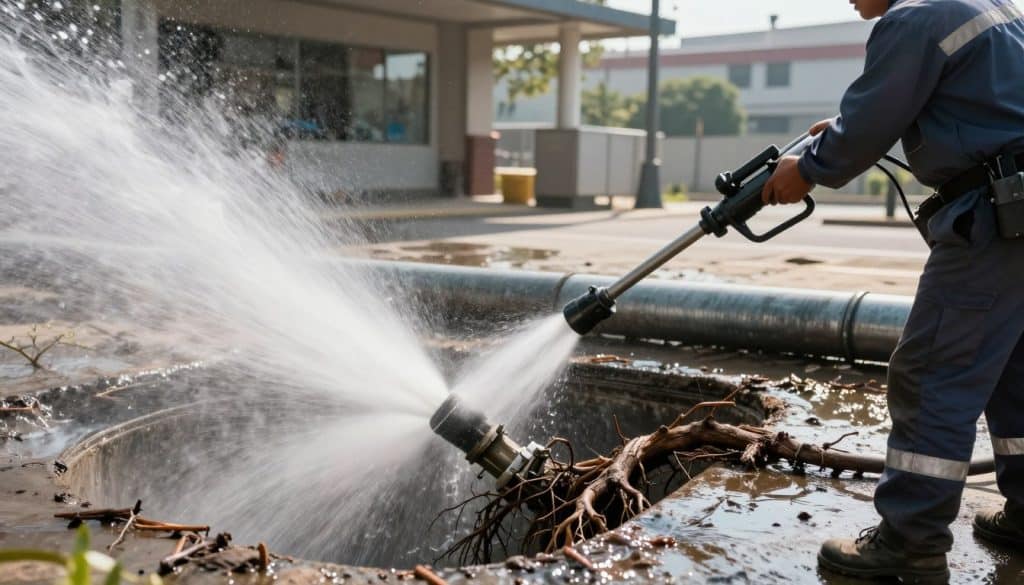
For severe line blockages, experienced technicians rely on forceful water cleaning to clear the full pipe diameter. Yes, professional hydro jetting cuts and flushes invasive growth and combined buildup, restoring flow in many affected sewer lines.
What this method removes and why it works well
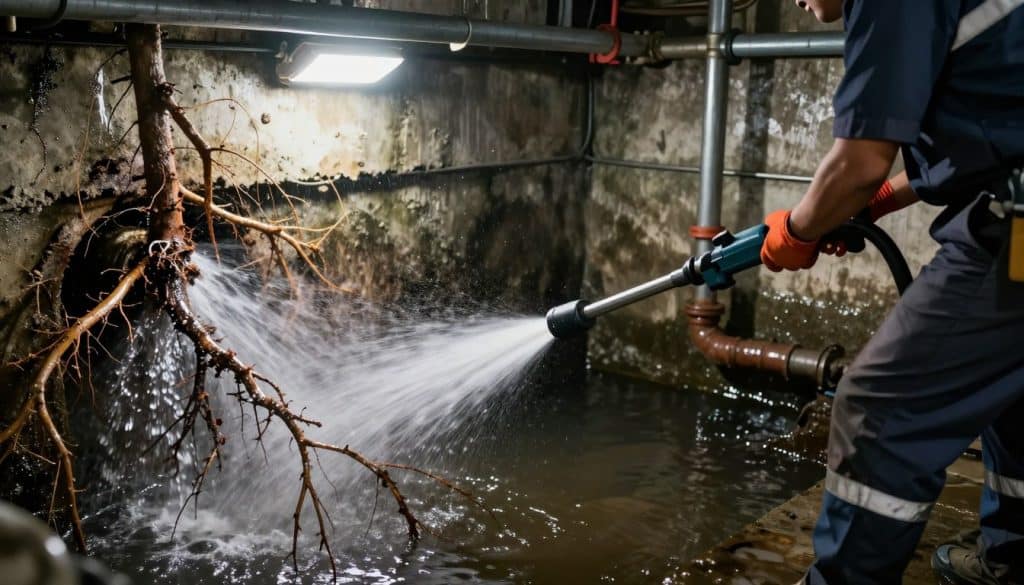
High-pressure water, delivered at up to 4,000 PSI, slices through masses and rinses debris out of your sewer. The stream reaches the whole pipe interior, so it clears grease, sludge, mineral scale, and the entangled material that traps more blockage.
When water cutting isn’t enough
If the intruding mass is extremely thick or the pipe shows cracks, offsets, or collapse on camera, jetting alone may not restore reliable flow. In those cases, cutting tools or spot repairs are needed before the line works long term.
How long results typically last
Hydro service is an effective short-term solution, but repeat intrusion often returns in about 1–3 years when the same entry points remain. We recommend pairing clearing with targeted repairs or lining to extend protection.
- Direct answer: It clears severe intrusion and the associated mess.
- Limitations: Structural damage or very heavy masses may need extra work.
- Next steps: Call J Sewer & Drain Plumbing Inc. in Chicago for inspection and a long-term plan.
How hydro jetting works for root intrusion removal
We begin every service with a camera inspection so you know exactly what sits inside the sewer line.
Video inspection first
A video sewer inspection locates the mass and shows if the line has cracks, separated joints, or corrosion. That view guides our plan and keeps surprises to a minimum.
High-pressure cleaning and nozzle action
We feed a hose through the cleanout and use high-pressure water—up to 4,000 PSI—with specialized nozzle heads. Forward and rear jets, plus spinning streams, cut and flush material while protecting the pipe wall.
Jetting vs. power snaking
Hydro jetting clears the full interior diameter so drains and toilets flow better. Power snaking often just opens a path and can leave residue that regrows faster.
- Step-by-step: camera inspection, targeted cleaning, follow-up check.
- When we combine methods: mechanical cutting first, then high-pressure flushing for dense obstructions.
- After service: you’ll notice faster drainage, stronger toilet flushes, and fewer backups.
Because pressure and nozzle choice matter, this work is best handled by trained plumbers. We serve Chicago, IL and nearby areas, Monday–Saturday, to protect your home and yard with care.
Long-term solutions after hydro jetting to keep roots out
Once flow returns, homeowners often ask what keeps the problem from repeating. The key principle is simple: clearing the line fixes today’s blockage, but long-term protection depends on sealing the entry points that allow growth.
Spot repairs with Schedule 40 PVC
When damage is localized, we replace short runs—typically under 10 feet—with Schedule 40 PVC. This targeted repair removes the damaged section and creates a durable seal that can last 50+ years.
Pipe lining as a trenchless option
Trenchless lining inserts an epoxy-saturated liner that cures in 2–4 hours, forming a smooth pipe-within-a-pipe. It blocks future entry without major digging, but suitability depends on line shape and existing damage.
Partial replacement for widespread compromise
When longer runs show collapse or repeated damage, replacing that segment—often 10–50 feet—is the safest path. Partial replacement protects the system and reduces the chance of future failures across your property.
Chemical treatments for maintenance
Chemical foams can help manage small intrusions over time, but they do not fix structural defects. Expect treatment to take 2–4 weeks to work and to require repeat maintenance if growth recurs.
- Repair vs. maintenance: choose repairs or lining when the line has defects; use chemical treatments for ongoing upkeep.
- Time & budget: spot repair is fast and cost-effective; lining saves landscaping but requires inspection first.
- Our role: we assess your sewer, explain options, and recommend the solution that balances longevity and cost for your Chicago, IL home.
Conclusion
A reliable short-term clear-out is only part of keeping your plumbing healthy. Hydro jetting is highly effective at clearing current root blockages, but lasting protection requires fixing how intrusions enter the system.
If you notice slow drains, backups, or gurgling, act early. We start with a camera inspection, clear the blockage with the right jetting or cutting method, then recommend repairs or lining to prevent repeat issues and more costly damage.
As a family-owned, two-generation team established in 2017, we treat every customer like family. For trusted Chicago-area plumbing help, call (773) 231-8869 or email [email protected]. Locations: 3343 N Monticello Ave, 3017 N Elston Ave, Chicago, IL; 809 Ridge Rd, Wilmette, IL. Monday–Saturday: 24 hours open. We serve Chicago, IL and nearby areas and handle both the immediate service and long-term solutions.
FAQ
Can hydro jetting remove tree roots from pipes?
High-pressure water cutting is effective at cutting and flushing many root intrusions. When performed by experienced technicians from J Sewer & Drain Plumbing Inc., a targeted nozzle breaks apart root masses and clears the line, restoring flow and resolving backups in many cases.
Why do roots invade sewer lines and pipes in the first place?
Roots seek moisture and nutrients. Leaks, hairline cracks, loose joints, or degraded pipe material create access points. Once roots sense consistent moisture near a joint or crack, they grow toward and into the pipe to exploit that steady water and nutrient source.
How do roots detect moisture and travel toward your sewer line?
Roots sense moisture gradients and chemical signals in soil. They extend growth in the direction of higher water content. Over months or years, tiny root hairs follow the path of least resistance until they enter small openings in the pipe and expand inside the flow line.
Which pipe materials and conditions make root intrusion more likely?
Older clay, cast-iron, and concrete pipes with failing seals or offset joints are especially vulnerable. Tree species planted near sewer routes, tree age, and poor bedding or soil shifts also increase the chance of intrusion. Schedule 40 PVC and properly joined pipes reduce risk.
What are the warning signs of root intrusion in a home sewer line?
Slow drains, frequent backups, gurgling toilets, multiple drains backing up at once, and persistent sewage odors are common indoor signals that roots may be restricting flow in a main line.
What outdoor red flags suggest roots in the sewer line?
Damp patches in the yard, foul smells near the ground, sinkholes or settling over the sewer route, and unusually vigorous tree growth near the line can indicate leaks caused by root intrusion.
What exactly does high-pressure water remove and why is it effective for severe root blockages?
The water stream shears away organic root material, rids the pipe walls of buildup, and flushes debris downstream. Because it combines cutting force and cleaning, it addresses both the roots and the residual obstructions that contribute to backups.
When might high-pressure water cutting not be enough for thick roots or damaged lines?
If roots have extensively damaged pipe walls, caused collapse, or fused into the pipe lining, cutting alone won’t restore structural integrity. In those scenarios, spot repair, pipe lining, or partial replacement will be required after removal.
How long do results typically last before roots can grow back?
Re-growth timing varies with tree species, proximity, and pipe condition. Roots often return within 1–3 years if the underlying entry point remains. Combining corrective repairs with routine inspections extends the interval between services.
How do we locate the root mass and assess pipe damage before cutting?
We use video sewer inspection to pinpoint root location, measure blockage length, and evaluate pipe condition. The camera feed guides the cleaning approach and tells us whether repairs or lining are needed after clearing.
What pressure levels are used and how does the nozzle cut and flush roots?
Technicians commonly use pressures up to 4,000 PSI with specially designed nozzles. These nozzles direct water jets both forward to break roots and backward to propel debris out of the line, providing a swept and clean pipe interior.
How does high-pressure water cutting compare to power snaking for cutting roots?
Power snaking mechanically chops a single obstruction but can leave root fragments and biological buildup. High-pressure water cuts more cleanly, removes residue, and flushes debris, delivering better flow restoration and longer-lasting results.
What will I notice after service?
You should experience faster draining, stronger toilet flushes, reduced gurgling, and fewer backups. Outdoor symptoms like soggy spots or smells should also diminish once the line is cleared and repaired.
What long-term solutions do you offer after clearing roots?
We provide spot repairs using Schedule 40 PVC to seal cracks or joints, trenchless pipe lining to create a new inner barrier, and partial replacement when damage is widespread. We also recommend scheduled maintenance and, where appropriate, chemical root treatments for control.
When is pipe lining a good option?
Pipe lining is ideal when the pipe is structurally sound enough to accept a cured-in-place liner but has leaks, cracks, or root intrusion along its length. It creates a seamless, jointless interior that resists future intrusion without extensive digging.
Are chemical root treatments an effective long-term fix?
Chemical foaming agents can delay re-intrusion by killing existing roots and discouraging regrowth, but they don’t repair structural breaches. They work best as a maintenance tool combined with physical repairs or lining.
When should partial replacement be considered?
If video inspection shows collapsed sections, severe offset joints, or repeated failures across a long stretch, partial or full replacement is the most reliable long-term solution to prevent recurring intrusion and backups.
How often should I schedule inspections or maintenance to prevent root problems?
For properties with mature trees near sewer routes, annual inspections and cleaning every 1–3 years, depending on prior history, help prevent serious blockages. We tailor plans based on your line’s condition and tree proximity.
Do you serve Chicago and nearby areas for these services?
Yes. J Sewer & Drain Plumbing Inc. provides inspection, cutting, repairs, and replacement across Chicago, IL and surrounding suburbs. We combine local expertise with family-oriented service to protect your home’s plumbing system.