
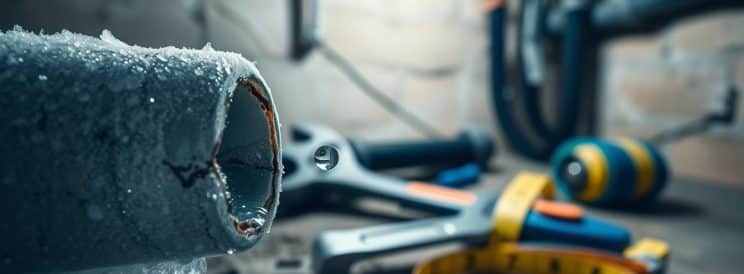
Curious: could a single cold night turn a quiet house into a costly mess? We ask that because many homeowners underestimate how fast freezing weather can harm a home’s plumbing. We are J Sewer & Drain Plumbing Inc., a family-owned Chicago team, two generations strong since 2017, and we treat every customer like family.
Freezing water expands and can build pressure that tears metal or plastic lines. Temperatures below 32°F put lines at risk, and below 20°F the danger rises. That mix of cold, hidden locations, and aging materials explains why damage can start small and escalate quickly.
We’ll explain, in plain language, how to spot at-risk signs, what outcomes to expect—loss of running water, hidden leaks, and cleanup—and when to call for professional help. For urgent service in Chicago and nearby areas, reach us at (773) 231-8869 or [email protected]. We’re open Monday through Saturday, 24 hours, to protect your home.
Key Takeaways
- Freezing causes water to expand and can rupture lines.
- Risk increases under 32°F, and spikes below 20°F.
- Watch for loss of water, wall dampness, or reduced flow.
- Act early: simple precautions often prevent big damage.
- Call J Sewer & Drain Plumbing Inc. for fast, local help.
When do pipes burst in winter weather?
Temperatures that dip below freezing put water inside home lines at immediate risk. In Chicago, the rule of thumb is clear: below 32°F starts the threat, and odds climb sharply as readings fall toward 20°F.
How fast it happens: In exposed or uninsulated runs, ice can begin to form in about six hours. Many homeowners first notice reduced flow or no water after one to three days of sustained subfreezing temperatures.
Why freezing creates dangerous pressure
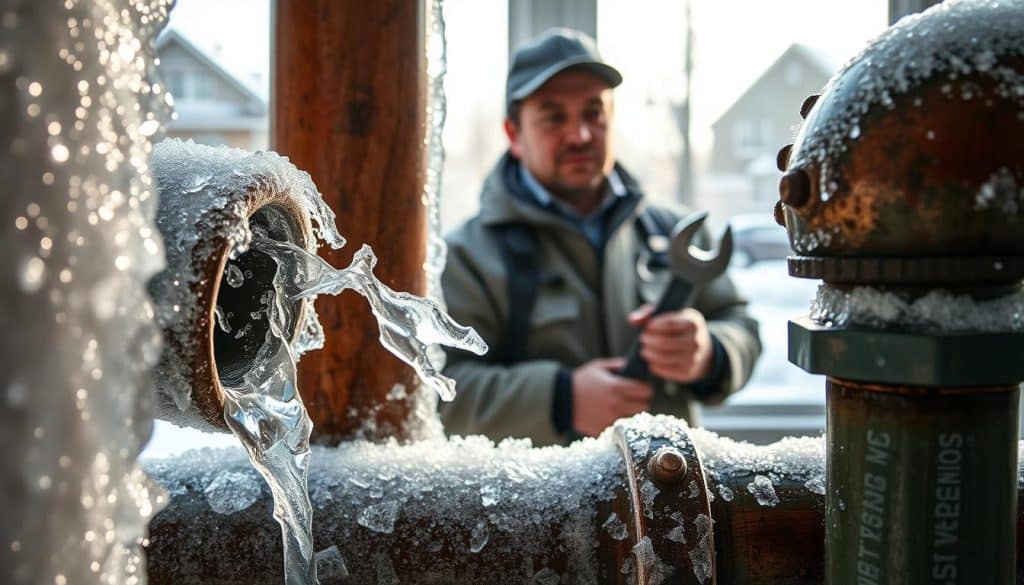
Water expands as it turns to ice, and that expansion pushes against the line. If ice creates a plug, trapped water between ice sections builds tremendous pressure and can split fittings or walls.
Why some Chicago homes face higher risk
- Pipes near exterior walls or in unheated spaces freeze faster.
- Older or uninsulated material fails more readily under repeated cold.
- Drafty additions and short cold snaps create “pinch points” that concentrate ice formation.
We’re a family-owned Chicago team, and we want you to spot reduced flow early so you can act before ice makes a costly repair necessary. For local guidance, call us—we’re here to help protect your property and peace of mind.
Where pipes freeze most often in Chicago-area homes
Cold air finds weak spots in a home’s plumbing and often targets the most exposed runs first. We map common freeze zones so you can prioritize protection across your property.
Exposed outdoor lines and hose bibs
Exposed pipes outside, including hose bibs and sprinkler supply, freeze fast. Drain and isolate these supply lines before deep cold arrives to avoid damage.
Unheated spaces: basements, crawl spaces, attics, garages
Water supply lines in unheated space are high risk. Basements, crawl spaces, attics, and any attached garage often lack steady heat, so check these runs early.
Exterior walls and under-sink runs
Pipes run along exterior walls or under kitchen and bathroom cabinets can chill quickly. Thin or missing insulation creates local cold pockets that let ice form even when the house feels warm.
- Scan exterior walls, basement corners, and garage walls for exposed sections.
- Open cabinet doors briefly during cold snaps to let warm air reach under-sink lines.
- Wrap susceptible runs with proper insulation or heat tape before winter.
Warning signs of frozen pipes and early burst-pipe damage
Odd sounds and weak flow are often the earliest clues a line is iced over—or even warning signs of a burst pipe developing. You may hear banging, whistling, or vibration as pressure shifts and water fights past an ice restriction.
At the faucet you might find a slow trickle or no water at all, especially at fixtures on exterior walls. A slow trickle that worsens with colder nights is a clear red flag.
Smell, sight, and feel — what to scan for
Notice strange odors coming from a drain or faucet? Blocked venting and trapped water can let sewer smells back into sinks, so take that seriously.
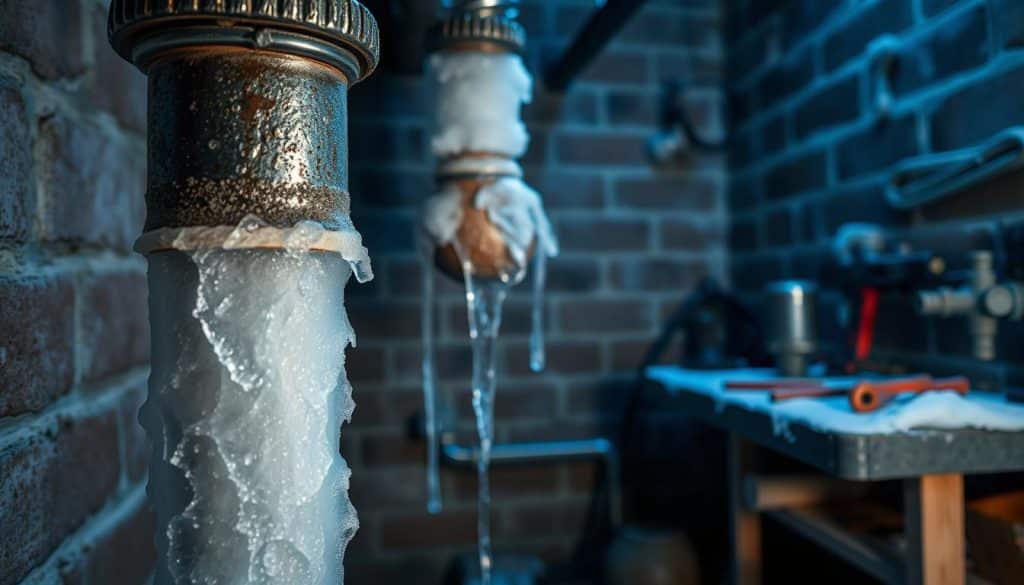
Look for frost on exposed pipe runs, bulging sections, or a visible crack along a joint. Even a small bulge signals ice expansion inside the pipe and higher risk of failure.
Early property damage signs to monitor
Puddles, damp spots, water stains, or drips on ceilings and walls often appear before you see the broken pipe itself. Check under sinks, in the basement, and behind kitchen cabinets.
- Watch and monitor: faint odors, a minor trickle, or cold cabinet areas—take precautions and keep an eye.
- Act now: loud banging, sudden loss of all water, visible bulge, or any leak on a wall or ceiling—shut main water and call for help.
We’re here to help protect your home and reduce preventable damage. If you spot the signs above, contact J Sewer & Drain Plumbing Inc. for fast, local guidance.
What to do if your pipes freeze or you suspect a burst pipe
If a run of your home’s water line freezes, quick steps can limit harm and water loss. Stay calm and follow clear actions to protect your home while you arrange help.
Shut off the supply and relieve pressure
Turn water off at the main supply valve right away. Then open faucets on the same line to relieve trapped pressure and reduce damage.
Locate the frozen section and keep faucets open
Check likely areas methodically: exterior walls, basements, attics, garages, and under-sink cabinets. Keep the affected faucet open so melting ice can flow out.
Thaw safely with controlled heat
Apply gentle heat using a hair dryer, electric heating pad, or hot towels. A portable space heater can help warm the area, but place it safely away from flammables and never leave it unattended.
What not to do and when to call a plumber
Do not use open flames or torches. Avoid cranking house heating wildly in tight spaces. If you find active leaking, cannot access the frozen section, or thawing fails to restore flow, contact a licensed plumber right away.
- Immediate steps: turn water off at the main valve, open faucets, and locate the frozen run.
- Safe thawing: hair dryer, heating pad, supervised space heater, or hot towels.
- Call for help: visible leak, inaccessible section, or inability to thaw — call J Sewer & Drain Plumbing Inc. at (773) 231-8869 or [email protected] for Chicago and nearby areas. We’re open Monday–Saturday, 24 hrs.

Conclusion
A few days of deep cold often set the stage for leaks that start small and grow fast.
In short, this is mainly a freezing problem driven by sustained low temperatures, trapped water and rising pressure inside a line. The best ways to cut risk are simple: add insulation, seal drafts at exterior walls, and keep vulnerable spaces warmer.
Try proven habits now — keep the garage closed, open kitchen cabinet doors to let warm air reach plumbing, and let a faucet drip during extreme low temps. Prevention matters: a single failure can flood ceilings and floors and cost thousands, far beyond a simple repair bill.
We’re family-owned, two generations strong since 2017, and we treat every customer like family. For fast help in Chicago and nearby areas call (773) 231-8869 or email [email protected].
Locations: 3343 N Monticello Ave, 3017 N Elston Ave, Chicago, IL; 809 Ridge Rd, Wilmette, IL. Open Monday–Saturday, 24 hrs.
FAQ
When do pipes burst in winter weather?
Pipes most often fail during prolonged cold snaps when temperatures fall below freezing. In Chicago, sudden drops and sustained subfreezing days raise risk, especially where insulation is poor or heating is reduced. Homes with unheated garages, exposed supply lines, or gaps in exterior walls see more incidents. We recommend keeping heat steady and protecting vulnerable piping to reduce risk.
What temperature causes pipes to freeze and burst risk to rise?
Water begins to freeze at 32°F, but freezing inside pipes can start when ambient air is slightly above that, if conditions allow. Risk increases sharply once temperatures sit below freezing for several hours. Wind chill, drafts, and wet insulation lower the threshold. In Chicago, sustained lows in the teens or single digits make freeze and rupture much more likely.
How long can it take for a frozen pipe to become a burst pipe?
A pipe can freeze within a few hours during intense cold, and it can rupture in as little time once ice blocks flow and pressure builds. Factors include pipe material, insulation, and how quickly the home cools. Acting fast—thawing safely and relieving pressure—can prevent many failures.
Why does freezing water create dangerous pressure inside pipes?
When water freezes it expands, and that expansion creates pressure between the ice blockage and a closed valve or faucet. That pressure transmits along the line and often causes a seam or joint to split. The damage may appear where the pipe is weakest, sometimes far from the actual frozen section.
Why do some homes in Chicago still face higher risk in cold snaps?
Older construction, thin wall insulation, uninsulated crawl spaces, and pipes routed along exterior walls increase exposure. Detached garages, attic vents, and poorly sealed utility penetrations let cold air reach plumbing. We recommend an inspection to identify weak spots and targeted protection where heat loss is greatest.
Where do pipes freeze most often in Chicago-area homes?
The most common trouble spots are outdoor lines, hose bibs, and sprinkler supply lines; unheated basements, crawl spaces, attics, and garages; and runs along exterior walls, including under kitchen and bathroom cabinets. Any section with poor insulation or cold airflow is a candidate for freezing.
Do exposed pipes and outdoor lines like hose bibs and sprinkler supply lines need special care?
Yes. Shut off and drain exterior water, and use insulated covers on hose bibs. For sprinkler supply lines, winterize the system according to the manufacturer or hire a pro. Exposed metal piping benefits from foam insulation or heat tape rated for outdoor use.
How do unheated spaces like basements, crawl spaces, attics, and garages increase freeze risk?
These areas often sit at or below outside temperature, so pipes there lose heat quickly. Pipes under sinks against exterior walls, or in garages with open doors, face the same problem. Adding insulation, sealing drafts, or providing supplemental heat in those spaces reduces the chance of freezing.
Why are pipes against exterior walls and under cabinets vulnerable?
Exterior walls lose heat faster, and cabinet installations can trap cold air around plumbing. Limited airflow and thin wall cavities make these runs colder than those inside the thermal envelope. Insulating the wall cavity or adding pipe wrap under cabinets helps maintain safe temperatures.
What are early warning signs of frozen pipes or impending damage?
Watch for reduced or weak water flow, strange odors, banging or knocking noises, and faucets that sputter. Frost or ice on accessible pipes, visible bulges, or small cracks are urgent signs. Damp spots on walls or ceilings indicate leaks that can follow a rupture.
What visible signs indicate a pipe may already be frozen or about to burst?
Frost build-up on the pipe surface, bulging pipe sections, hairline cracks, and damp ceilings or floors signal serious issues. If you see these, act quickly to shut off the main and call a licensed plumber to evaluate and repair the damage.
What should I do immediately if my pipes freeze or I suspect a burst pipe?
First, shut off your water supply at the main valve to limit flooding. Open all faucets to relieve pressure and drain remaining water. If you see leaks, turn off electricity in affected areas to avoid shock. Contact a licensed plumber—J Sewer & Drain Plumbing Inc.—for emergency response and repair.
How can I find the frozen section safely and keep water flowing while I act?
Locate the coldest exposed stretch—near exterior walls, basements, or garages. Leave a faucet open; flowing water reduces pressure build-up and helps thawing. Avoid cutting into pipe or using open flames. If unsure, call us for safe location and thawing assistance.
How should I thaw frozen pipes safely at home?
Use gentle heat sources: a hair dryer, heating pad, electric space heater placed safely, or hot towels wrapped around the pipe. Work from the faucet toward the frozen area so melting water can escape. Never use a blowtorch or open flame. If thawing fails or you suspect damage, call a plumber.
When should I not try to thaw a pipe myself and call a plumber right away?
If you find a leak, a bulging pipe, or ceilings and walls wet from water, stop and call us. Also contact a pro if the frozen section is inaccessible, electrical hazards exist, or thawing attempts haven’t worked quickly. Fast professional action can limit water damage and repair costs.