What is the difference between traditional and trenchless sewer line repair? That question can decide whether your yard survives a fix or needs full restoration.
At J Sewer & Drain Plumbing Inc., we are a family-owned, two-generation Chicago company founded in 2017. We treat every customer like family and focus on clear options, not one-size-fits-all pitches.
Home sewer problems can escalate fast. You may face a deep excavation or a less invasive fix using small access points. Our goal is to protect your property, explain both approaches, and match a method to your pipe condition, access, and what sits above the pipe—lawn, driveway, or slab.
Call or email for a camera inspection and honest guidance. We serve Chicago, IL and nearby areas, Monday to Saturday: 24 hrs Open. Quick contact: call (773) 231-8869 or email [email protected].
Key Takeaways
- We compare two main options so you can pick what fits your home and budget.
- The best choice depends on pipe condition, access, and surface above the pipe.
- Licensed plumbers should diagnose first to avoid repeat work and extra cost.
- We protect property, offer transparent answers, and prioritize community trust.
- Expect clear steps ahead: warning signs, process, timelines, costs, and restoration after inspection.
Why Sewer Line Repair Methods Matter for Homes Today
A fast response to sewer trouble keeps small issues from becoming major property headaches. We prioritize quick, accurate evaluation so you avoid larger cost and health risks.
Common warning signs of a sewer problem
Watch for odors, backups, and soggy spots. Persistent sewage smell outdoors, recurring drain backups, slow drains throughout your home, gurgling fixtures, or unexplained wet patches in the yard all point to trouble.
- Persistent outdoor sewage odor
- Recurring indoor backups or slow drains
- Gurgling noises and soggy yard areas
Why fast diagnosis by a licensed plumber prevents bigger damage
A small crack or root intrusion may start tiny but can grow when flow is restricted or pressure changes. That escalation turns a pinhole issue into widespread damage that affects multiple fixtures.
Don’t wait. Delays let backups spread contamination and raise total costs. Licensed plumbers give accurate camera inspections so we match the right repair method to the actual failure point.
In Chicago, tight lots, shared alleys, and hardscape make quick, precise action essential. Once we confirm the pipe condition, we can discuss repair options with clear costs and less disruption.

What Is Traditional Sewer Line Repair and Replacement?
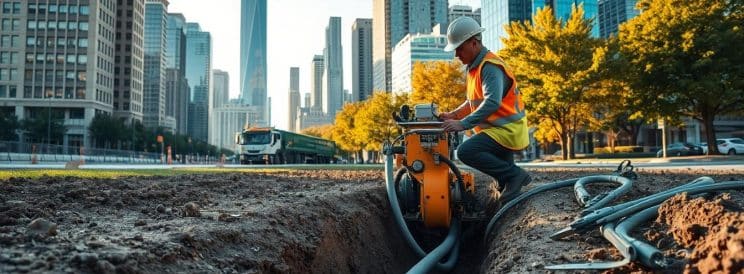
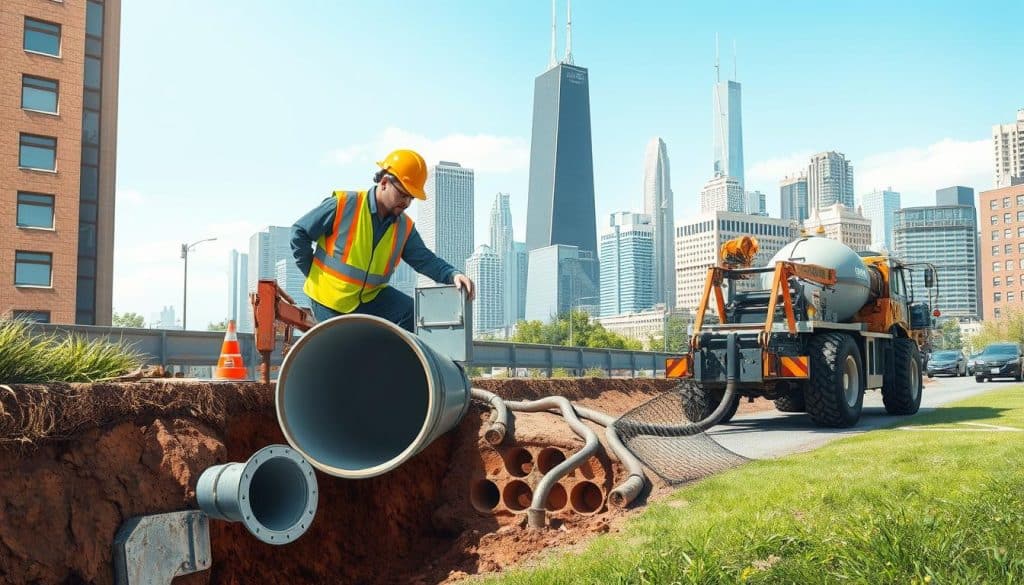
When a pipe has failed badly, full excavation often gives the clearest path to a lasting fix. In plain terms, traditional sewer repair means we dig a trench, expose the damaged section, remove it, and install new piping for reliable service.
How open-trench excavation works from start to finish
Here is the typical process:
- Locate and mark the line, then set up safety zones.
- Excavate a trench, remove the failing pipe, and prepare the bedding.
- Place and connect the new pipe, test flow, and backfill.
- Complete landscaping and surface restoration.
When full excavation is the better option
We choose this method when pipes are collapsed, badly misaligned, or when trenchless tools can’t pass. It offers full visibility for complex replacement work.
Property disruption to expect
Digging can affect lawns, driveways, and sidewalks. The job may need heavier equipment and more labor, so timelines and restoration needs grow accordingly.
We plan to limit disruption, protect your property, and restore surfaces as closely as possible to their original condition.
What Is Trenchless Sewer Line Repair?
Today’s rehabilitation methods let us renew sewer runs through small access points instead of wide trenches. This approach repairs or replaces underground pipes with far less surface damage and faster timelines.
How minimal access points reduce excavation
Rather than dig the full run, we use cleanouts or small pits at strategic spots. Crews bring specialized equipment to those entry points and work inside the existing pipe path.
How cured-in-place lining works
CIPP lining means we clean the host pipe, insert a resin-coated liner, expand it, then cure it with heat or UV. The result is a smooth, jointless new pipe inside the old one that resists roots and leaks.
How pipe bursting replaces old pipe while saving landscaping
Pipe bursting uses a bursting head pulled through the failed pipe. That head fractures the old material outward while towing a new pipe into place behind it. The surface stays mostly intact because only small access pits are needed.
Other no-dig options and limits
- Slip lining and reaming fit certain diameters and degrees of damage.
- Robotic spot repairs fix localized cracks without full replacement.
- Success depends on materials, proper access, trained crews, and a qualifying pipe condition.
We recommend a camera inspection first. That lets us confirm whether this low-impact solution will be durable and cost-effective for your property.
What is the difference between traditional and trenchless sewer line repair?
Choosing the right repair path starts with how much digging your property will endure. We compare two clear approaches so you can pick what fits your yard, budget, and long-term needs.

Excavation versus access points and property impact
Traditional excavation exposes the run by digging a trench. That gives full access for full replacement, but it can disturb lawns, driveways, and hardscape.
Trenchless work uses small entry pits or cleanouts to repair or renew the pipe with minimal surface damage when conditions allow.
Repair timeline and typical duration
Trenchless jobs often finish in a day to 1–3 days, since crews avoid full digging and large restorations.
Traditional projects usually take longer. Excavation, backfill, and surface restoration add time and coordination.
Materials, equipment, and crew needs
- Materials: trenchless may use CIPP liners or HDPE replacement pipe; traditional installs full-length new pipe along the excavated path.
- Equipment: trenchless needs curing and bursting tools; excavation needs heavy earth-moving machinery.
- Crew: trenchless requires trained operators for specialized gear; traditional needs more hands for digging and restoration.
Keep in mind: faster doesn’t always mean better. If a pipe is collapsed or badly misaligned, we may recommend excavation as the safest, most durable option for your home.
Side-by-Side Comparison of Costs, Value, and Restoration Needs
Knowing typical price ranges helps you plan for both pipe work and surface fixes. We give straight numbers so you can budget, then confirm final figures after a camera inspection.
Typical traditional replacement cost ranges: Expect about $4,000–$20,000 in the United States, with many jobs landing near $6,000–$12,000. Contractors sometimes price per linear foot — for example, $150/ft × 40 ft = $6,000 — then add restoration for driveways or lawns.
Typical trenchless cost ranges and what affects price
Trenchless options commonly fall in the $4,000–$13,000 range, and in certain cases $6,000–$15,000. Per-foot estimates vary, often $135–$285/ft, because specialized equipment and skilled crews raise upfront cost.
Why restoration changes the total cost
Restoration of driveways, sidewalks, and lawns can add more than you expect. Concrete replacement, topsoil, and landscaping may exceed the pipe work cost on some projects.
- What drives traditional price: depth, access, length, labor, heavy equipment time, and how much replacement is needed.
- Why trenchless can save overall: less surface damage means lower restoration bills and faster completion, improving total value.
- Hidden cost driver: driveway or patio restoration often surprises homeowners and shifts the final bill significantly.
Our approach: we provide transparent estimates after an on-site evaluation. That avoids guesswork and helps you control costs by choosing methods that match pipe condition, access, and desired restoration outcome.
Pros and Cons of Traditional Sewer Repair Methods
Direct access through a trench gives technicians full visibility and control over complex replacements. We explain when this approach serves your home best, and where it can create added work.
Advantages for full replacement and severe deterioration
- Full visibility: excavation lets crews inspect and replace failing segments directly, making complete repairs reliable.
- Best for collapse: when a run is crushed or misaligned, trench work often becomes the responsible option.
- Cost-effective in simple yards: properties with minimal hardscape can see reasonable overall costs when restoration needs are low.
Disadvantages: timelines, disruption, and urban limits
- More digging: this approach involves heavier excavation and on-site equipment, so timelines run longer.
- Surface disruption: lawns, concrete, and other finishes may need replacement, which multiplies restoration work and cost.
- Infrastructure challenges: urban sites near utilities require careful planning and can increase complexity and time.
We recommend traditional sewer repair when it offers the safest, longest-lasting outcome. Our team balances disruption and durability to protect your property and neighborhood.
Pros and Cons of Trenchless Sewer Repair Methods
Modern no-dig techniques can cut noise, restore service faster, and protect landscaping at once. We use these methods when they match pipe condition and access, always after a camera inspection.
Advantages you’ll notice right away
- Minimal property damage: small access pits avoid long trenches through lawns or concrete.
- Faster completion: many trenchless sewer repair projects finish in a day or a few days, reducing disruption.
- Long-term durability: cured liners and HDPE replacement materials resist roots, corrosion, and cracking for decades.
Limitations and important safety notes
Trenchless repair won’t suit every situation. Fully collapsed or badly misaligned pipes often need open excavation.
Specialized equipment and trained crews are essential so the curing process, chemical handling, and joins work as intended.
Environmental and neighborhood impact
Less digging means lower emissions, reduced noise, and less soil displacement — helpful in busy Chicago blocks.
Operational planning: some jobs require temporary bypasses to keep your plumbing and water service safe during the process.
How to Choose the Right Sewer Repair Method for Your Property
Your property’s layout and the pipe condition drive which repair path gives you the best long-term value. We assess three things first: how severe the damage is, where the run sits under your yard or hardscape, and common causes that brought you here.
Damage severity and pipe condition
Major misalignment, collapsed or crushed pipe usually means excavation for a full replacement. Minor cracks, localized leaks, or surface wear may qualify for a rehabilitative option that preserves landscaping.
Location challenges
Lines under driveways, slabs, or near utilities change the math. In tight Chicago lots, low-impact methods often reduce restoration time and cost when the pipe allows it.
Common scenarios and warning signs
Tree roots, corrosion, mineral buildup, and repeat backups point to deeper damage. If cleaning only fixes the problem briefly, a durable solution is likely needed.
Why a camera inspection matters
Video inspection is the turning point. It verifies internal condition, measures the failure, and tells us if lining or replacement will work. After inspection, we outline options, expected disruption, and restoration so you can choose with confidence.
- We pick a method based on pipe condition, location, and long-term reliability.
- For urgent backups, we’re available Monday–Saturday: 24 hours Open to respond quickly.
Conclusion
Good decisions start with a camera inspection and a clear, written estimate so you know expected costs and long-term value.
Trenchless work often reduces property damage and can be completed in fewer days, while full excavation remains the best route when a pipe has collapsed or shifted severely.
Keep value in view: a lower upfront price can become higher once restoration of lawn, driveway, or sidewalk is added.
Let us inspect your line, explain options for repair or replacement, and list restoration plans before any work begins. We’re family-owned, two-generation, serving Chicago since 2017, and we care for our community.
Call (773) 231-8869 or email [email protected]. Serving Chicago and nearby areas; Monday–Saturday: 24 hours open.
Locations: 3343 N Monticello Ave, 3017 N Elston Ave, Chicago, IL; 809 Ridge Rd, Wilmette, IL.
FAQ
What are common warning signs of a failing sewer line?
Slow drains, recurring backups, gurgling sounds, foul odors near drains or the yard, soggy spots above the buried pipe, and unexplained increases in your water bill all signal possible sewer trouble. If you notice any of these, contact a licensed plumber in Chicago right away to limit damage.
Why should a licensed plumber diagnose problems quickly?
Fast diagnosis with a camera inspection pinpoints the issue, prevents further property damage, and avoids more costly repairs. Early action often allows less invasive options, preserves landscaping, and reduces health risks from sewage exposure.
How does open-trench excavation work from start to finish?
Crews locate utilities, mark the dig site, then excavate a trench to expose the pipe. The damaged section is removed and replaced or repaired, the trench is backfilled, and the surface is restored. This method handles severe failures but involves significant disruption.
When is full replacement with digging the better option?
Full open replacement is best for collapsed pipes, extreme corrosion, severe misalignment, or sections with multiple breaks. When the pipe condition prevents relining or bursting, excavation ensures a durable, long-term fix.
What property disruption should homeowners expect with digging?
Expect yard and landscaping disturbance, possible driveway or sidewalk removal, equipment staging, noise, and a longer timeline for restoration. We plan restoration work carefully to return your property to its pre-repair condition.
How does trenchless repair minimize excavation?
Trenchless methods use small access pits or existing cleanouts instead of long trenches. Technicians thread materials or equipment through the existing pipe, restoring flow with minimal surface damage and faster site cleanup.
What does cured-in-place pipe (CIPP) lining do?
CIPP installs a resin-saturated liner inside the existing pipe, then cures it to form a new, seamless pipe within the old one. It seals cracks, stops leaks, and extends service life without removing the original pipe.
How does pipe bursting replace old pipe while preserving landscaping?
Pipe bursting pulls a new pipe through the path of the old one while fracturing the existing pipe outward into the surrounding soil. This replaces the line with little surface excavation beyond two small pits, protecting lawns and hardscapes.
Are there other trenchless options we might use?
Yes. Spot repairs, sectional lining, and lateral lining can address localized damage. The choice depends on pipe size, material, access, and inspection findings from a camera survey.
How do excavation and access-point methods affect my property?
Open excavation can remove large sections of turf, driveways, or sidewalks and requires extensive restoration. Access-point trenchless work limits digging to small pits, reducing restoration time and cost while preserving landscaping.
What is the typical timeline for each method?
Trenchless jobs often finish in a day or two for typical residential sections. Traditional replacement can take several days to weeks, depending on excavation, replacement length, and surface restoration needs.
What materials, equipment, and crew differences matter?
Traditional crews need heavy excavation equipment, backhoes, and materials like new pipe segments plus restoration crews. Trenchless teams use camera systems, inversion or bursting rigs, resins, and specialized pipe—fewer heavy machines but technicians with specific training.
What drives traditional replacement costs?
Labor for excavation, heavy equipment use, pipe materials, permit fees, and the cost to restore driveways, sidewalks, and landscaping drive prices up. Accessibility and local regulations in Chicago also influence the final total.
What drives trenchless repair costs?
Costs depend on pipe length, diameter, material, the chosen trenchless method (CIPP, bursting, or sectional repair), and any needed access work. Trenchless often lowers restoration expenses, which can offset higher material or specialized labor costs.
Why does surface restoration change total project cost?
Restoring concrete, asphalt, or mature landscaping can exceed the plumbing work cost. Trenchless options reduce the restoration scope, often delivering lower overall project costs and faster property return.
What are the advantages of full traditional replacement?
It provides complete control over damaged areas, allows installation of new pipe materials and updated slopes, and solves extensive deterioration or complex alignment issues with a permanent fix.
What are the disadvantages of open-trench methods?
Longer timelines, greater noise and disruption, higher restoration costs, and more site logistics are common downsides compared with trenchless alternatives.
What are the main benefits of trenchless methods?
Faster completion, minimal surface damage, less disruption to daily life, and strong long-term performance are key benefits for many homes and properties.
What limitations come with trenchless repairs?
Trenchless isn’t always suitable for severely collapsed lines, heavily offset pipes, or when access pits can’t be placed. Camera inspection determines eligibility for these methods.
How does trenchless work in dense urban neighborhoods?
Trenchless reduces street and sidewalk disruption, lowers traffic impacts, and shortens project duration—advantages for busy Chicago blocks where minimizing disturbance matters most.
How do we choose the right method for a property?
We assess damage severity, pipe material and alignment, nearby obstacles like slabs or utilities, and the importance of preserving landscaping. That evaluation, guided by a camera inspection, determines the optimal approach.
Why is a camera inspection essential before picking a method?
A camera provides a real view of interior pipe condition, location of roots or offsets, and exact damage so we can recommend the least invasive, most reliable repair with accurate pricing and timeline expectations.