
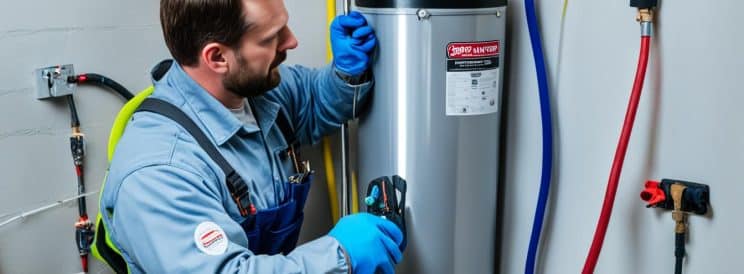
If your water heater is failing, one of your first questions is probably simple: What will it cost to replace? There isn’t one set price.
Your water heater replacement cost depends on several factors, including:
- Whether it is traditional or tankless
- The size or capacity of the unit
- Your existing plumbing and utility setup
- Whether gas lines need to be changed
- Whether venting needs to be updated
- Whether electrical work is required
J Sewer & Plumbing provides water heater installation and replacement throughout the Chicago area. Our licensed plumbers can look at your current setup, walk you through your options, and provide a free on-site estimate before the work begins.
Learn more about our water heater installation and replacement.
What Affects Water Heater Installation Cost?
The water heater is only one part of the total price. The amount of work required to replace the existing unit can have a big impact on the final cost.
Traditional vs. Tankless
Traditional tank water heaters are generally simpler to install compared with tankless systems, especially when you are replacing an existing tank with a similar unit.
Switching to a different type of water heater can involve changes to the plumbing, venting, gas supply, or electrical connections.
Water Heater Size
Larger-capacity units usually cost more, so it is important to choose a size that matches your household’s needs. The right capacity should match the way your household uses hot water.
A unit that is too small may struggle during showers, laundry, and other high-use periods. An oversized system may increase your monthly costs without giving you many benefits.
A plumber may consider:
- How many people live in your home
- The number of bathrooms
- Your typical hot-water usage
- Whether several fixtures or appliances often run at once
The goal is to find a water heater that can keep up with your needs without paying for unused capacity.
Fuel Source and Existing Connections
Gas and electric water heaters have different installation needs.
If the new unit is similar to the one already in place, the job may be more straightforward. However, if you are switching fuel sources or system types, additional work may be required.
Location and Installation Requirements
Replacing a unit in an open basement or utility room is usually more straightforward than working in a tight closet or another difficult-to-access area.
Additional work may include:
- Modifying water piping
- Updating venting
- Changing gas lines
- Completing electrical work
- Relocating the water heater
- Making required code updates
- Removing and hauling away the old unit
Inspecting the existing setup allows a plumber to account for these details before providing a final estimate.
Does It Cost More to Install a Tankless Water Heater?
Tankless water heaters are typically more expensive to install than traditional water heaters.
Depending on the home, the installation may involve changes to gas piping, venting, electrical connections, or water lines.
That does not mean tankless is the wrong option for you. Some homeowners prefer the smaller footprint and having water heated as it is needed.
The best choice for your home depends on your hot-water needs, budget, and how long you plan to stay there.
What Should a Water Heater Installation Estimate Include?
When comparing estimates, make sure you understand what each price includes so there are fewer surprises once the work begins.
Ask whether the estimate covers:
- The new water heater
- Installation labor
- Standard installation materials
- Removal of the old unit
- Disposal or haul-away
- Plumbing modifications
- Gas, venting, or electrical work
- Required code-related updates
- Testing after installation
- Applicable equipment or labor warranties
J Sewer & Plumbing offers free on-site estimates, giving our plumbers a chance to see the existing system before recommending the work.
Should You Repair or Replace Your Water Heater?
A problem with your water heater doesn’t automatically mean a replacement is the right choice for your home.
If the unit is otherwise in good condition and the issue involves a repairable part, fixing it may still make sense.
Replacement may be worth considering when:
- The tank itself is leaking
- The same problems keep coming back
- Rust or corrosion is becoming more noticeable
- The unit no longer provides enough hot water
- The water heater is getting older
- Continued repair costs are becoming difficult to justify
If you’re dealing with a problem but aren’t sure what your water heater needs, learn more about our water heater repair services.
Water Heater Replacement Cost FAQs
Is replacing a water heater cheaper than moving it to a new location?
Yes, it usually is cheaper.
Keeping the new water heater in the same location might allow the installer to use much of the existing plumbing and utility setup. Moving it can require additional piping, venting, gas, or electrical work.
How long does water heater replacement take?
Many straightforward replacements can be completed within several hours.
A project may take longer if you’re changing the style of water heater, relocating the system, or making changes to plumbing, gas lines, venting, or electrical connections.
Can I get an exact water heater replacement cost over the phone?
You may be able to get an idea of the cost range, but an on-site estimate is usually more accurate.
Seeing the existing water heater allows a plumber to account for its location, connections, condition, and any additional work the new installation may require.
Get a Water Heater Installation Estimate in Chicago
So, how much does it cost to replace a water heater? The answer ultimately depends on the unit you choose and what your home needs to install it properly.
J Sewer & Plumbing can inspect your current setup, explain your options, and give you clear pricing before you decide how to move forward.
Call (773) 231-8869 or contact us online to request a free on-site estimate today.