
How often should hydro jetting be done? Is your drain quietly narrowing until a sudden clog shuts down your home? That surprise backup is a common risk in older Chicago homes and multi-unit buildings. We see pipes that “work” one day and cause panic the next.
At J Sewer & Drain Plumbing Inc., we treat your plumbing like family. Our two-generation team offers professional drain cleaning and preventive maintenance to protect your system and avoid costly repairs.
This guide gives a practical schedule, explains what affects timing, and lists the warning signs that mean it’s time to call for service. We serve Chicago, IL and nearby areas, and we know the local issues that change the timeline.
Planned upkeep can save you money and stress. If you want help tailoring a plan for your property, call us at (773) 231-8869. We’ll help you pick the right frequency so your pipes work reliably and you can prevent future emergencies. Our Locations: 3343 N Monticello Ave, 3017 N Elston Ave, Chicago, IL; 809 Ridge Rd, Wilmette, IL.
Key Takeaways
- Regular professional service prevents sudden backups and costly repairs.
- Drain cleaning frequency depends on pipe age, use, and past clogs.
- We focus on protecting your whole plumbing system, not just one clog.
- Our family-owned team serves Chicago with transparent, reliable care.
- Planned maintenance saves time and reduces emergency calls.
Hydro jetting explained: what it is and why it works for drain cleaning
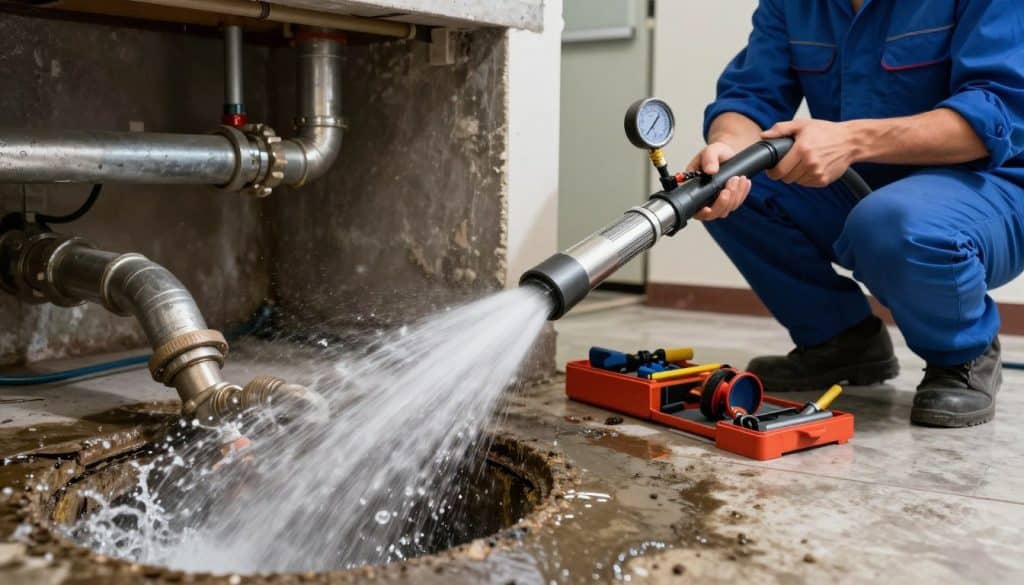
Professional line cleaning relies on controlled pressure and nozzle design to scour pipe interiors. This method uses a specialized hose and nozzle to send high-pressure water through lines. The stream breaks up clogs, strips grease and mineral scale, and clears organic buildup along the full pipe diameter.
Why it works: nozzle jets and pressure create a scouring action that removes residue instead of just punching a hole through it. Machines commonly run about 1,500–4,000 PSI, and we adjust pressure to match pipe material and age to avoid damage.
- Deep clean vs. snaking: snaking often opens a channel but leaves residue; jetting cleans the entire interior surface to reduce repeat clogs.
- What it removes: grease, food waste, soap scum, sludge, mineral scale, and small tree roots; heavy root intrusion may need repairs beyond cleaning.
- Safety note: DIY hydro jetting risks harming fragile pipes without the right equipment and inspection—professional hydro jetting pairs camera inspection with calibrated pressure for safe results.
How often should hydro jetting be done? A practical maintenance schedule
Certain routines protect your sewer line and cut down emergency calls. A steady schedule gives Chicago homes practical protection from gradual buildup.
Typical Chicago home: Plan service every 18–24 months as a baseline for regular maintenance. This interval clears gradual grease and mineral buildup before a full blockage forms, protecting the main sewer line and reducing costly repairs.
- Annual service: Choose yearly cleaning for older homes, heavy cooking, frequent guests, or repeat clogs.
- Commercial & multi-tenant: Restaurants often need service every 3–6 months due to grease. Other multi-unit properties benefit once or twice per year.
- Special situations: After buying an older property, after a major backup, or when multiple fixtures show trouble, schedule cleaning sooner.
We tailor the frequency to your usage and system condition, not guesswork. For planning help and reliable service, call us — Monday to Saturday: 24 hours Open — and we’ll build a proactive schedule for your property.
Factors that change hydro jetting frequency for sewer lines and plumbing systems
Every property has its own risk profile that guides our recommended service schedule. We review usage, pipe material, and past problems before picking a plan that protects your system and limits future repairs.

Grease, food waste, and everyday drain habits
What goes down the drain matters. Cooking oils, greasy pans, starchy scraps, heavy detergent, and so-called “flushable” wipes speed buildup and raise the chance of clogs.
Homes with heavy cooking or multi-tenant kitchens often need service more frequently than the baseline.
Tree roots and recurring intrusion
Mature trees common in Chicago neighborhoods can send roots toward sewer lines. Small roots may clear with hydro, but repeated intrusion often requires monitoring or repairs.
We pair camera inspections with targeted cleaning to spot root regrowth and recommend fixes before major blockages form.
Pipe material, age, and condition
Cast iron develops rust and scale; older clay can be fragile. Both affect safe pressure and nozzle choice.
We adjust equipment and pressure after inspection to clean without causing damage and to set a realistic follow-up schedule.
System warning history
Recurring backups, slow drains, or partial blockages usually point to systemwide buildup, not a single clog.
- Repeat clogs often mean more frequent cleaning is needed.
- One-time backups may need only an inspection and targeted service.
- Multiple fixtures acting up suggests the main sewer line needs attention.
When grease-heavy use, root activity, or aging pipes are present, you may require shorter intervals for hydro jetting and checks. Our goal is the least invasive plan that restores flow, prevents future blockages, and reduces emergency calls.
Signs it’s time to call for a professional hydro jetting service
When small nuisances turn into repeated troubles, your plumbing system is asking for professional attention. Spotting issues early helps you avoid messy, costly repairs and protects older Chicago pipes from damage.
Frequent clogs and backups
Repeat problems that return after plunging or snaking usually mean buildup stays on the pipe walls. A professional hydro jetting service cleans the full diameter to clear that residue and help prevent future blockage.
Slow drains
Narrowing drains in sinks, tubs, or showers point to grease, soap, or mineral buildup reducing flow. Acting now stops a small issue from turning into a major sewer line blockage.
Persistent odors and gurgling
Foul smells come from trapped waste; gurgling hints that air is trapped behind a developing blockage. Both signs call for inspection and calibrated hydro cleaning, not temporary fixes.
Multiple fixtures or urgent red flags
Several fixtures acting up at once often mean the main sewer line is involved. Raw sewage in drains or water in the basement are urgent — address them immediately to limit water damage and costly repairs.
- What to expect: camera inspection first, followed by calibrated hydro jetting and checks to avoid damage.
- We’re available: Monday to Saturday, 24 hours Open for urgent needs and routine service planning.

Conclusion
A clear, realistic maintenance plan helps preserve sewer lines and avoids surprise repairs.
For many Chicago homes, hydro jetting every 18–24 months is a strong baseline. Annual service may help older homes or properties with repeat clogs. Commercial kitchens often need cleaning every 3–6 months.
Regular maintenance protects your sewer line, improves flow, and extends the life of your plumbing system. Professional hydro jetting pairs camera inspection with calibrated high-pressure water and the right equipment to clean safely. DIY hydro jetting can cause damage to older pipes and may create costly repairs.
If you see repeat clogs, slow drains, odors, gurgling, or multiple fixtures affected, schedule service now. We’re a family-owned, two-generation team (established 2017) serving Chicago, IL and nearby areas. Call or email to set a custom plan.
J Sewer & Drain Plumbing Inc.
Phone: (773) 231-8869
Email: [email protected]
Chicago Office: 3343 N Monticello Ave, Chicago, IL 60618
Wilmette Office: 809 Ridge Rd, Wilmette, IL 60091
Our New Location!: 3017 N Elston Ave, Chicago, IL 60618
Hours: Monday to Saturday: 24 hours Open
FAQ
How often should hydro jetting be done for a typical home in Chicago?
We recommend scheduling professional hydro jetting every 18 to 24 months for most single-family homes in Chicago. This interval helps remove grease, soap scum, mineral buildup, and organic matter before they form stubborn blockages. Homes with heavier use or older pipes may need service more frequently.
What is hydro jetting and why does it work for drain cleaning?
Hydro jetting uses a high-pressure water stream to scour the full pipe diameter, blasting away clogs and accumulated buildup. Unlike snaking, which may only cut a path through a blockage, this method cleans walls of grease, scale, hair, and roots, restoring flow and reducing repeat problems.
How does hydro jetting compare to snaking for deep cleaning?
Snaking removes or breaks apart a plug, but it often leaves residue on pipe walls. High-pressure water removes that residue, delivering a deeper clean across the entire pipe circumference. That thorough cleaning lowers the chance of quick recurrence and helps maintain capacity.
What can high-pressure water remove from pipes?
Professional jetting can remove grease, food waste, hair, soap scum, mineral scale, sand, and even invading tree roots when done by trained technicians with the right nozzles and equipment. It’s effective for heavy buildup that ordinary drain cleaners can’t handle.
When does annual service make sense?
Annual service is wise for older homes, properties with recurring clogs, families with heavy kitchen use, or where cast iron and clay pipes are present. Annual attention prevents progressive build-up and reduces risk of costly repairs down the line.
What about commercial or multi-tenant properties—how often is service needed?
Restaurants, multi-unit buildings, and other high-use facilities often need jetting every 6 to 12 months. Grease, high solids, and heavy flow accelerate buildup, so a tighter maintenance schedule protects plumbing infrastructure and keeps lines clear.
Are there special situations that require earlier service?
Yes. After purchasing an older home, experiencing frequent backups, or when tree roots are close to sewer lines, earlier inspection and cleaning make sense. A one-time deep clean followed by a tailored maintenance plan can prevent urgent failures.
How do pipe material and age affect maintenance frequency?
Older materials like cast iron and clay develop rust, scale, or rough interiors that trap debris. Those conditions require more frequent cleaning than smooth PVC lines. We assess pipe type during inspection to recommend the right interval for your system.
What warning signs indicate it’s time to call for professional jetting?
Call us if you see recurring clogs, multiple fixtures draining slowly, persistent foul odors, gurgling sounds, or any backups. Urgent signs include sewage in drains or water in the basement—those need immediate attention.
Can tree roots be removed with high-pressure water without damaging pipes?
Properly executed root cutting with specialized jetting nozzles can remove intruding roots. However, extensive root invasion or compromised pipe walls may require pipe repair or replacement. We inspect lines and recommend safe, effective solutions that protect your plumbing.
Is DIY high-pressure cleaning a good idea?
We advise against DIY jetting. Equipment is powerful and requires training to avoid pipe damage, fixture issues, or personal injury. For safety and long-term results, trust licensed professionals like J Sewer & Drain Plumbing Inc. to perform the service.
Will regular jetting prevent costly repairs?
Yes. Routine maintenance reduces the chance of severe blockages, pipe collapse, and root-induced damage. Investing in scheduled cleaning protects your system, extends pipe life, and often costs far less than emergency repairs or full-line replacement.
How do we determine the right maintenance plan for a property?
We start with an inspection, including camera evaluation of the sewer line and service history review. From there, we recommend an interval tailored to your pipe material, usage patterns, presence of nearby trees, and any prior problems—keeping your system healthy and reliable.