
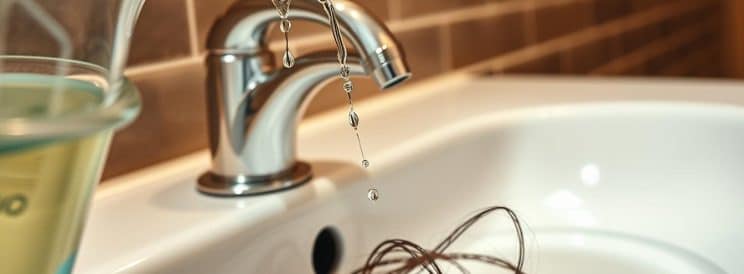
Have you ever wondered if a common solution can really clear that stubborn clog? We get that question a lot from homeowners and property managers across Chicago, IL and nearby areas. As a family-owned, two-generation team founded in 2017, J Sewer & Drain Plumbing Inc. treats every call like a neighbor reaching out for help.
Hair forms tough clumps that mix with soap scum and oils, so simple fixes can fail when water pools. We explain what a product can and cannot do, depending on where the clog sits and how long it has built up.
We outline a safe order of steps, starting with low-risk actions before moving to stronger options or tools. Our goal is to protect your home, your pipes, and your time with clear, practical advice drawn from years in local plumbing service.
Call (773) 231-8869 or email [email protected] to schedule and feel confident in your home.
Key Takeaways
- We answer “will drain cleaner dissolve hair” in plain terms, so you can choose a safe next step.
- Expectations vary by clog type, location, and pipe age.
- Start with low-risk methods before stronger products or professional tools.
- We prioritize pipe-friendly practices used every day in Chicago service calls.
- Call us when DIY risks damage or expose you to harsh chemicals.
Why hair clogs happen in shower drains and bathroom sinks
Every shower and sink collects loose strands over time, and those strands knot into stubborn tangles.
How durable clumps form: Hair is naturally tough and does not break down, so strands gather at the opening, under strainers, and in the trap. Over days and weeks those strands tangle into compact clumps that act like a net, catching soap scum and other residue.
Why scum and oils make a small clog worse: Soap scum and body oils coat pipe walls and help clumps stick and harden. What starts as slow drainage can quickly turn into a larger problem when scum layers build around those clumps.
- Common signs: slow drainage, gurgling sounds, or water backing up.
- Typical build spots: beneath strainers, in the P-trap, and at pipe bends.
- Bathroom sinks behave the same way, but clog risks rise faster because lines are smaller.

Will drain cleaner dissolve hair and when it actually works
Chemical products sometimes soften a clog enough for water to flow, but results depend on the clog’s makeup and location. By “dissolve hair” we mean the product can loosen part of the mass so water moves again — not make every strand vanish instantly.
When chemical drain cleaners can help: gel formulas cling to the blockage and act on soap and grease around the tangle. For partial blockages and scum-heavy buildup, a proper chemical drain option can clear enough to restore flow if it reaches the clog and has adequate contact time.
When they usually won’t: full blockages with standing water, deep clogs in the plumbing system, or dense tangles far down the line often resist chemical action. Rushing the process shortchanges contact time and leads to repeat problems.
- Overuse risks corrosion in older metal and heat stress on PVC.
- Moderation and checking pipe compatibility protect your plumbing system.
- If unsure, try mechanical methods first or call our team for guidance.
Safety first before you try any drain cleaning method at home
Before you pour anything, take a moment to assess safety—standing water changes the approach entirely.
If you have standing water in a clogged drain, pause. That water can trap chemicals on top of the blockage and raise risk to your home and anyone working on the pipes.
What to do if there’s standing water in a clogged drain
Start by removing what you can at the opening. Use a cup or small bowl to scoop out water, then try mechanical tools designed for drains rather than pouring products into pooled water.
Protective steps for handling chemical products safely
- PPE: gloves, eye protection, and good ventilation.
- Keep children and pets away, and follow label directions exactly.
- Have a flashlight and a container ready to collect debris.
When to avoid chemicals because a plumber may need to open the pipe
Avoid chemicals if the blockage fully stops flow, if repeated attempts failed, or if you suspect a plumber will need to open a section of pipe. Spilled chemicals can cause a bigger problem during repairs and harm surfaces or tools.
Choosing a safer first step protects your home and helps our team fix the issue more quickly if you call for professional plumbing help.
How to remove hair from a shower drain without chemicals
A mechanical approach often clears a blocked shower faster than pouring products down the pipe. Start with safe, visible checks before moving deeper into the line.
Access the clog
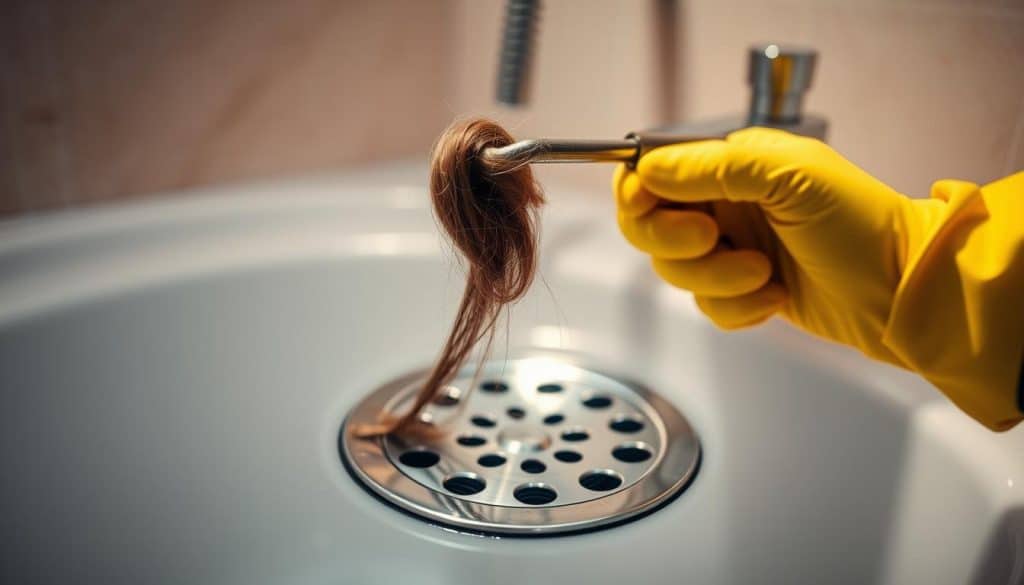
Unscrew or lift the cover or strainer and look for tangled strands at the opening. If you see clumps, use gloves and pull them out. Only reach as far as you can see to avoid cuts.
Make and use simple tools
Bend a wire coat hanger into a small hook to snag strands further in. Twist gently and pull; repeat until little or no debris comes up.
When to use plastic tools, plungers, or a snake
Try a plastic removal tool next — its barbs grab strands without scoring the pipe. If flow stays slow, plunge with a tight seal and some water for suction against soap scum.
If the clog is deeper, feed a 1/4″ plumber’s snake or small auger into the system until you hit resistance, twist to hook clumps, then withdraw and flush.
- Step: Remove cover, check opening, remove visible clumps.
- Use a hook or plastic tool to reach deeper.
- Plunge, then use a snake if needed; flush and observe flow.

Hot water, boiling water, baking soda, and vinegar for soap scum buildup
A steady pour of hot water often loosens the sticky gunk that traps strands and soap residue. Use heat when soap scum or oily buildup is the main problem, not when the line is fully blocked with compacted material.
When hot water helps break up gunk
Hot water softens soap scum and melts some greasy films so trapped material slips free. For metal pipes it is usually safe; for unknown plastic pipes, pour slowly and test with moderate heat first.
How to use baking soda and vinegar to loosen sludge
Measure about 1/2 cup baking soda, pour it into the opening, then add 1 cup of vinegar. Wait about 5 minutes while fizzing loosens sludge, then flush with a steady stream of hot water.
Dish soap plus vinegar and baking soda for greasy residue
For oily bathroom films, add 1 tablespoon of liquid dish soap before the vinegar step. The soap breaks oils so the baking soda and vinegar reaction can work more effectively.
- Amounts: 1/2 cup baking soda, 1 cup vinegar, 1–2 cups hot water to flush.
- Timing: Wait ~5 minutes for fizzing, then pour hot water slowly.
- Expectations: In many cases this improves drainage and odor, but a lot of compacted material may need tools.
- Next steps: If flow improves, repeat once later; if not, try mechanical removal rather than stronger chemicals.
Choosing the right drain cleaner for hair clogs
A thoughtful match between product and blockage saves time and protects your plumbing. Start by checking whether the line holds mostly strands, mostly grease and soap, or a hardened mix that needs physical removal.
Chemical options that act fast
Chemical drain gels and liquids can cut through grease and soften tangled material. Gel formulas cling to the clog for better contact.
Use them sparingly: repeated use stresses older pipes and may harm seals. Follow label guidance and confirm compatibility with your plumbing system.
Biological enzyme alternatives
Biological enzyme products are gentler and eco-friendlier. They slowly eat organic residue and help prevent recurring clogs when used routinely.
Mechanical tools: the most pipe-friendly choice
- Snakes and augers physically remove the blockage, avoiding chemical exposure.
- Plastic removal tools and strainers stop strands from entering lines in the first place.
- We help you decide when a product is a short-term fix or when a deeper issue needs pros.
When it’s probably not hair and you should call a Chicago drain specialist
If backups return after a quick fix, or multiple sinks slow at once, the issue may be farther down the line. That pattern often signals a deeper clog or a problem in the main plumbing system rather than a simple trap blockage.
- Recurring backups or a clogged drain that clears briefly, then returns.
- Multiple drains and fixtures acting slow at the same time.
- Gurgling, sewage smell, or water backing up in unexpected places.
Deeper clogs can stem from buildup farther down the system, root intrusion, or a failing pipe section. A camera inspection quickly identifies the location and nature of the issue, saving time and avoiding repeated trial-and-error with products or tools.
When to stop DIY: if the problem is persistent, affects multiple drains, or you considered pouring chemicals before a repair, pause and call professionals to protect your pipes and surfaces.
Contact J Sewer & Drain Plumbing Inc. for fast, family-owned service in Chicago, IL and nearby areas. We use camera diagnostics and professional drain cleaning to solve the root cause with transparency and care.
- Phone: (773) 231-8869
- Email: [email protected]
- Offices: 3343 N Monticello Ave, 3017 N Elston Ave, Chicago, IL; 809 Ridge Rd, Wilmette, IL.
- Business hours: Monday to Saturday: 24 hours Open
Conclusion
Quick fixes can help, but a careful sequence prevents small clogs from becoming bigger repairs. Start by checking the opening, and try to remove hair physically before other methods.
Use hot water or a mild baking soda and vinegar routine for leftover gunk, and avoid repeated harsh products that stress pipes. If a clog stays or several drains slow down, pause and get a professional look.
We protect Chicago homes with clear communication and family-level care. If your drain problems continue, contact J Sewer & Drain Plumbing Inc. for prompt, professional plumbing support.
FAQ
Will a chemical drain cleaner dissolve hair in my shower or sink?
Some chemical products can break down organic matter and weaken hair clumps, especially when the blockage is near the drain and mostly made of hair and soap scum. However, these products don’t always fully clear compacted, deep clogs or thick mats of hair; mechanical removal or a professional service from J Sewer & Drain Plumbing Inc. may be required.
Why do clogs form in shower drains and bathroom sinks?
Hair naturally sheds during showers, then binds with soap scum, oils, and mineral deposits. Over time those strands knit into durable clumps that catch more debris, restricting water flow and creating recurring problems for your pipes.
How do hair and soap scum combine to worsen a clog?
Soap scum and body oils act like glue, coating hair strands and helping them stick to the pipe walls. As more residue builds, the clog becomes denser and harder to remove with just water or surface cleaning.
What does “dissolve hair” actually mean for plumbing?
When a product claims to dissolve hair, it usually means it chemically breaks down protein and organic matter enough to loosen the mass so it can pass through the trap. That doesn’t guarantee complete removal, especially if the clog is mixed with mineral scale or lodged farther down the line.
When can chemical products be effective, and when won’t they help?
Liquids and gels can work on fresh, shallow clogs made mostly of hair and grease. They’re less effective on old, compacted blockages, root intrusions, or problems in the sewer main. If you’ve tried treatments and the water remains slow or trapped, call J Sewer & Drain Plumbing Inc.
Are there risks to using chemical treatments frequently on older pipes?
Repeated use can harm metal and some PVC fittings, degrading seals and joints over time. Harsh chemicals may also react with residues to produce heat or fumes. We recommend limited home use and professional inspection for chronic issues.
What should I do if there’s standing water before attempting any treatment?
Stop adding products. Turn off water sources, remove visible water if possible, and avoid mixing chemicals. Standing water often indicates a deeper blockage that may need mechanical clearing or a plumber’s assessment.
How can I handle chemical products safely at home?
Wear gloves and eye protection, work in a ventilated space, follow label instructions exactly, and never mix different formulas. Keep kids and pets away, and rinse thoroughly if any contact occurs. For uncertain situations, contact our Chicago team for guidance.
When should I avoid using chemicals and call a plumber instead?
Avoid chemicals if the clog is severe, water remains standing, you smell sewage, or you have older, corroded piping. These signs suggest a need to open the line, perform a camera inspection, or use mechanical tools safely.
How can I remove hair from a shower drain without chemicals?
Start by removing the cover or strainer, then pull out visible clumps with gloved fingers. A simple hook made from a wire coat hanger or a purpose-built plastic hair tool can reach deeper. A plunger or a small auger often clears what hand tools can’t.
What is the best way to make a wire hook tool for hair clogs?
Straighten a wire coat hanger, bend one end into a small hook, and use it gently to fish out hair. Work slowly to avoid pushing debris deeper. For persistent clogs, a plumber’s snake is safer and more effective.
When does hot or boiling water help break up buildup?
Hot water can soften soap scum and melt greasy residues that bind hair, improving flow for minor blockages. Use caution with PVC fittings—boiling water may damage some plastics. When in doubt, opt for warm water or ask our technicians for advice.
How do baking soda and vinegar help with soap scum and grease?
A baking soda then vinegar rinse creates fizzing action that can loosen light sludge and clear odors. Follow with hot water to flush residue. This method is gentler on pipes than harsh chemicals and can be useful for routine maintenance.
Can dish soap plus vinegar and baking soda remove greasy bathroom residue?
Yes. A small amount of dish soap helps dissolve grease, while baking soda and vinegar break up mineral and soap deposits. Rinse with hot water afterward. This combo is safe for most plumbing and effective for light maintenance.
What types of commercial products target hair and grease?
There are caustic formulas designed to cut through proteins and fatty residues and enzyme-based products that digest organic matter over time. Enzymes are gentler on pipes but act more slowly; caustic products work faster but carry higher risk for certain materials.
Are enzyme cleaners a good choice for household plumbing?
Enzyme cleaners are an excellent, pipe-friendly option for regular maintenance and mild clogs. They’re safe for older systems and septic tanks, though they may take longer to show results compared with harsh chemicals.
Why are mechanical tools often the safest alternative?
Tools like hair removal grabs, augers, and snakes physically extract the blockage without exposing pipes to aggressive chemicals. They are effective for a wide range of clogs and reduce the chance of long-term pipe damage.
How can I tell if the clog is deeper in the plumbing or the sewer line?
Signs include multiple fixtures backing up, gurgling toilets, foul sewer smells, slow drains across the home, or sewage pooling in a basement. These indicate the problem is beyond a single trap and needs professional attention.
How does a camera inspection help identify the real issue?
A camera lets us see the pipe interior in real time, pinpointing the blockage location and cause—whether roots, collapsed pipe, or dense buildup. That saves time and prevents unnecessary work, giving a clear plan to restore proper flow.
How can I contact J Sewer & Drain Plumbing Inc. for service in Chicago?
Call (773) 231-8869 or email [email protected] to schedule an inspection or emergency service. We serve Chicago and nearby communities with prompt, family-oriented plumbing care.
Where are J Sewer & Drain Plumbing Inc. offices located and when are you open?
Our offices are at 3343 N Monticello Ave, Chicago, IL 60618; 809 Ridge Rd, Wilmette, IL 60091; and 3017 N Elston Ave, Chicago, IL 60618. Business hours are Monday to Saturday, 24 hours open for urgent needs.